
The World's First Public Company's Dividend Payout That Crashed the Spice Market
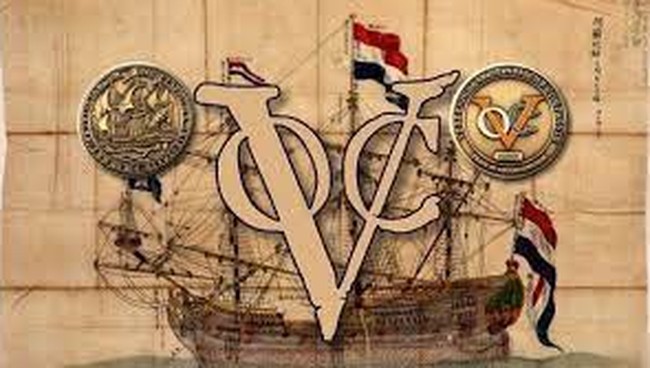
Jakarta, CNBC Indonesia - Paying dividends is usually good news for investors. However, for the Vereenigde Oost-Indische Compagnie (VOC), dividend payments once proved to be a disaster.
The company, which Coordinating Minister for Economic Affairs Airlangga Hartarto referred to as the world’s first publicly listed company during the 49th anniversary of the Indonesian Capital Market, even had to change the way it distributed profits after dividends paid to investors caused spice prices in Amsterdam to plummet.
How did the story unfold?
History records that the VOC began selling shares to the public in August 1602. Lodewijk Petram, in The World’s First Stock Exchange (2011), noted that 1,143 people invested money as the initial capital of the VOC on the Amsterdam Stock Exchange.
At that time, the VOC’s business was in Asian commodity trading, especially spices, which were among the most sought-after goods in the world. Over time, this business allowed the VOC to grow into a giant company.
Airlangga said that if the VOC’s value were calculated based on current values, its market capitalisation would reach around US$7–8 trillion. This figure shows how large the company was in its era.
“Then I looked at the market cap, if calculated today or valued today, the market cap is US$7–8 trillion. So even with today’s value, it is high,” he said.
The VOC’s enormous value was inseparable from the profits generated by its trading business. As a public company, the VOC also distributed part of its profits to shareholders in the form of dividends.
Dividends Were Not Smooth
However, the VOC’s dividend payments did not go smoothly. The way the company distributed profits to investors actually caused problems in the market.
In April 1610, eight years after the initial share sale, the VOC paid its first dividend. Herald van der Linde, in Asia’s Stock Markets (2022), noted that investors received a dividend of 75% of the nominal value of the initial share sale.
Interestingly, the dividend was not in the form of cash as investors know it today. The VOC instead paid the profits using the commodity that was the source of its wealth: spices.
Herald noted that the VOC paid dividends using sacks of pepper, nutmeg, or other spices.
“The form of dividend that was often paid was sacks of pepper, nutmeg, or other spices,” Herald wrote.
At that time, spices were the world’s main trading commodity with very high value. Therefore, receiving large quantities of spices as a dividend was actually a benefit for investors.
However, this benefit created a new problem when investors chose to resell the spices they received.
Many investors did the same thing, causing the supply of spices in the Amsterdam market to suddenly surge. Investors competed with each other to sell the commodity. As a result, spice prices plummeted.
“The sudden abundance of pepper caused spice prices to collapse throughout Amsterdam,” said Herald van der Linde.
This situation eventually led the VOC’s board of directors to change its dividend distribution mechanism. From 1623, the VOC began distributing profits not only in the form of spices but also in cash.
After this change, the VOC paid dividends to its investors every two to six years.