
The World Needs Rp 3,230 Trillion Per Year to Save the Planet
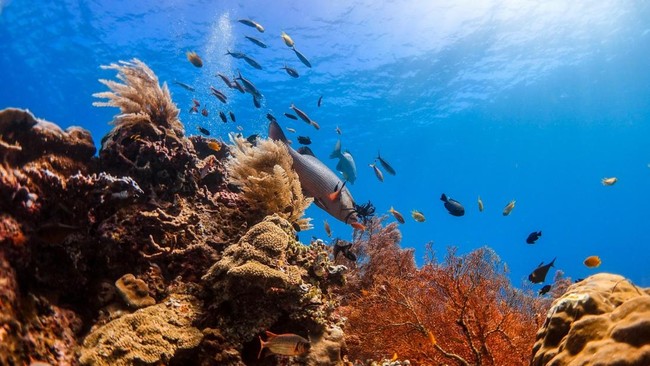
The world has reached the midpoint of its journey towards one of the largest conservation targets ever globally agreed upon. In 2022, 188 governments approved the Kunming-Montreal Global Biodiversity Framework (GBF), which includes the target to protect at least 30% of the world’s lands, inland waters, coastal areas, and oceans by 2030.
This agreement, born from COP15 in Montreal, Canada, is known as the 30x30 target. The GBF encompasses four main objectives and 23 biodiversity targets, ranging from ecosystem conservation to financing and the reduction of subsidies that harm nature.
However, four years after the agreement was made and with only four years remaining until the deadline, the world is still lagging. Recent research led by the Campaign for Nature and Together for the Ocean shows that approximately 20% of the world’s land and inland waters have now been designated as protected or conserved areas. Meanwhile, marine protection coverage has only reached about 10%.
Since the framework was agreed upon at the end of 2022, approximately 1.3 million square kilometres of land and 6 million square kilometres of marine areas have gained formal protection. In other words, progress is occurring, but the pace is insufficient to bring the world towards the 30% target by the end of the decade.
If all measurable commitments announced by governments are fully realised, terrestrial and inland water protection coverage is expected to reach approximately 26% by 2030. This figure still leaves a gap of about four percentage points against the 30% target. The situation is far more severe in the ocean. Even if all available commitments are realised, marine protection is expected to reach only about 12% by 2030, leaving an 18 percentage point gap from the global goal.
This progress demonstrates that the greatest issue is not merely increasing the area of conservation zones, but ensuring that these areas receive genuine protection on the ground. The largest gap in achieving the 30x30 target is visible in marine ecosystems. The Ocean Protection Gap Report 2026 notes that about 10% of the world’s oceans are currently designated as protected or conserved areas, an increase of about 1.7 percentage points since 2022.
However, this formal coverage does not fully reflect the quality of protection. Only about 3.5% of the world’s oceans are assessed to have effective protection, while only about one-third of reported protected areas fall into the ‘fully’ or ‘highly’ protected categories. “There is a significant gap between protection on paper and protection in practice. A line on a map does not mean protection is actually happening in the ocean,” said Merriman, Senior Director for Oceans at WWF International.
With approximately four years remaining until 2030, about 3 million square kilometres of marine territory still need to enter protection. The challenge is even greater than simply increasing the area, as the amount of ocean receiving effective protection is estimated to need to increase nearly ninefold to catch up with the target. This quality gap is also evident in critical habitats. While mangroves, seagrass, coral reefs, and salt marshes are widely reported to be within protected areas, the portion receiving full or high protection remains much smaller. For mangroves, for instance, about 32.87% of habitats are reported as protected, but only 0.26% fall into the fully or highly protected category. For seagrass, the comparison is 32.44% versus 1.08%.
The next issue is financing. The biodiversity protection gap goes hand-in-hand with a massive funding gap. Recent studies estimate that the conservation funding needed to meet the 2030 targets reaches approximately US$100 billion to US$180 billion per year, or about Rp 3,230.1 trillion (US$1= Rp 17,945). Meanwhile, current spending is only about US$24 billion per year. Consequently, the annual funding shortfall is estimated to be around US$75 billion to US$150 billion.
The gap is even sharper for marine protection. Funding needs are estimated at nearly US$16 billion per year, while current available spending is only about US$1.8 billion. The 2026 report states that marine protection funding needs to increase by approximately nine to ten times to match the scale of the requirement.
Indonesia plays a vital role in pursuing the global 30x30 target. Indonesia is one of the countries highlighted in the Ocean Protection Gap Report 2026. The report assesses that Indonesia is beginning to shift its focus from merely expanding marine protected areas to improving management effectiveness. In its national biodiversity plan, the government is committed to evaluating the management effectiveness of approximately 19.1 million hectares of existing marine conservation areas, alongside the creation of new ones.
This step is visible in Maluku. In early 2024, the Maluku Provincial Government and Blue Alliance Indonesia signed a long-term management cooperation agreement for approximately 1.4 million hectares of marine conservation areas, covering six large conservation zones. A similar model has been implemented since 2024 in Banggai, Central Sulawesi, for an area of approximately 750,000 hectares. This approach combines government authority, long-term management capacity, and the involvement of communities and customary rights holders, alongside efforts to build sustainable financing through the blue economy.
Source: jawawa.id (https://jawawa.id/newsitem/the-world-needs-rp-3-230-trillion-per-year-to-save-the-planet-1790575106)
Originally published by CNBC Indonesia (https://www.cnbcindonesia.com/research/20260924134930-128-770566/dunia-butuh-rp-3230-triliun-per-tahun-untuk-selamatkan-bumi), translated from Indonesian