
The world is increasingly connected, yet people are growing more anxious
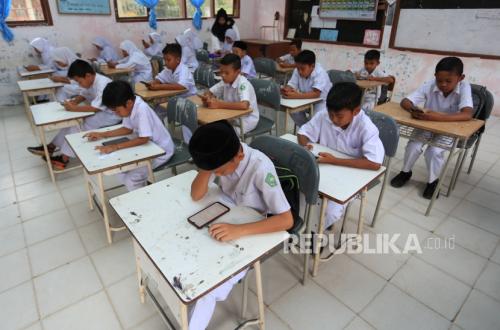
There is something peculiar about the modern world. We live in an era where people can communicate across continents in seconds via the global internet and digital technology. Marshall McLuhan popularised the concept of the ‘global village’ in his works The Gutenberg Galaxy (1962) and Understanding Media (1964). Yet paradoxically, as the world becomes more interconnected, wars persist, inequality widens, global debt rises, and modern humans grow increasingly anxious.
According to ‘The Age of Anxiety’ and modern mental health studies, social anxiety is a defining characteristic of contemporary society. This raises a critical question: why does a more connected world not automatically become more peaceful?
Globalisation: The Grand Promise of Modern Civilisation
After World War II, the world attempted to build a new international order through the United Nations, International Monetary Fund, World Bank, and the Bretton Woods system. The aim was noble: to prevent large-scale wars, strengthen trade, and create global economic stability.
Thinkers like Thomas L Friedman in ‘The World Is Flat’ explain how technology, trade, and global networks have made the world increasingly ‘flat’ and interconnected. However, criticism has emerged. Joseph E Stiglitz, in ‘Globalization and Its Discontents’, argues that globalisation often operates unfairly, particularly for developing nations. In essence, globalisation may successfully connect markets but not necessarily justice.
Capital Goes Global, But Suffering Remains Local
This is one of globalisation’s greatest paradoxes. Money can move across the globe in seconds via international financial systems. According to ‘Capital in the Twenty-First Century’, global wealth concentration is increasingly concentrated in the hands of economic elites and major capital owners.
World Inequality Lab reports also show that global wealth inequality has sharply increased in recent decades. Multinational corporations can produce in low-cost countries, sell in wealthy markets, and stash profits in tax havens.
Meanwhile, small-scale farmers, traditional fishermen, and local labourers must compete against a vast global economic system. Thus arises the irony: markets become global, but suffering remains local.
Financial Capitalism and Capital Concentration
In modern capitalism, giant investment funds hold shares in thousands of global companies. Names such as BlackRock, Vanguard Group, and State Street Corporation frequently appear as major institutional shareholders in technology, pharmaceuticals, energy, media, and defence industries. This phenomenon is explained in various studies on ‘financialisation’ and ‘asset manager capitalism’.
Economists like David Harvey in ‘A Brief History of Neoliberalism’ explain how neoliberalism strengthens global financial capital’s dominance. Yet, while capital moves across borders, ordinary people remain caught in national and geopolitical identity tensions.
Today, the United States and China fiercely compete in semiconductors, trade, technology, AI, and military affairs. Yet, their economies remain interdependent. Graham Allison discusses this phenomenon in ‘Destined for War’, noting that major powers compete while simultaneously depending on each other—like two rivals fighting on the same ship.
Technology Bridges Distance, But Alienates the Soul
Social media connects billions of people. Yet, numerous studies show rising anxiety, depression, loneliness, and attention crises.
Sherry Turkle, in ‘Alone Together’, explains how digital technology can make humans ‘alone together’. Jonathan Haidt, in ‘The Anxious Generation’, discusses social media’s impact on youth mental health. Meanwhile, Byung-Chul Han, in ‘The Burnout Society’, describes modern society as psychologically exhausted. This gives rise to the term ‘hyper-connected loneliness’—digitally connected yet emotionally disconnected.
Many once hoped global trade would reduce conflict. But the modern age has birthed new forms of war: economic, currency, data, cyber, energy, and food wars. Henry Kissinger, in ‘World Order’, explains that geopolitical rivalries remain part of the global order. Globalisation does not eliminate power struggles—it merely transforms their form.
From AgriCulture to AgriBusiness
Globalisation’s paradox is evident in the food sector. Traditional agriculture, once community-based and sustainable, has gradually shifted to large-scale industrial systems. Vandana Shiva, in ‘Stolen Harvest’, criticises food industrialisation and agribusiness corporations’ dominance.
Meanwhile, E.F. Schumacher, in ‘Small Is Beautiful’, warns that modern economies often lose their human and ecological dimensions. Food has transformed from a life-giving trust to a global market instrument.
If colonialism once seized spices, gold, and oil, modern colonialism now takes data, attention, behaviour, and human psychology. Shoshana Zuboff, in ‘The Age of Surveillance Capitalism’, explains how human data has become a new economic commodity. Yuval Noah Harari, in ‘Homo Deus’, explores a future where algorithms understand humans better than humans understand themselves.
The critical question is now urgent: are humans still the subjects of technology, or are they slowly becoming its raw material?
A Modern Civilisation Crisis
The biggest problem of the modern world may not be a lack of technology. Today’s humans possess satellites, AI, global internet, biotechnology, and supercomputers. Yet the world remains filled with polarisation, debt, a crisis of meaning, and anxiety—