
The World Is Becoming More Dependent on Pesticides, Despite the Flowers That Protect Crops
Jakarta, CNBC Indonesia — Pesticide use in global agriculture continues to rise. This presents a challenge: maintaining food productivity while reducing the environmental impact of chemical use.
According to the latest Food and Agriculture Organization (FAO) data, released in July 2026, global agricultural pesticide use reached 3.92 million tonnes of active ingredients in 2024, up 5% on the previous year and 18% over a decade. The FAO warns that pesticide use can affect soil and water quality, as well as biodiversity.
This situation underscores the importance of sustainable agriculture that is focused not only on crop yields but also on maintaining the balance of ecosystems.
One approach is crop diversification through refugia: companion plants that provide habitat for natural enemies of pests and may therefore reduce reliance on pesticides.
Refugia: a natural way to protect crops from pests
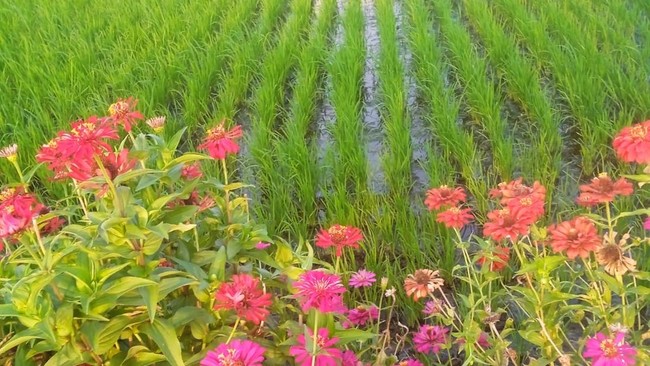
Refugia are plants deliberately grown around farmland to provide habitat for natural enemies of pests. They are one form of ecological engineering in agroecosystems.
This means farmers do not rely solely on pesticides to control pests. The agricultural environment is also designed to help predators and parasitoids that naturally prey on pests survive around cultivated crops.
This approach can increase the number and diversity of natural enemies in farmland. More broadly, refugia can also be incorporated into precision agriculture, with plant selection and placement tailored to the pests, crops and field conditions farmers face.
This multi-objective approach matters because refugia are useful for more than pest control. Companion plants can also support biodiversity conservation and strengthen the resilience of food production systems.
Attractive plants such as sunflowers can be used
Refugia plants are generally easy to find. Those used commonly have brightly coloured flowers and can provide nectar or pollen for insects.
For example, research in Molamahu village, Gorontalo, used three types of refugia in maize fields: sunflowers (Helianthus annuus), kenikir (Cosmos caudatus) and Tagetes erecta.
The plants were grown around the maize or along the edges of the fields, making refugia a kind of microhabitat within the agricultural area.
Refugia are not limited to these plants. The key is to choose plants that provide food and shelter for beneficial insects while remaining suitable for the main crop and the pests being targeted.
How refugia help fight pests
Refugia do not eat pests directly. Instead, they create an environment that supports natural predators and parasitoids.
Refugia flowers provide carbohydrate-rich nectar. This energy source helps natural enemies maintain their activity and metabolism, and can also extend the lifespan of some parasitoids.
Pollen, meanwhile, provides protein, minerals and vitamins. These nutrients can affect the lifespan, fertility and physiological functions of insects that are natural enemies of pests.
With food and shelter available, predators and parasitoids have a better chance of surviving around fields. They can then prey on pest eggs, larvae and insects that attack crops.
In a refugia system, some pests may also be attracted to the companion vegetation. Those that gather there can then be controlled by natural predators, targeted botanical pesticides or physical management of the refugia plants.
Planting cannot be done at random: precision is key
Although the approach is straightforward, refugia must be implemented appropriately. Plant species, location, spacing and flowering time need to be matched to the pests and main crop to maximise their benefits.
In the study of maize fields in Molamahu village, Gorontalo, Tagetes erecta was planted around the maize, while sunflowers and kenikir were placed along field edges and near drainage channels.
This pattern shows that refugia are a form of ecosystem engineering, not simply a matter of planting greenery. If implemented properly, refugia can help maintain populations of natural pest enemies and reduce dependence on pesticides.
Not just fewer pests: yields could also increase
Refugia may also bring economic benefits to farmers. Companion plants can help reduce pesticide requirements while maintaining production.
This was illustrated by research involving maize farmers in Molamahu village, Gorontalo. Maize production using refugia was recorded at 10.51 tonnes per hectare, higher than the 6.67 tonnes per hectare achieved with conventional methods.
Farmers using refugia also earned around Rp33.52 million per hectare, compared with Rp21.17 million under conventional methods. Production costs were lower, alongside reduced requirements for pesticides and chemical fertilisers.
Although results can vary from one field to another, these findings suggest that ecological engineering through refugia is relevant not only for the environment. It may also offer a pathway to more economically efficient and sustainable agriculture.
Source: jawawa.id (https://jawawa.id/newsitem/the-world-is-becoming-more-dependent-on-pesticides-despite-the-flowers-that-protect-crops-1794145847)
Originally published by CNBC Indonesia (https://www.cnbcindonesia.com/research/20261106163138-128-783060/dunia-kian-kecanduan-pestisida-padahal-ada-bunga-penjaga-pertanian), translated from Indonesian