
The World is Becoming More Advanced: Has 'Underwater Warfare' Begun?
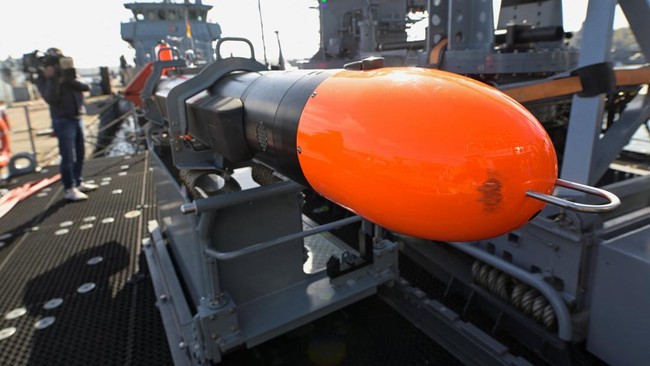
The world is becoming increasingly sophisticated, and the era of ‘underwater warfare’ may have already begun. Both nations and corporations are increasingly recognising that the future of conflict lies not only in the skies but also on the seabed. Significant capital is being directed towards new technologies designed for subsea use, driven by growing concerns regarding the vulnerability of vital infrastructure, such as connectivity cables and energy pipelines, that traverse the ocean floor.
This shift occurs amidst rising anxieties over ‘hybrid warfare’—a broad term encompassing cyberattacks, energy sabotage, disinformation, and economic pressure, which may or may as well be accompanied by conventional military methods. “The changing threat landscape is what has brought this to the fore,” said Katja Bego, a senior researcher at Chatham House, as reported by CNBC International.
Simultaneously, rapid advancements in artificial intelligence, drones, and autonomous technology are enabling new approaches to underwater surveillance. From autonomous underwater vehicles (AUVs) to sensors attached to subsea cables, governments and military alliances are exploring ways to better monitor the infrastructure that sustains the global economy. “Our entire economy is built upon this,” Bego added.
In September 2022, following Russia’s full-scale invasion of Ukraine, explosions damaged the Nord Stream gas pipelines in the Baltic Sea. Investigators concluded that the pipelines, built to transport natural gas from Russia to Germany, had been deliberately sabotaged. This incident, alongside damage to subsea infrastructure in other regions such as the Arctic and near Taiwan, has focused government attention on vulnerabilities that had been largely overlooked in the decades following the Cold War.
According to TeleGeography, a telecommunications research firm tracking global subsea cable networks, over 1.5 million km of undersea communication cables were operational globally by early 2026. Alongside telecommunications cables and oil and gas pipelines, an expanding network of subsea power cables is connecting electricity markets and transporting power from offshore wind farms to the mainland.
Furthermore, the widespread use of aerial drones during the war between Ukraine and Russia has demonstrated how remote-operated autonomous systems can transform the nature of warfare. Bego described the maritime environment as the “next logical domain.” Consequently, defence companies are positioning themselves to meet this shift.
Italian shipbuilding firm Fincantieri announced plans last July to acquire majority stakes in four companies worth approximately €600 million (US$689 million) to expand its capabilities in underwater and surface drones, marine surveying, and subsea communications. The company is leveraging over a century of submarine expertise to transition from what CEO Pierroberto Folgiero calls the “conventional underwater” world to a “non-conventional” era involving smaller submarines, drones, and underwater telecommunications.
Folgiero described underwater telecommunications as the “primary driver of this new ecosystem.” He envisions future surface vessels acting as “motherships,” coordinating a network of vehicles operating on the seabed and throughout the water column. Fincantieri is not alone; major defence groups, including France’s Thales, have built businesses spanning sonar, anti-submarine warfare, mine detection, and autonomous underwater systems, as both large and small firms vie for a role in the emerging subsea market.
In the realm of underwater drones, the German-based defence technology company Euroatlas is targeting the potentially lucrative seabed defence market. According to Verineia Codrean, the company’s head of strategy and partnerships, they have developed an autonomous underwater vehicle named GrayShark, capable of travelling to specified areas and executing missions without continuous human control.
This robot is designed to avoid obstacles and follow pre-set instructions when encountering unexpected objects. For instance, while inspecting a pipeline, the robot can identify mine-like objects, report the finding, and wait for an operator to decide if further investigation is required. Rather than patrolling every mile of cable with warships, Codrean envisions a future with a fleet of autonomous vehicles constantly patrolling strategic seabed areas, converging whenever one detects an anomaly.
“It is almost impossible to cover the entire ocean. You only need to know which areas are more critical to have constant visibility of what is happening there,” said Codrean. She argued that this is essentially a problem of scale, as frigates, submarines, and maritime patrol aircraft are too expensive and scarce to maintain a continuous presence across the vast regions where cables, pipelines, and other strategic assets reside.
“The undersea domain is now facing a series of much larger problems that did not previously exist. From a mathematical perspective, [manned assets] cannot be everywhere and at every place where these problems arise, whether it be sabotage or the movement of enemy submarines,” explained Codrean.
Machine versus machine: Autonomous vehicles are being developed not only for infrastructure surveillance. Alongside anti-submarine warfare, where submarines target other manned submarines…