
The World Changes from Vladivostok
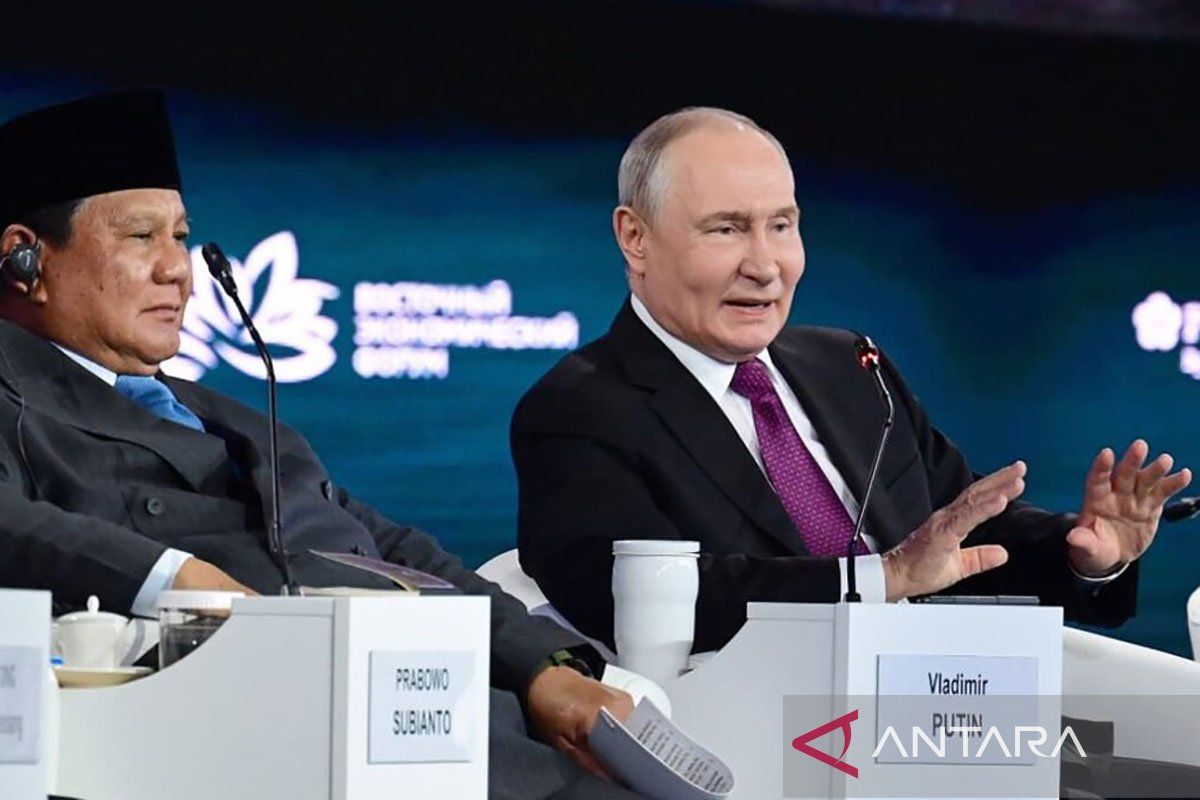
Jakarta (ANTARA) - On 3 September 2026, President Prabowo Subianto met with Russian President Vladimir Putin on the sidelines of the 11th Eastern Economic Forum (EEF) in Vladivostok. Putin expressed his appreciation for President Prabowo’s presence as the keynote guest of the EEF, which was attended by delegates from approximately 80 countries. This annual forum aims to attract investment and strengthen economic ties among Asia-Pacific nations.
The city of Vladivostok, the venue for the Eastern Economic Forum, is not only beautiful but also a historic city marking the early end of the Soviet Union, the superpower of the Cold War era. It was from this very city that the world experienced profound changes.
Vladivostok is Russia’s largest port city. Situated at the edge of Golden Horn Bay, facing the Pacific Ocean, it lies near the borders of China and North Korea. Before becoming Russian territory, Vladivostok was controlled by the Jin Dynasty (1115-1234), then the Mongol Empire, and later returned to Chinese control. However, China’s defeat in the Opium Wars resulted in Vladivostok being controlled by the Soviet Union (now Russia).
I have long desired to visit this historic city. That wish was fulfilled in September 2012 during the Asia-Pacific Economic Cooperation (APEC) Summit, which was attended by President Susilo Bambang Yudhoyono. The summit took place on Russky Island, approximately one kilometre from the centre of Vladivostok.
Gorbachev, with his ideas of glasnost (political openness) and perestroika (economic restructuring), opened up to Asia-Pacific nations, withdrew military regiments from Afghanistan, halted the arms race, normalised relations with the US, and accelerated nuclear weapons negotiations. Gorbachev also opened the city of Vladivostok—formerly a Soviet military base—to visitors, including American journalists. Previously, the city had been closed.
Gorbachev’s speeches became the milestone marking the end of the Cold War between the Eastern Bloc, led by the Soviet Union, and the Western Bloc, led by the United States. The dissolution of the Soviet Union also served as a counterweight to the power of the United States. It was Gorbachev’s political policies that encouraged several nations previously under Soviet control within the Eastern Bloc (the Warsaw Pact) to break away from the alliance.