
The World Begins to Follow Indonesian Regulations, Everything Changes Completely
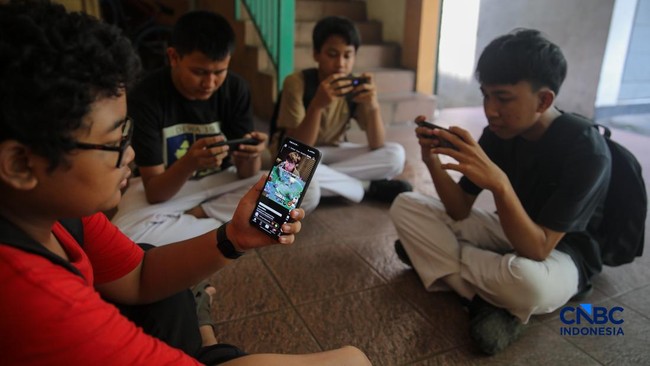
The Indonesian government’s formulation of regulations to protect children from the dangers of social media is now becoming a global reference. This policy is known as PP Tunas.
PP Tunas is not only changing domestic rules but is now being followed by dozens of countries from Asia to Europe. Even the United States has begun moving in the same direction, recognising that the steps taken by Indonesia are the correct answer to protecting future generations.
The Minister of Communication and Digital, Meutiously Hafid, previously stated that approximately 19 countries are currently monitoring the implementation of regulations in Indonesia to subsequently apply similar policies in their respective regions. This means that what Indonesia has established to protect children is no longer merely a domestic regulation.
This regulation has become a global benchmark, proving that Indonesia is capable of being a pioneer in protecting children in a borderless digital space. Compliance by digital platforms with these rules impacts not only children in Indonesia but also millions of children in other parts of the world.
Concrete evidence of this major shift was seen in the United States in late August 2026. Tech giant Meta, owner of Facebook and Instagram, finally conceded and agreed to a fine worth US$16.7 billion (approximately Rp296 trillion) to settle lawsuits from 29 US states.
Meta was accused of intentionally designing features that make children addicted, while concealing the negative impacts on adolescent mental health, including risks of depression, body image issues, and suicidal ideation.
As part of the settlement, Meta is required to implement major changes that align precisely with the direction of Indonesia’s policy. Obligations to be met include:
Daily usage limits for teenagers.
Blocking access during curfew hours to prevent children from using apps late at night.
Stricter age verification to prevent underage access.
Parental supervision tools to monitor and limit usage.
The agreement also stipulates that Meta will only pay part of its fine if other platforms, such as YouTube and TikTok, also implement the same restrictions. This indicates that the standards championed by Indonesia are now being recognised as the standard that should apply globally.
What occurred in the United States provides further confirmation regarding the direction of Indonesia’s policy. The Indonesian government has consistently pressured large platforms like YouTube and TikTok to comply with child protection rules, and now US courts have established the same.
This means that what Indonesia is fighting for is also being fought for by courts in even the most advanced nations. The difference is that the US government has not yet taken decisive steps to curb the negative influence of social media platforms; instead, the issue was brought to court because legislators failed to pass laws limiting user age.
List of Countries Following Indonesia:
Australia: Has already implemented age limits and child protection rules on social media platforms, being one of the first nations to move in line with Indonesia.
Singapore: Is drafting similar regulations using a phased approach, monitoring the results of implementation in Indonesia before establishing permanent rules.
Malaysia: Has announced plans to limit social media access for children under 16, following the pattern implemented in Indonesia.
France: President Emmanuel Macron officially expressed support and consideration for implementing similar child protection rules across the region.
European Union: As a whole, is considering implementing a similar child protection framework across all member states, following input from France and other nations.
Greece: Is the latest country to state it will set a minimum age for accessing social media, following Indonesia’s policy direction.
United States: Through the settlement involving a Rp296 trillion fine against Meta, US courts have effectively established daily usage limits, curfews, and age verification identical to Indonesia’s policy.
What is contained in PP Tunas?
Restrictions on children’s access to mobile applications and social media are regulated under Government Regulation No. 17/2025 concerning the Management of Electronic Systems for Child Protection (PP Tunas). The regulation also outlines the idea of classifying digital platforms based on risk and user age groups.
“Digital platforms cannot be treated equally. Therefore, the government will classify access based on the platform’s risk category, namely low, medium, and high,” explained Minister Meutya Hafid.
High-risk platforms, such as those containing pornography, violence, or vulnerability to bullying, will be subject to strict age restrictions. The categories for websites and applications under PP Tunas are as follows:
Under 13 years: May only access fully safe platforms, such as educational sites or children’s platforms.
13-15 years: Permitted to access low to medium-risk platforms.
16-17 years: Can access high-risk platforms, but must do so with parental supervision.
18 years and above: Permitted to access all categories of platforms independently.
However, PP Tunas does not explicitly mention which specific applications fall into the low, medium, or high-risk categories. Platforms such as X, Instagram, or YouTube must conduct their own evaluations and report their categories to the Ministry of Communication and Digital.