
The Void Caused by AI Standardisation and the Absence of Unique Individuality
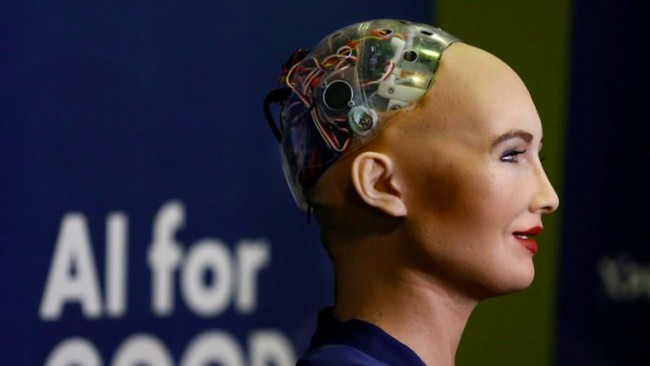
The structure of human life today appears to be undergoing a total reorganisation. If previously, the structure in the Industry 4.0 era was heavily influenced by the existence of the internet, then the presence of another type of technology has altered that structure. Its designation has also been updated. Perhaps Industry 5.0 is the appropriate term for the continuation, as artificial intelligence (AI) completely overhauls the structure.
In the Industry 4.0 era, the internet was the backbone of interaction. The result was the formation of networks. This was driven by the massive use of microelectronics, which subsequently also changed the shape of society. The society originally called mass society transformed into a network society. Its characteristic is always being in a state of connection. Network society is a terminology put forward by Manuel Castells in 1996 in his book ‘The Rise of The Network Society’. In this form of society, information is the raw material of connection.
Connections between humans take place without being limited by space and time. Most of it occurs within microelectronic devices: mobile phones, tablets, laptops, connected to the internet. With interactive applications—social media, messaging, photo and video sharing, shopping, and games—as the practice space, the result of this connection is knowledge, whose meaning is formed by social interaction.
A political event that was initially ignored, for example, becomes meaningful—thus requiring a response of support or rejection—because of social interaction. Therefore, interactive applications become a digital public sphere. A space that forms common social knowledge.
Common social knowledge is an important characteristic of the Industry 4.0 era facilitated by the digital public sphere. Meanwhile, the AI era also produces knowledge, in the form of machine-generated knowledge. It is produced by devices that process very large amounts of data—big data—into algorithms, through machine learning and neural networks. Its operation occurs within a computational structure that is mathematical and statistical in nature, generating new information based on data permutations and combinations. This new information can be used to predict, not just describe.
The main difference in the way knowledge is produced lies here. Although the AI era also relies on the internet as a means of connection—and the role of data as the raw material for algorithms—knowledge that was originally produced through social interaction in the digital public sphere has shifted to knowledge produced by machines using big data. The role of the digital public sphere is displaced by computational operations that process, analyse, and produce knowledge based on big data.
Permutations and combinations based on big data—within machine learning and neural networks—create a universe of knowledge that appears infinite, especially when compared to the capacity for formation that relies solely on human roles. However, it is clearly visible that knowledge in the AI era is presented according to the needs of the individual user and is not the result of social interaction. Does this mean that knowledge produced in the AI era supports individuality? No, in fact, the AI era rejects individuality and eliminates diversity in favour of standardisation.
This reality is confirmed by thebrokernews.ch in 2026, in ‘Humanity is an Average: No Single Person Fits that Description’. It states that the mission of every leading AI laboratory is the development of systems for billions of people, never about the individual. Analysis of documents from OpenAI, Anthropic, and Google DeepMind shows this consistency: the individual disappears from the purpose of artificial intelligence development. It is further stated that the commitment set out in OpenAI’s charter directs artificial intelligence for ‘all of humanity’. Similarly, Anthropic defines its mission as being responsible for providing ‘long-term benefits to humanity’. In a similar vein, Google DeepMind, which researches intelligence, aims to advance science and ‘benefit humanity’. The figures also confirm this. Not one of the three laboratories mentions the ‘individual’ in their mission. Their focus is on ‘humanity’, ‘society’, or ‘the world’, summarised in one word: humanity.
All of this can be explained by the fact that AI developed by OpenAI, Anthropic, and Google DeepMind is an accumulation of billions of data points and the average of everything that has ever been a digital trace of humanity. Therefore, if formulated more conceptually, the shift from the Industry 4.0 era to the AI era is a structural change to achieve standardisation and average out individual uniqueness. Diversity is homogenised through the use of AI. All of this then changes communication patterns, making them transactional.
This statement is relevant to the expression conveyed by Bjorn Beam in 2025 in ‘The Social Price of AI Communication’. He stated that AI-supported platforms backed by large language models (LLMs) and the algorithmic operations behind them unconsciously teach people to speak and think like machines. To behave efficiently, clearly, and without emotion. The purpose of interaction is measurable, as transactional communication. Interaction is optimised to be clear and concise for the sake of efficiency, but it loses its emotional depth. Cultural nuances and the spontaneity that define authentic human relationships are absent. This structural change then influences how people interact—both in the workplace and in personal relationships—to become efficient and cold, like AI.
Source: jawawa.id (https://jawawa.id/newsitem/the-void-caused-by-ai-standardisation-and-the-absence-of-unique-individuality-1785235950)
Originally published by CNBC Indonesia (https://www.cnbcindonesia.com/opini/20260728164358-14-754488/kehampaan-akibat-standardisasi-ai-dan-absennya-individualitas-unik), translated from Indonesian