
The Various Names of Indonesian Cabinets from Soekarno to Prabowo
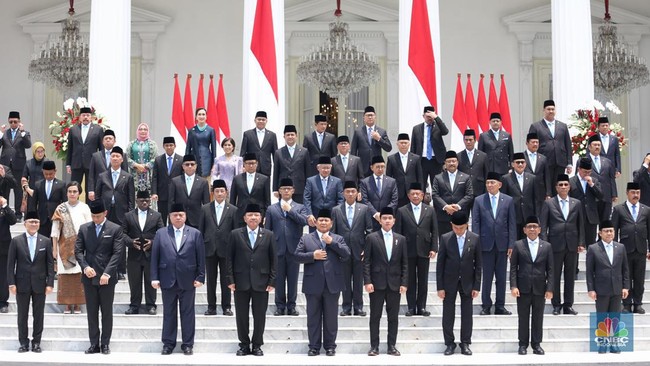
As the Republic of Indonesia enters its 81st year of independence, the nation’s governmental journey has passed through various important phases that have shaped the direction of national development. Cabinet changes have served as one marker of that transformation, reflecting the political, social, and economic dynamics that have evolved over time.
Since the Proclamation of 17 August 1945, Indonesia has experienced changes in its system of government, from presidential cabinets and the parliamentary system to Guided Democracy, the New Order, and the Reform era. Each period has produced a cabinet with different characteristics, challenges, and policy priorities.
The following is the journey of Indonesian cabinets from the era of President Soekarno to President Prabowo Subianto.
Era of the Independence Struggle
In the early days of independence, the cabinet was the main instrument for defending Indonesia’s sovereignty amid Dutch military pressure and an unstable political situation.
After the Proclamation of 17 August 1945, Indonesia used a Presidential Cabinet under President Soekarno. At that time, the government did not yet recognise the position of Prime Minister, so all executive control rested with the president.
A change occurred in November 1945 when Sutan Sjahrir was appointed Prime Minister. The system of government shifted to a parliamentary one in order to strengthen Indonesia’s diplomatic position internationally.
The Sjahrir Cabinets I to III played a role in the diplomatic process that produced the Linggarjati Agreement. After that, Amir Sjarifuddin led the cabinet amid the First Dutch Military Aggression, although his government ended after opposition emerged to the results of the Renville Agreement.
The struggle period was closed by the Hatta Cabinets I and II, which played an important role in the process of recognising Indonesia’s sovereignty while ending the phase of physical revolution.
Era of Parliamentary Democracy
The period 1950–1959 was marked by very rapid cabinet changes due to strong political dynamics in parliament.
The Natsir Cabinet succeeded in pushing for the reunification of Indonesia into the Unitary State of the Republic of Indonesia through the Integral Natsir Motion. After that came the Sukiman-Suwirjo Cabinet, which drew controversy because of the signing of the Mutual Security Act with the United States.
One of the greatest achievements of this period occurred during the First Ali Sastroamidjojo Cabinet, namely the holding of the 1955 Asian-African Conference in Bandung.
The era of parliamentary democracy ended during the Djuanda Cabinet, which produced the Djuanda Declaration concerning Indonesia’s maritime territory. The prolonged political crisis then prompted President Soekarno to issue the Presidential Decree of 5 July 1959 and restore the presidential system of government.
Era of Guided Democracy
In the period 1959–1966, President Soekarno held more centralised control of government through the concept of Guided Democracy.
The First Working Cabinet marked the beginning of the implementation of that system, with a focus on national stability and development, although inflationary pressure began to rise.
One of the most well-known periods occurred during the Third Working Cabinet, when Indonesia carried out the Confrontation with Malaysia while building various prestige projects such as the National Monument (Monas) and the Gelora Bung Karno Main Stadium.
The deteriorating political and economic situation ultimately led to the issuance of the Order of 11 March (Supersemar) in 1966, which gave General Soeharto the authority to restore national security and order.
Era of the New Order
The period 1966–1998 was led by President Soeharto with a primary orientation towards political stability and economic development.
The first cabinet of this era was the Ampera Cabinet, which focused on restoring economic and political conditions after the change of government.
Subsequently, the First Development Cabinet began implementing the Five-Year Development Plan (Repelita) programme. The following cabinets, from the Second to the Seventh Development Cabinets, emphasised infrastructure development, industrialisation, food self-sufficiency, increased oil production, and foreign investment.
During this period Indonesia recorded relatively high economic growth, although at the end of the administration the Asian monetary crisis triggered the end of the New Order in 1998.
Reform Era to the Present
The Reform Era began after President Soeharto resigned in May 1998 and brought major changes to Indonesia’s political system.
The Development Reform Cabinet under President B.J. Habibie was the first cabinet of this era, with a main agenda of economic recovery and the holding of the 1999 general election.
The administration of Abdurrahman Wahid, through the National Unity Cabinet, emphasised strengthening democracy and decentralisation, although it faced high political dynamics.
Next, the Gotong Royong Cabinet under President Megawati Soekarnoputri focused on post-crisis economic recovery while facing security challenges after the 2002 Bali bombing tragedy.
During the presidency of Susilo Bambang Yudhoyono, the United Indonesia Cabinets I and II implemented various economic stabilisation policies and social protection programmes, including direct cash assistance (BLT).
Entering the administration of President Joko Widodo, the Working Cabinet and the Onward Indonesia Cabinet prioritised accelerating infrastructure development, bureaucratic reform, industrial downstreaming, and strengthening national connectivity.
Since October 2024, the government has been led by President Prabowo Subianto through the Merah Putih Cabinet. This cabinet is Indonesia’s newest government and consists of ministers, deputy ministers, and minister-level officials who carry out various strategic agendas, ranging from food and energy security to industrial downstreaming and strengthening national economic competitiveness.
As Indonesia enters 81 years of independence, the journey of these cabinets forms an important part of the history of national government. Cabinet changes show how each era has responded to the challenges of its time in building the nation.
Source: jawawa.id (https://jawawa.id/newsitem/the-various-names-of-indonesian-cabinets-from-soekarno-to-prabowo-1786881067)
Originally published by CNBC Indonesia (https://www.cnbcindonesia.com/research/20260816082410-128-759765/ragam-nama-kabinet-indonesia-dari-soekarno-hingga-prabowo), translated from Indonesian