
The VAR of Democracy and the Trophy of Public Trust
I have always felt the World Cup is somewhat magical. We watch it as if we are merely seeing twenty-two people fighting over a ball. Sometimes while drinking coffee. Sometimes while eating fried snacks. Sometimes while pretending to be an impromptu coach from the living room. ‘Pass to the right, hey!’ Even though the player is over in America. We, sitting askew on the sofa at home, feel we know more than the coach who is paid billions. That is football. Everyone suddenly has a coaching licence. At least a commentator’s licence.
In the eyes of the spectator, the World Cup indeed looks simple: two teams, one ball, two goals, and 90 minutes of play. There is a goal that makes the stadium erupt. There is a penalty that makes the heart relocate. There are players who cry, coaches who hug their staff, supporters whose faces are painted in full colour but go home with shattered hearts.
However, the World Cup is certainly not that simple. Behind a single match that we watch while replying to WhatsApp messages, a giant machine is at work. Stadiums are prepared. Schedules are arranged. Tickets are sold. Transport is calculated. Security is maintained. Cameras are installed. Technology is tested. Referees are trained. Millions of people are mobilised so that the 90-minute match we enjoy can take place beautifully.
The 2026 World Cup is even larger in scale. Forty-eight countries are participating. There are more matches. The hosts are not just one country, but the United States, Canada, and Mexico. Football is not just about kicking a ball, but also about governance.
At this point, I am often reminded of elections.
The Complex Side Behind the Voting Booth
Elections also often look simple from the outside. Citizens come to the polling station, show their ID card, receive a ballot, enter the booth, punch the ballot, put the ballot into the box, dip a finger in ink, and then go home. Done. Democracy seems like a five-minute affair. Perhaps even quicker than choosing a lunch menu on a delivery app.
However, for election organisers, those five minutes in the voting booth are the culmination of a very long process. Long before polling day, there is voter data that must be updated, political parties that must be verified, candidates who must be confirmed, logistics that must be prepared, officers who must be recruited, campaigns that must be regulated, campaign funds that must be reported, ballots that must be printed, distribution that must be guarded, voters who must be served, counting that must be open, recapitulation that must be transparent, and disputes that must be answered.
So, if the World Cup is the biggest football tournament, an election is the biggest tournament of democracy. The difference is, in the World Cup, a trophy is contested. In an election, the people’s mandate is contested. Yet both share one important similarity: victory is only meaningful if the match is believed to have been fair.
A beautiful goal will still be questioned if it smells of offside. A penalty will still be debated if the public feels the referee was wrong. A red card can still trigger anger if the reason cannot be explained. In football, the final score determines the winner. However, trust in the process determines whether that victory is accepted.
Elections are the same. The most votes are indeed important. However, the most votes must be born from a trusted process: an accurate voter list, legitimate candidacies, a fair campaign, open voting, transparent counting, and accountable recapitulation. In a democracy, it is not enough for the winner to just win. The winner must win in a match that is trusted by the public.
Learning from Green Field Technology
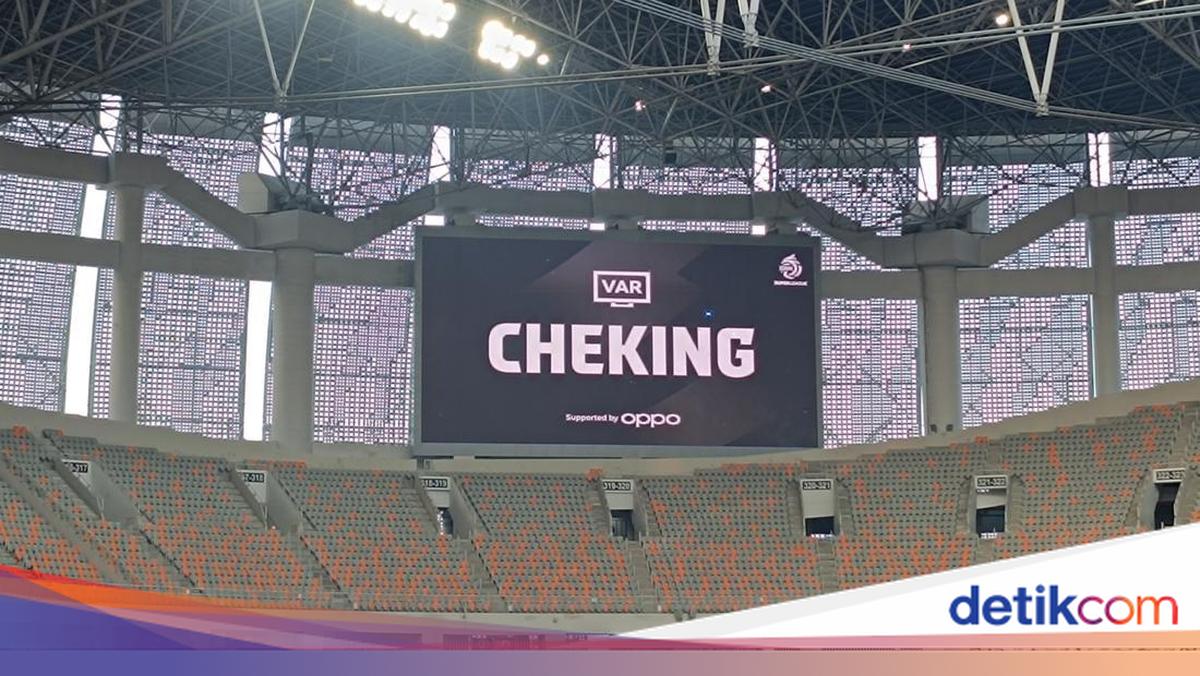
This is where the modern World Cup provides an interesting source of inspiration. Today’s football no longer relies solely on the referee’s eyesight. There is the Video Assistant Referee (VAR). There are cameras from various angles. There is semi-automated offside technology. There is a ball equipped with a sensor. Things that could once only be debated until neck veins were tense can now at least be re-examined with data.
Did the ball cross the line? Was the player in an offside position? Was there a handball? Was there a foul before the goal? Everything can be checked, replayed, viewed from various angles, and then decided with a specific procedure. Of course, VAR does not make football free from controversy. Players can still protest. Coaches can still get angry. Spectators can still shout. Social media can still be noisy all night. Sometimes VAR actually makes people more annoyed because a goal that was celebrated while taking off one’s shirt is suddenly disallowed because the tip of a player’s boot was a few centimetres ahead of the opponent.
However, VAR provides one important thing: decisions are no longer based solely on feeling. There is a recording. There is data. There is a trail. There is a reason that can be explained.
Indonesian elections also need that kind of spirit. This does not mean elections must be fully digital. It does not mean technology can replace humans. Voters must still come to the polling station. Officers must still serve. Witnesses must still take notes. Supervisors must still oversee. Citizens must still be able to witness the vote counting openly.
Technology must not replace the human pulse in democracy. However, technology can be an additional layer to maintain legal certainty and prevent fraud. Imagine if every data change in the election stages had a clear trail: when it was changed, who changed it, based on what document, and why the change was made. Imagine if every candidacy document could be easily traced. Imagine if changing voter data always left a history. Imagine if the counting results could be matched back with the source documents from the polling station. Imagine if anomalies could be detected more quickly before they turned into major disputes.
That is what I mean by technology as the VAR of democracy. In football, VAR helps the referee review an incident.
Source: jawawa.id (https://jawawa.id/newsitem/the-var-of-democracy-and-the-trophy-of-public-trust-1783738278)
Originally published by detikcom (https://news.detik.com/kolom/d-8569000/var-demokrasi-dan-trofi-bernama-kepercayaan-publik), translated from Indonesian