
The Urgency of Transformation for Preachers and How to Begin
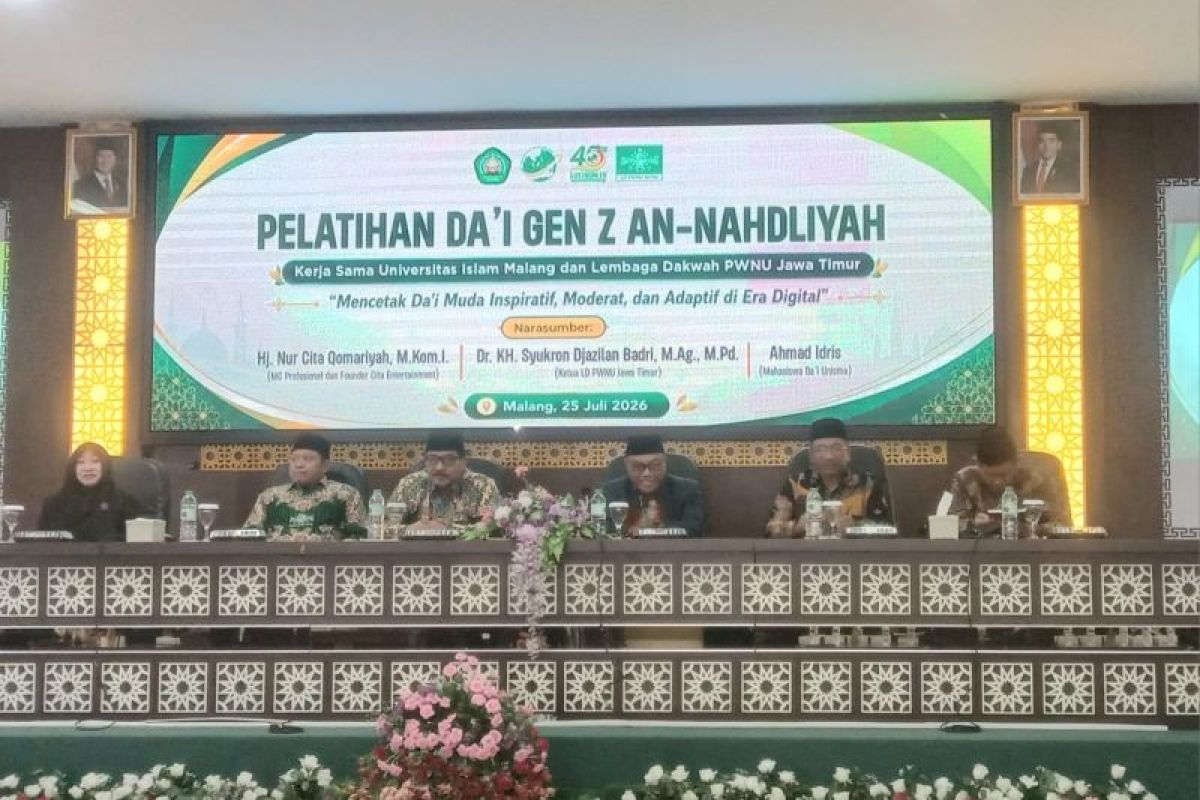
Jakarta (ANTARA) - After interacting with 5,000 pesantren (Islamic boarding school) leaders through transformative pesantren workshops, the author has concluded that preachers (dai) also need to undergo a transformation. This conclusion was reinforced while interacting with 2,000 leaders of pioneering pesantren, as part of an ongoing effort to engage 10,000 selected pesantren leaders across Indonesia.
Furthermore, following a keynote speech last week at a workshop for female religious leaders (ibu nyai and ning) regarding sexual education and mental health—where the Imam Jazuli Foundation selected 700 participants from a target of 5,000 nationwide—the focus has shifted back to preachers. The need for transformation arises because preachers are also facing the impact of disruptive change. Consequently, the Imam Jazuli Foundation began hosting the “National Workshop for Transformative Preachers Amidst Disruptive Change” last week.
When first opened to preachers in West Java, the programme saw 1,500 applicants within just three days. After a selection process narrowed the group to 700, the inaugural workshop commenced. To enrich the core ideas presented in the keynote speech, several prominent figures shared their perspectives, including KH Anwar Iskandar from the Central Indonesian Ulema Council (MUI), national branding expert Gus Ipang, Ustaz Yusuf Mansur, and Ari Untung.
The next target is to invite 5,000 preachers nationwide to these transformative workshops, with participation contingent upon passing a selection process based on portfolio and competence.
The author observes that the world of preaching (dakwah) is indeed changing. It is not merely the medium that is shifting; society itself is changing, as are its expectations, methods of seeking knowledge, and the criteria for determining who is worthy of being heard.
Many senior preachers possess profound knowledge, long experience, and unquestionable religious authority. However, some are beginning to lose their audience. This is not necessarily because their knowledge is no longer needed, but because their delivery no longer aligns with how modern society receives messages. Simultaneously, new preachers are emerging who are more agile in digital spaces, better at understanding the language of the younger generation, more skilled at packaging messages, and faster at capturing public attention. The problem is that the ability to attract attention does not always go hand-in-hand with scholarly competence. As a result, a serious paradox has emerged: preaching platforms are becoming more crowded, yet they are not all occupied by individuals with adequate religious capacity.
Contextual and Actual
Upon deeper analysis, the command for preaching in the Al-Quran always uses imperative and present tense verbs. This implies that preaching must be contextual and actual, suited to the conditions of today’s society. The Wali Sanga (the nine saints of Islam in Java) provide a highly successful example. If the saints were alive today, they might use films, videos, or social media rather than wayang (shadow puppets) as socialisation media. History records that the Wali Sanga’s preaching successfully won the battle for influence within society.
Change never kills people; rather, it is the rejection, delay, and inaccuracy in responding to change that often stifles human progress. With today’s extraordinary technological advancements, every individual essentially owns their own editorial office. For preachers, the opportunities are global, low-cost, and allow for the dissemination of content and communication with the public (mad’u) anytime and anywhere, while providing rapid and easy access to source materials.