
The Urgency of Formalising Special Gas Price Policy
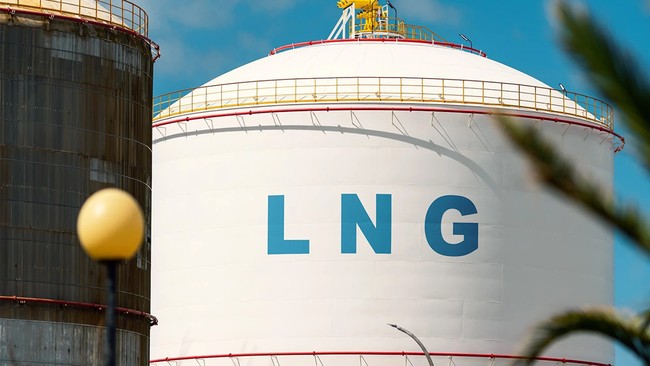
The national gas sector is at a critical juncture in balancing the financial capacity of the upstream sector, the viability of gas distribution businesses, and the resilience of the domestic manufacturing sector. The dynamics of Indonesia’s gas market are currently facing a supply imbalance, particularly in the largest consumer regions such as West Java. To protect domestic industry from the impact of energy price spikes, the government has intervened by setting a special gas price adjustment. However, the effectiveness of this intervention instrument is highly dependent on the legal certainty underpinning it. The absence of formal regulation could trigger systemic risks across all related sectors, from legal and financial aspects to supply sustainability and the competitiveness and resilience of the industrial sector.
The international Liquefied Natural Gas (LNG) market is currently experiencing a significant upward price trend compared to the previous year. Based on market data, the Asian benchmark price, or Japan Korea Marker (JKM), is in the range of US$21.10 to US$21.14 per MMBTU. This international price surge indirectly affects the economic calculations for domestic LNG-based gas supply. Domestically, the gas supply crisis in several regions such as DKI Jakarta, West Java, and Banten is triggered by declining domestic pipeline gas production from gas fields. The reduction in pipeline gas volume has forced industrial players to use LNG supplies sourced from other regions like Papua, Sulawesi, and Kalimantan. This shift from pipeline gas to LNG carries the consequence of inflated supply chain costs. This new cost structure includes the cost of liquefying gas at the source plant, marine transportation costs using tankers, and regasification costs at the receiving terminal. As a result of these accumulated logistics costs, the price of domestic non-HGBT LNG soared to between US$20 and US$23 per MMBTU before intervention.
The government, through the Ministry of Energy and Mineral Resources (ESDM), has taken a special intervention step to protect downstream manufacturing industries from these energy cost pressures. The government officially lowered and fixed the industrial LNG price in the West Java region to US$13 per MMBTU. This policy is targeted to be in effect for the medium term, until 31 December 2026. The primary basis for this price reduction policy rests on a direct instruction from President Prabowo Subianto and an emergency policy discretion issued by the Ministry of ESDM. The mechanism to reduce the price from the economic level of US$20-US$23 per MMBTU to US$13 per MMBTU is designed to be implemented without directly burdening the State Budget (APBN) with subsidies. The price reduction is designed to be achieved through a regulatory cost-sharing reduction scheme. This formula involves cutting the profit margins of upstream Cooperation Contract Contractors (KKKS), reducing the government’s non-tax revenue share from the oil and gas upstream sector, and trimming distribution, trading, and transmission margins in the downstream sector managed by state-owned enterprises, particularly PT Pertamina (Persero) and PT Perusahaan Gas Negara Tbk (PGN).
Although this policy has been announced and implemented since 29 June 2026, the formal special regulatory instrument has, as of the time of writing, not yet been issued. Gas trading business entities like PGN are implementing the US$13 per MMBTU price based solely on instructions and transitional commitments between the government and business entities to resolve the emergency. Technically and commercially, business entities are currently using a transitional accounting scheme or provisional billing adjustment. The difference between the real economic price and the instructed price is recorded as a deferred expense or internal receivable, with final settlement awaiting the issuance of an official legal umbrella regulation. From an emergency perspective, the government’s policy and actions are fundamentally appropriate and tactical. However, if a formal regulation in the form of a Presidential Regulation (Perpres) or Ministerial Decree (Kepmen) is not issued soon or is delayed for a long period, the consequences could be significant. Firstly, there is a potential for legal consequences for the business entities. Under state-owned enterprise governance rules, directors are required to implement Good Corporate Governance (GCG) principles and maintain company profitability. The act of cutting selling prices below the acquisition cost without a valid written legal basis could potentially be categorised by the Supreme Audit Agency (BPK) as an act causing state losses. Furthermore, private KKKS in the upstream sector have the legal right to file civil lawsuits if their revenue share is reduced without a valid national regulation as the basis for the deduction. Secondly, there is heavy financial pressure on gas distribution corporations. Without a regulation that legalises the reduction of the state’s share, PGN and Pertamina must bear the LNG logistics cost burden from their own pockets. This condition has the potential to trigger margin bleeding, a sharp decline in net profit performance, and even a fall in the share value of national gas issuers on the capital market. In the long term, this liquidity disruption could cause business entities to delay LNG procurement payments to upstream producers, which in turn could disrupt the sustainability of gas supply to end-users.
Source: jawawa.id (https://jawawa.id/newsitem/the-urgency-of-formalising-special-gas-price-policy-1786099920)
Originally published by CNBC Indonesia (https://www.cnbcindonesia.com/opini/20260807162829-14-757493/urgensi-pengaturan-kebijakan-harga-gas-khusus), translated from Indonesian