
The Urgency of a "Green Curriculum" to Foster Ecological Awareness
If the Earth is changing, the curriculum must change too. After all, education is not just about teaching from books, but also about reading the signs of the times and acting before it’s too late.
Jakarta (ANTARA) - Education is no longer sufficient merely as a pathway to produce superior, skilled, and competitive human resources.
In the midst of a rapidly changing Earth, education must also play a role in shaping ecological awareness, building sensitivity to crises, and forging the ability to live amid uncertainty.
Therefore, today’s educational curriculum is not enough to merely prepare students for the job market. It must also prepare them to face the realities of a world where seasons are no longer predictable, rains are irregular, and temperatures are rising.
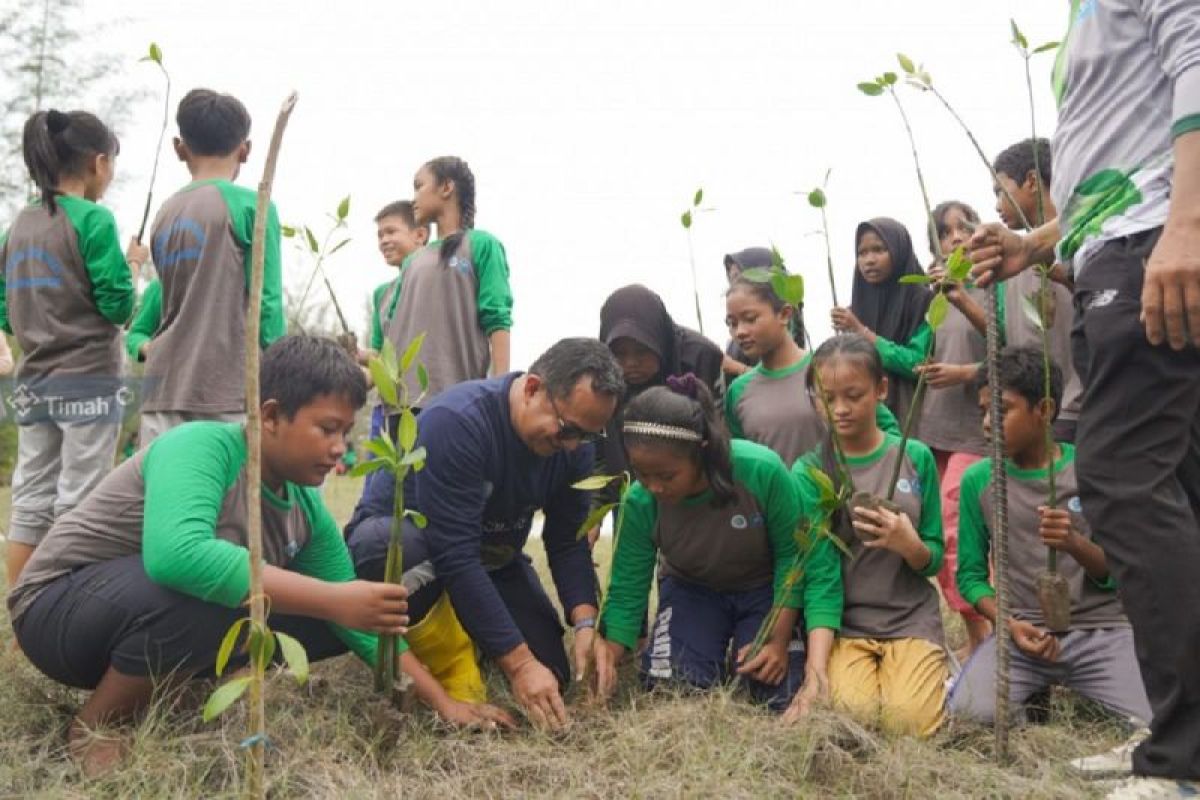
The problem is that our education still tends to treat the climate crisis as an additional theme that appears in one or two subjects, school cleanliness projects, energy-saving campaigns, or tree-planting activities. All of these are good and important, but certainly not enough.
The climate crisis, which is currently a global concern, is not just an environmental issue, but also relates to food, health, poverty, migration, urban planning, disasters, energy, social conflicts, and the future of human life.
The Intergovernmental Panel on Climate Change (IPCC) – a scientific body under the UN – emphasises that the impacts and risks of climate change do not stand alone. They are intertwined with various other global trends, such as the loss of biodiversity, ecosystem degradation, rapid urbanisation, socio-economic inequalities, and unsustainable resource consumption patterns.
This means that if the educational curriculum still views the environment as a marginal issue, education will fail to read the signs of the times. Children may know how to explain photosynthesis, but not understand why forests are slowly disappearing.
They may memorise types of meteorological disasters, but not understand why poor groups are always the most vulnerable when those disasters strike. They may be taught to dispose of rubbish properly, but not encouraged to question why our development model continues to produce waste, emissions, and ecological inequalities.