
The Uranium Issue Sparking Disputes Between Iran and the US
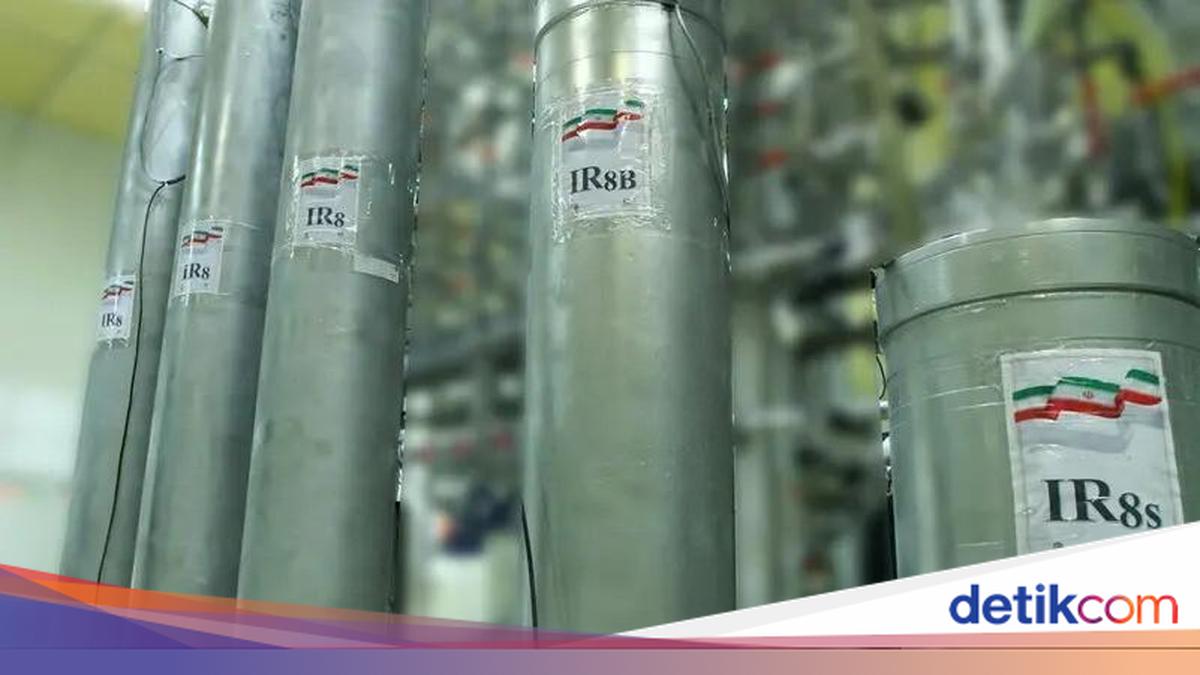
Negotiations between the United States (US) and Iran in Islamabad, Pakistan, amid the war in the Middle East, have yet to reach an agreement. One of the reasons is the conditions regarding uranium.
As summarised by detikcom on Saturday (18/4/2026), drawing from various sources including TRT World, the prominent New York Times (NYT) in its report, citing several US and Iranian officials, stated that Tehran offered to freeze uranium enrichment for five years, but the US is pressing Tehran to suspend enrichment for 20 years.
Several US officials, quoted by the NYT, revealed that Washington in those negotiations is pushing Iran to freeze uranium enrichment for 20 years. According to two senior Iranian officials and one US official quoted by the NYT, Tehran in its official response sent on Monday (13/4) offered a shorter pause, namely five years.
Trump, said a US official in the NYT report, rejected Iran’s proposal. Washington also demands that Tehran relocate its highly enriched uranium supplies from their territory.
However, based on the officials quoted by the NYT, Iran rejected that demand and insists that the enriched uranium supplies remain within the country, offering to significantly dilute them to levels unsuitable for use as a weapon.
US officials argue that concerns remain about Iran retaining the capability to re-enrich uranium in the future.
In addition to revealing the content of the US-Iran negotiations, the NYT report also mentioned that discussions are underway regarding the possibility of another round of face-to-face negotiations between the two countries. However, so far, according to the NYT, no date has been agreed upon.
US Claims Iran Agrees to Surrender Uranium Stockpiles
Regarding the uranium, the two countries are even making mutual claims. Recently, US President Donald Trump claimed that Iran has agreed to hand over its uranium stockpiles.
As reported by AFP on Friday (17/4), Trump stated that Tehran has agreed to surrender its uranium stockpiles. Trump said he would return to Pakistan to sign the agreement.
Therefore, he said, the two countries are currently considering further talks in Islamabad.
“We are very close to making a deal with Iran,” Trump said.
“We must ensure that Iran never gets a nuclear weapon. They fully agree with that. They have agreed to almost everything, so perhaps if they can sit at the negotiating table, there will be differences,” he said.
When asked if he would go to Pakistan to sign the agreement, Trump said, “I might go, yes. If the deal is signed in Islamabad, I might go,” he said.
Iran Denies Trump’s Claim on Uranium Surrender
Trump’s statement immediately drew a denial from Iran’s Foreign Ministry. Iran affirmed that its enriched uranium stockpiles will not be moved “anywhere.”
“Iran’s enriched uranium will not be moved anywhere,” said spokesperson for Iran’s Foreign Ministry Esmaeil Baqaei to Iranian state television, as reported by AFP news agency on Saturday (18/4).
“The transfer of Iran’s enriched uranium to the US was never discussed in the negotiations,” he snapped.
Previously, Trump posted on his Truth Social platform on Friday morning (17/4) local time: “The US will get all the ‘Nuclear Dust’, produced by our great B2 bomber planes,” referring to the enriched uranium that was buried due to last year’s US attack.
However, Baqaei said recent talks centred on resolving the conflict, not on surrendering Iran’s uranium stockpiles.
“Previous negotiations focused on nuclear issues, but now the negotiations focus on ending the war, and of course the scope of topics discussed has become broader and more diverse,” he said.
“The 10-point plan to lift sanctions is very important to us. The issue of compensation for damages caused during the imposed war is very important,” he stated.
He also criticised Trump for posting on the Truth Social platform that the US naval blockade of Iranian ports would remain in place until a peace agreement with Tehran is reached, even though Tehran has stated that the Strait of Hormuz has been reopened.
“The opening and closing of the Strait of Hormuz does not happen on the internet; it is determined on the ground, and our armed forces certainly know how to act in response to any actions by the other side,” said Baqaei.
“What they call a naval blockade will certainly be met with an appropriate response from Iran. A naval blockade is a violation of the ceasefire, and Iran will certainly take the necessary actions,” he emphasised.