
The Unsovereign Halal Giant
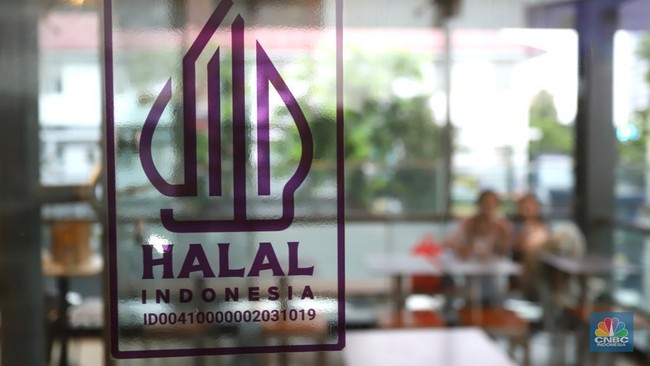
Indonesia has once again lost a position in the State of the Global Islamic Economy (SGIE) 2025/2026 report. After maintaining third place globally for three years, Indonesia has now fallen to fourth. This decline serves as an alarm, occurring amidst various government efforts to build a national halal ecosystem, ranging from strengthening halal certification to developing halal industrial zones and establishing supporting institutions.
A simple question arises: why is a country with the world’s largest Muslim population, the largest halal market, and grand ambitions to become a global halal hub losing its position in the global Islamic economy index? The answer lies in how we define success. The SGIE does not merely assess the Muslim population or the scale of halal consumption; it measures a nation’s competitiveness based on the performance of its halal sectors, the strength of its supporting ecosystem, innovation, investment, trade, and the ability to penetrate global value chains. In other words, the metric is not how large the halal market is, but how significant its contribution is as a major player in the global halal industry.
Is Indonesia playing on a truly level playing field, or is there an ‘invisible hand’ shaping the global halal economic competition, where some nations act as controllers while others remain merely markets? In this context, the invisible hand refers to the systemic global economic structure that determines who controls standards, technology, financing, logistics, and international market access. In the modern halal economy, power is determined by whoever controls the value chain. Nations that control halal standards, globally recognised certification, industrial innovation, and international trade networks reap the greatest benefits, even with relatively small Muslim populations. Malaysia, for instance, has maintained its first-place position in the SGIE for over a decade by building an integrated halal ecosystem, using certification as an instrument to boost exports and attract investment.
Conversely, Indonesia often appears to be focusing on ‘attendance’ rather than ‘competence.’ In recent years, the success of the Sharia economy has often been reduced to the number of halal certificates issued. While more certificates are being issued, certificates alone do not automatically create competitiveness. Although Indonesia’s 2025 halal exports reached US$63.42 billion with a trade surplus of US$51.17 billion, a deeper analysis reveals a problem: US$34.16 billion, or more than half of Indonesia’s halal exports, still originate from palm oil and its derivatives. Meanwhile, Muslim fashion contributes US$8.67 billion and halal cosmetic chemicals approximately US$5.46 billion. This indicates that Indonesia’s halal export strength is still heavily reliant on commodities and natural resource-based products, while high-tech halal products, pharmaceuticals, biotechnology, and industrial raw materials have yet to become primary strengths.
As a result, Indonesia often finds itself in a paradox: being the largest halal market and a supplier of raw materials, yet failing to control the global value chain. This situation is particularly relevant ahead of the mandatory halal policy implementation in October 2026. To avoid strategic failure, national halal policy orientation must change. Indonesia must stop using the number of certificates as the primary measure of success and instead use certification as a gateway to industrialisation. Furthermore, there must be accelerated investment in innovation-based halal sectors—such as halal pharmaceuticals, cosmetics, biotechnology, and processed foods—to create halal brands capable of competing globally and to play an active role in determining international halal standards.