
The United States and Israel Strike Tehran, Targeting Khamenei
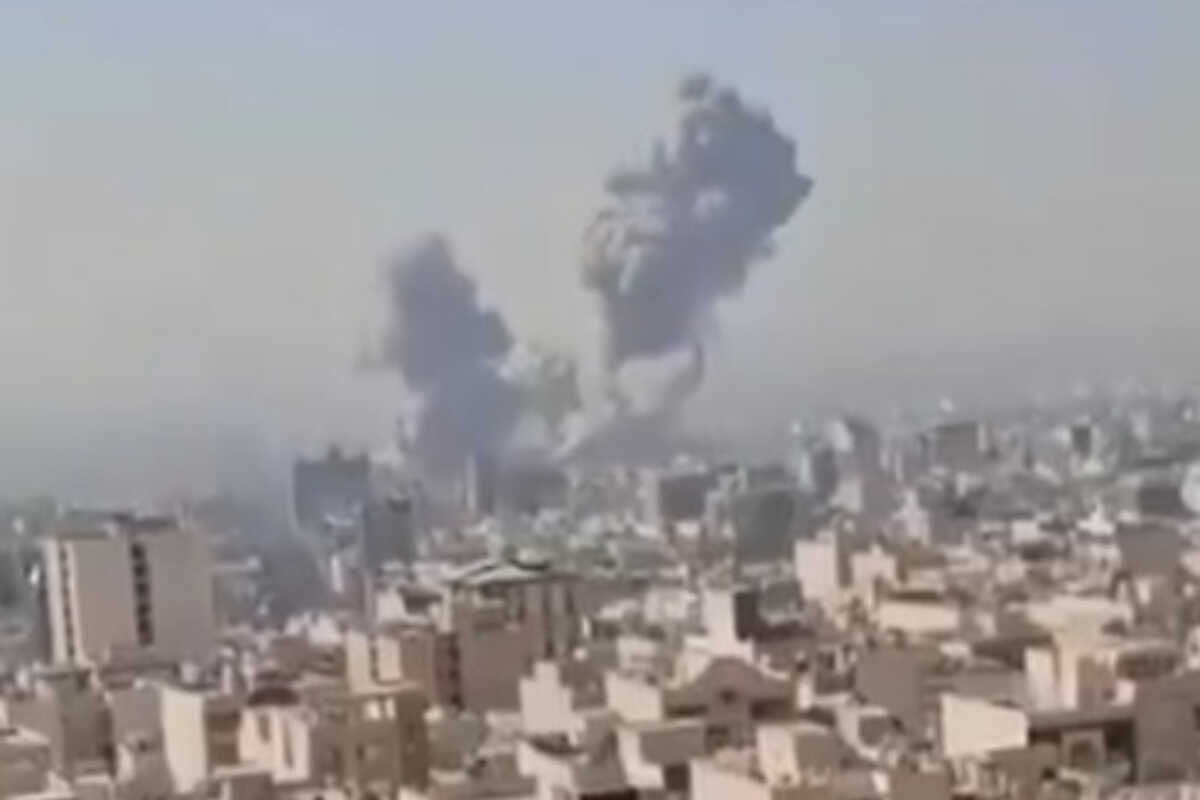
The Middle East stands on the brink of large-scale war following massive airstrikes launched by the United States and Israel against Iran’s core military defence systems and the residence of Supreme Leader Ayatollah Ali Khamenei on Saturday, 28 February.
The military operation, which targeted missile infrastructure and the dwelling of Iran’s highest-ranking leader, immediately triggered a fierce response from Tehran. The Islamic Revolutionary Guards Corps (IRGC) unleashed barrages of ballistic missiles against US military bases in Gulf nations and Israeli territory, forcing the complete closure of airspace throughout the region.
Thick smoke was seen rising from the Pasteur district in Tehran, location of Khamenei’s residence, amidst extraordinarily tight security measures that paralysed Iran’s capital. Israel’s public broadcasting agency, Kan, reported that Ali Khamenei and President Masoud Pezeshkian were primary targets of the operation.
Nevertheless, Iran’s state television claimed Pezeshkian was in “safe and sound” condition, although several explosions were confirmed to have struck the Keshvardoost and Pasteur districts.
US President Donald Trump stated that Washington’s objective was to “eliminate the imminent threat” and destroy Iran’s missile industry to the ground. “We will destroy their missiles and eradicate their military industry. We will annihilate their navy,” Trump asserted, according to AFP.
He also pledged “immunity” for Iranian forces who surrender, whilst calling upon the Iranian people to overthrow their current government. In similar fashion, Israeli Prime Minister Benjamin Netanyahu described the military operation as a step to eliminate the “existential threat” to his nation.
The Israeli military warned Iranian civilians to keep away from military infrastructure, as extensive airstrikes would be conducted across various strategic locations.
Tehran’s response was equally fierce. The IRGC announced it had launched attack waves targeting the US Fifth Fleet headquarters in Bahrain, as well as American military bases in Qatar and the United Arab Emirates.
Explosions were reported heard in the skies above Jerusalem, Doha, Manama, and Amman, as air defence systems in those countries worked frantically to intercept incoming projectiles.
In Qatar, the defence ministry stated it had repelled several attacks directed at Al-Udeid air base, the largest US military facility in the region.
This escalation triggered global aviation chaos. Iran, Iraq, Kuwait, Syria, the UAE, and Israel immediately closed their airspace to civilian flights, resulting in massive cancellations of international flight routes.
Amidst the turmoil of war, Iran’s exiled crown prince, Reza Pahlavi, emerged through a video message from Washington, declaring that “ultimate victory” to take control of Iran was now within reach.
Iran’s Ministry of Health reported it had deployed ambulances to central Tehran, although official casualty figures from the strikes have not yet been confirmed.
Explosions were also reported in several strategic locations beyond the capital, including Isfahan, Qom, Karaj, and Kermanshah, according to the Fars news agency.
Bahrain sounded air raid sirens and restricted road access following reported explosions. Israel declared a national emergency after launching strikes against Iran.
Seven rockets struck Tehran, targeting the residence of Ayatollah Khamenei and the Iranian Presidential Palace. The Indonesian Foreign Ministry confirmed the safety of Indonesian nationals in Iran following the US and Israeli airstrikes on 28 February.