
The UNIFIL Peacekeeper Tragedy and the Dilemma of Diplomacy
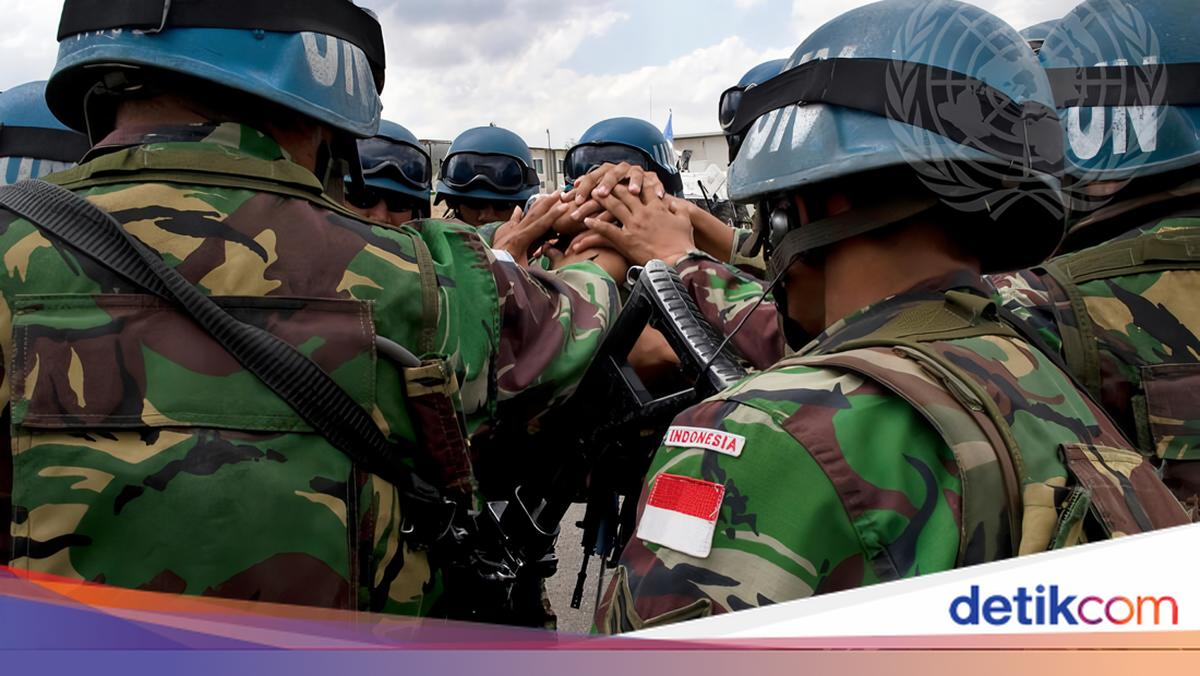
The death of Corporal Farizal Rhomadhon in the United Nations Interim Force in Lebanon (UNIFIL) mission is not merely a sorrow for Indonesia, but also a marker of a deeper crisis in global peace governance. The artillery attack suspected to have been carried out by Israel not only claimed the life of a soldier but also shook the fundamental assumption that peacekeeping forces are in a relatively protected position under international law.
This situation becomes increasingly problematic when placed in the context of Indonesia’s recent policy choices. Involvement in the “Board of Peace” scheme associated with Donald Trump potentially places Indonesia in a dilemma. On one hand, Indonesia seeks to maintain its commitment to peace and reconstruction in Gaza. On the other hand, participation in a forum that also involves Israel creates ambiguity in its position on the ground, especially when Indonesian forces directly confront the realities of Israeli military actions. In such situations, the line between neutral actors and those drawn into the conflict configuration becomes blurred, thereby increasing the vulnerability of Indonesian forces as targets.
The condemnation issued by UN Secretary-General Antonio Guterres demonstrates that normatively, the international community still recognises the importance of protecting peacekeepers. However, this condemnation also underscores the long-standing paradox in the international system: norms exist, but enforcement depends on the distribution of power. In this context, Indonesia’s involvement as one of the world’s largest peacekeeping troop contributors places it in the most vulnerable position, namely bearing the risks without control over conflict escalation.
Thus, this tragedy cannot be read as an isolated incident, but rather as part of the erosion of protection for non-combatant actors in modern conflicts, as well as a mirror of Indonesia’s strategic dilemma in navigating a global peace arena increasingly filled with power interests.
Crisis of Neutrality in Peacekeeping Missions
Conceptually, peacekeeping is built on three main principles: consent, impartiality, and limited use of force. However, in conflicts like Israel–Hezbollah, these three principles are becoming increasingly difficult to maintain. Literature by Bellamy and Williams (2010) indicates that when one party no longer recognises the neutrality of a UN mission, peacekeeping transforms into a dangerous grey area.
The case of the United Nations Interim Force in Lebanon exhibits these symptoms. When peacekeeping forces remain in an escalating conflict zone without strong commitments from the warring parties to respect the UN mandate, the “neutral” status becomes an operational illusion. In such conditions, Indonesian forces are no longer treated as peacekeepers but potentially viewed as part of the conflict configuration itself.
The problem becomes more complex when linked to Indonesia’s position as one of the main troop contributing countries in UN peacekeeping missions. Historically, this contribution has been a source of diplomatic prestige and part of Indonesia’s identity as a country actively maintaining world peace. However, the fall of TNI soldiers in a context that does not provide commensurate strategic benefits risks shifting the meaning of this contribution into a reputational burden.
From the perspective of international reputation, the death of personnel in peacekeeping missions is not merely seen as a sacrifice, but also as an indicator of operational risk and mandate effectiveness. Literature on peacekeeping effectiveness shows that contributor countries experiencing casualties in missions with unclear political end-states tend to be perceived as being in a subordinate position within the operational structure (Fortna, 2008). In other words, Indonesia risks being seen not as an agenda setter, but as a risk bearer.
The implications are twofold. At the international level, Indonesia’s position as a major contributor does not automatically increase its bargaining power, as troop contributions are not followed by the capacity to influence mandate design or implementation. At the domestic level, this incident opens space for criticism of the rationality of foreign policy, particularly regarding the deployment of troops to high-escalation areas without adequate protection guarantees.
This is where Indonesia’s strategic issue lies. Large contributions to peacekeeping missions do not automatically correlate with political influence. Indonesia bears high risks but lacks sufficient leverage to influence the behaviour of main actors like Israel. This situation indicates an imbalance between risk exposure and diplomatic capacity, which in the long term can erode the credibility and effectiveness of Indonesia’s role in the global peace architecture.
The Illusion of Multilateralism and the Board of Peace
In this context, Indonesia’s involvement in the scheme associated with Donald Trump, namely the “Board of Peace”, needs to be read more critically. The problem is not merely Indonesia’s presence in the same forum as Israel, but the power structures and agendas shaping that forum.
Liberal institutionalism theory, particularly from Keohane (1984), acknowledges that international institutions can facilitate cooperation. However, at the same time, institutions can also become hegemonic instruments. If the “Board of Peace” more reflects the interests of dominant powers like the United States, then Indonesia’s participation risks transforming from a diplomatic effort into a form of legitimisation of an agenda not fully aligned with national interests.
Criticism of Indonesia’s position becomes sharper when linked to the realities on the ground. On one hand, Indonesian soldiers
Source: jawawa.id (https://jawawa.id/newsitem/the-unifil-peacekeeper-tragedy-and-the-dilemma-of-diplomacy-1774958108)
Originally published by detikcom (https://news.detik.com/kolom/d-8423755/tragedi-peacekeeper-unifil-dan-dilema-diplomasi), translated from Indonesian