
The Underground Organism Blanketing Earth That Determines Human Fate
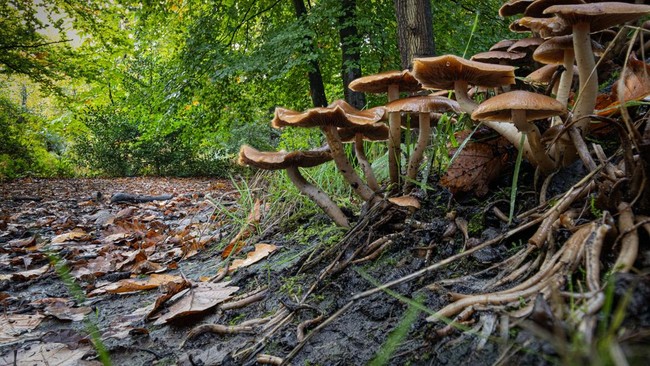
Beneath the surface, within the roots of almost all plants growing on Earth, live tiny, invisible organisms that play a massive role in human survival.
According to recent research published in a scientific journal and reported by The Guardian, arbuscular mycorrhizal fungi networks envelop almost all land on Earth and serve as a primary determinant of climate fate and human food security.
Arbuscular mycorrhizal fungi have lived in symbiosis with plants for over 450 million years. The fungi penetrate plant root cells, forming fine networks that spread deep into the soil, functioning like an extension of the roots. In exchange, plants provide carbohydrates produced through photosynthesis as an energy source for the fungi.
In this process, the fungi absorb water and nutrients such as phosphorus and nitrogen from the soil and deliver them back to the plants—helping plants grow larger, stronger, and more resistant to drought and disease.
Research reported by The Guardian sought to map the distribution of these fungi. The results show that these fungal networks are widespread across continents, ranging from tropical rainforests and grasslands to agricultural lands.
Researchers emphasise that their presence is not merely a support for plant life, but the fundamental foundation of terrestrial ecosystems. Without these underground networks, soil structure would collapse, nutrient supplies would be severed, and thousands of plant species—including human staples such as rice, maize, and wheat—would struggle to survive.
Furthermore, these microscopic organisms play a crucial role in maintaining the Earth’s climate balance. These fungal networks are capable of capturing carbon from the air and storing it in the soil in massive quantities. Research data shows that millions of tons of carbon that would otherwise accumulate in the atmosphere and exacerbate global warming are instead stored in the soil thanks to the activity of these fungi.
They function as the Earth’s largest natural carbon sinks. Unfortunately, this function is often overlooked in climate change mitigation efforts.
The research team belongs to an organisation called SPUN, a network of scientists focused on protecting the Earth’s underground fungal networks. According to their calculations, the length of fungal networks on Earth exceeds 110,000 trillion kilometres, many times the distance between the Earth and the Sun.
“In a single teaspoon of soil, mycorrhizal networks can reach 10 metres,” said Justin Stewart, one of the researchers and authors of the study.
The same study revealed the impact of human activity on fungal networks worldwide. In lands cultivated by humans, fungal networks were found to be 47.3 per cent less abundant than in wild ecosystems.
“Large-scale agriculture threatens fungal networks. The greatest impact comes from ploughing activities, which ‘uproot’ these fungal networks,” said Stewart.
This means that this web of life is now under threat. Human activities such as excessive use of chemical fertilisers, deforestation, intensive farming, and land-use changes have widely damaged these fungal populations. When these networks are destroyed, soil becomes less fertile, water retention capacity decreases, and stored carbon is released back into the atmosphere. This creates a vicious cycle that exacerbates climate change while simultaneously threatening global food security.
Source: jawawa.id (https://jawawa.id/newsitem/the-underground-organism-blanketing-earth-that-determines-human-fate-1781830230)
Originally published by CNBC Indonesia (https://www.cnbcindonesia.com/tech/20260618144606-37-743783/makhluk-bawah-tanah-ini-menyelimuti-bumi-penentu-nasib-manusia), translated from Indonesian