
The UI urban forest that asks nothing of people
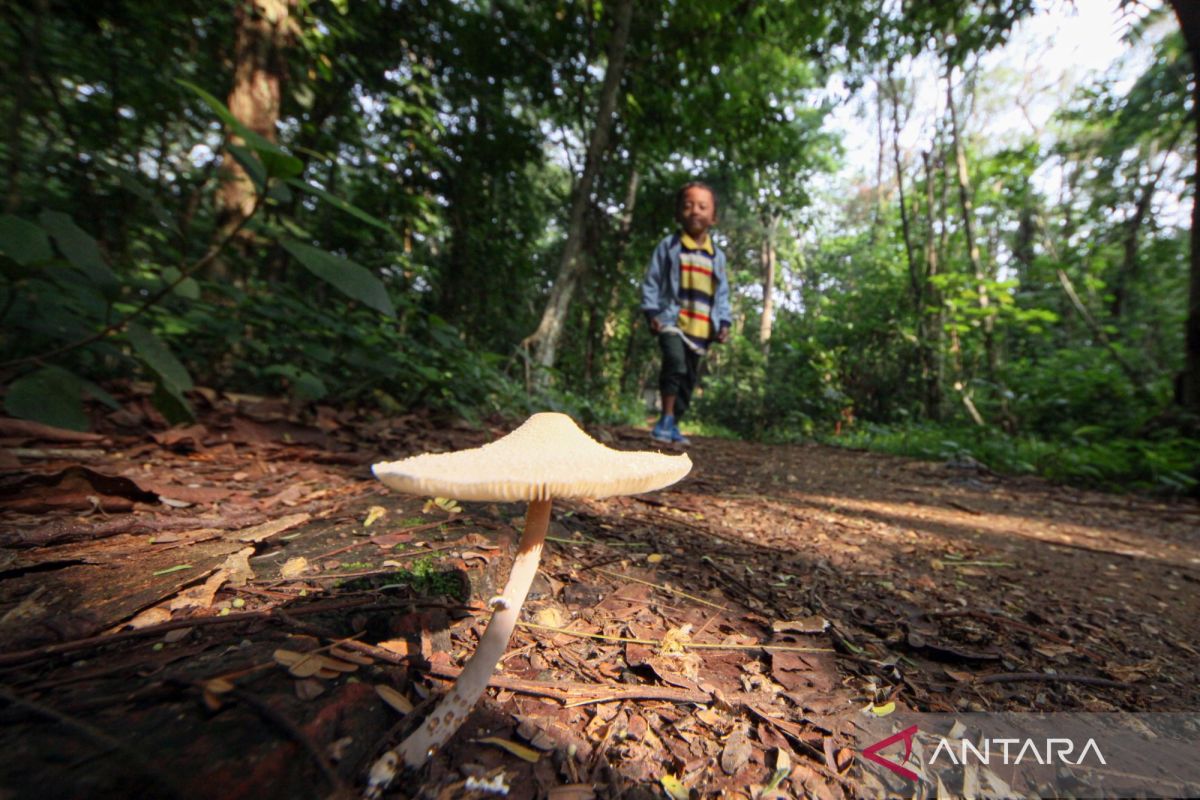
Jakarta (ANTARA) — Satellite imagery shows the University of Indonesia campus in Depok divided into two temperature zones. The satellite records the campus’s southern section, where buildings, car parks and asphalt roads are concentrated, as a patch of red. The northern section remains cool in colour. There, an urban forest covers around 90 hectares on the border between Depok and South Jakarta.
Geography students at UI who compared two satellite images, one from 2013 and another from 2025, found that the campus’s average surface temperature had risen by more than four degrees over the 12-year period. The increase coincided with vegetated land being gradually replaced by new buildings. However, the cool patch in the north did not turn red.
The forest itself originated in an idea that was ahead of its time. In 1983, when environmental issues had yet to attract much attention, UI lecturer Sambas Wirahadikusumah introduced the concept of developing an urban forest through a pilot project with the Forestry Department. Five years later, the then rector, Sujudi, designated the green land on the new campus as an urban forest. As the campus spans two administrative areas, the Governor of Jakarta also formalised the designation in 1999, before its status was upgraded to a conservation urban forest in 2004.
Four decades on, the trees have become full-time workers without pay. They store carbon, produce oxygen, retain water, cool the air and provide a habitat for living things. The trees do all this every day, and none asks the people around them for anything in return.
A storehouse and a source of breath
The forest’s first task is performed quietly: storing carbon. Every vehicle travelling along Margonda Road, Lenteng Agung or Bogor Raya Road releases a little carbon dioxide into the air. Leaves absorb some of it, convert it into sugar and store it as wood in trunks and roots. The older and larger the tree, the bigger its storehouse.
The storehouse in UI’s urban forest is among the largest. A study by IPB once measured the carbon stocks in trees across several urban forests in Jakarta and its surroundings. It found that one hectare of the UI forest stores nearly 179 tonnes of carbon—more than seven times the amount stored by Srengseng Urban Forest in West Jakarta. A 2016 study by UI postgraduate researchers calculated the total stored across all three zones at around 9,400 tonnes of carbon, equivalent to more than 34,000 tonnes of carbon dioxide no longer floating above residents’ heads.
The trees did not grow overnight. Most of the vegetation is around 30 years old, so the carbon stored today represents savings accumulated over three decades. This is a reserve that often goes unnoticed. The trees can be removed in a matter of days, but it takes a generation for them to build up the same carbon reserve again.
The second task, arising from the same process, is the release of oxygen by leaves. A 2010 study estimated that the urban forest could produce around 45 tonnes of oxygen a day. If one person needs about 840 grams of oxygen daily, the calculation on paper suggests enough for tens of thousands of people.
The researchers themselves caution that this figure represents potential, not the amount actually inhaled. Even so, that potential depends on large-trunked trees such as acacia, flamboyant, sengon and rubber trees—species that cannot be replaced by rows of ornamental potted plants.
Source: jawawa.id (https://jawawa.id/newsitem/the-ui-urban-forest-that-asks-nothing-of-people-1795837927)
Originally published by Antara (Indonesian) (https://www.antaranews.com/berita/5884423/hutan-kota-ui-yang-tidak-menagih-apapun-pada-manusia), translated from Indonesian