
The Twilight of the Military Courts Law: TNI Members Can Be Tried in Civilian Courts Following Constitutional Court Ruling
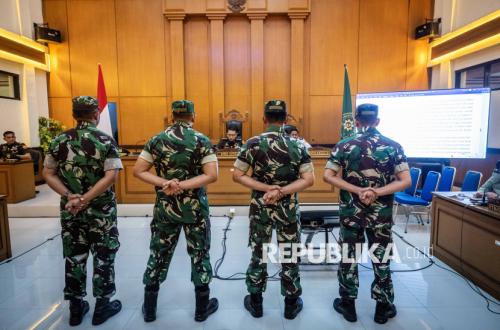
JAKARTA — Indonesian National Armed Forces (TNI) personnel who commit ordinary crimes can no longer ‘hide’ behind military courts. In ruling 26/PUU-XXIII/2025, read out on Thursday (10 October 2026), the Constitutional Court (MK) affirmed that military personnel or TNI soldiers who commit ordinary crimes must be tried in civilian courts.
The ruling also calls for amendments to Law No. 31/1997 on Military Courts. The MK has given lawmakers two years to amend the law.
If lawmakers fail to act on the ruling by revising the Military Courts Law, Law No. 31/1997 will automatically be declared invalid for being contrary to the Constitution, or the 1945 Constitution.
“If, within a maximum period of two years from the pronouncement of this ruling, the lawmakers have not made amendments, Law No. 31/1997 on Military Courts shall be contrary to the 1945 Constitution of the Republic of Indonesia and shall have no binding legal force,” the ruling said, as quoted on Tuesday (20 October 2026.
The National Commission on Human Rights (Komnas HAM) backed the ruling. Its chair, Anis Hidayah, said serious problems of injustice had arisen when TNI personnel committed ordinary crimes against civilian victims.
The Military Courts Law, she said, had effectively appeared to shield TNI personnel who committed such crimes.
“We hope that revision of the Military Courts Law will resolve the problem of impunity that has often arisen in cases involving soldiers who commit criminal offences,” Anis told Republika on Tuesday (20 October 2026).
Anis said a system that subjects soldiers accused of ordinary crimes to a separate military trial was incompatible with delivering justice to victims. “The Military Courts Law is no longer relevant to addressing this problem,” she said.
She said the government and the House of Representatives (DPR), as the law-making body, should follow through on the Constitutional Court’s ruling. Anis added that it was consistent with Komnas HAM’s recommendations to the government in cases involving ordinary crimes allegedly committed by military personnel.
“One example is the acid attack on [human rights activist] Andrie Yunus. One of our recommendations was for the President and the DPR to revise the Military Courts Law, particularly the provisions requiring TNI personnel who commit ordinary crimes to be tried in civilian courts,” Anis said.
The acid attack on Andrie Yunus was proven to have been carried out by several serving TNI intelligence personnel. Four soldiers were tried at the Jakarta Military Court: Second Sergeant Edi Sudarko, First Lieutenant Budhi Hariyanto Widhi, Captain Nandala Dwi Prasetya and First Lieutenant Sami Lakka.
At the military trial, prosecutors sought light sentences. The military judges ultimately sentenced the four attackers to between 18 months and three years in prison.
Later, the High Military Court reduced the three-year sentence imposed on Edi Sudarko to two and a half years. The sentence for First Lieutenant Budhi was also cut from two and a half years to two years.
Andrie Yunus suffered permanent injuries, and his right eye is at risk of losing its function. “This is not limited to cases like Andrie Yunus’s. In other criminal cases involving TNI personnel as suspects, Komnas HAM has consistently recommended that they be tried in civilian courts,” Anis added.
Source: jawawa.id (https://jawawa.id/newsitem/the-twilight-of-the-military-courts-law-tni-members-can-be-tried-in-civilian-courts-following-constitutional-1792500696)
Originally published by Republika (https://analisis.republika.co.id/berita/tn7gc8409/senjakala-rezim-uu-peradilan-militer-anggota-tni-bisa-diadili-di-pengadilan-umum-usai-putusan-mk), translated from Indonesian