
The Turkish Nation in History: From Steppe Nomads to Custodians of Islamic Civilisation
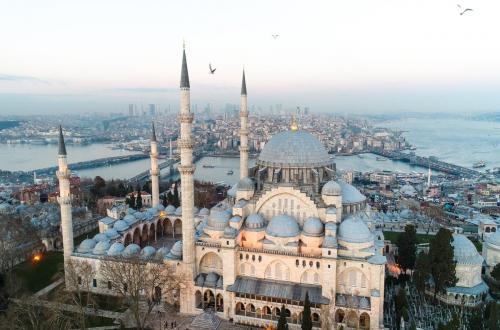
The Turkish nation has been one of the most decisive forces in Islamic history. For centuries, they have not only been conquerors but also protectors of the Sunni world, developers of scholarly traditions, and inheritors and connectors of Arab, Persian, Central Asian, and Eastern European civilisations. Emerging from the harsh steppes of Central Asia, the Turks gradually entered the world stage, building empires whose traces remain evident today.
Initially, the Turks were not part of the Islamic world. They lived as nomadic societies across the Central Asian steppes, stretching from Mongolia to Turkestan. Their lifestyle depended on mobility, pastoralism, and military prowess. Horses were central to their cultural identity; Turkish men were accustomed to riding and archery from a young age, earning them renown as the most formidable cavalry forces of the medieval era.
Before embracing Islam, Turkic tribes practised various beliefs such as Tengrism, shamanism, Buddhism, and Nestorian Christianity. However, their geographical position along Central Asian trade routes facilitated continuous interaction with major civilisations, including the rapidly expanding Islamic world under the Abbasid Caliphate.
A pivotal moment in early Turkish-Islamic relations occurred after the 751 CE Battle of Talas between the Abbasids and China’s Tang Dynasty. Although the battle did not immediately convert the Turks to Islam, it strengthened Islamic political and cultural influence in Central Asia. Trade routes flourished, social interactions intensified, and Turkic tribes gradually became acquainted with Islam.
The Islamisation of the Turks was a gradual process. Islam spread not solely through warfare but via trade, scholarly preaching, Sufi networks, and military ties with Islamic caliphates. Many young Turks were recruited into Abbasid armies due to their exceptional martial skills, deepening the connection between Turks and the Islamic world.
Among the earliest Muslim Turkish states, the Karakhanid Dynasty held significant importance. Its ruler, Sultan Satuq Bughra Khan, is often cited as one of the first Turkic leaders to formally embrace Islam in the 10th century. This event marked a turning point in Central Asian history. After the Turkic political elite converted to Islam, the religion spread widely among other Turkic tribes, giving rise to a new generation of Muslim Turks who would dominate Islamic politics for centuries.
The first major Turkish resurgence in the Islamic world was evident through the Ghaznavid Dynasty. Born from Turkish military traditions within Persian and Abbasid contexts, the dynasty was founded by Alptigin, a former Turkic general of the Samanid Dynasty who seized Ghazni in Afghanistan. However, Sultan Mahmud of Ghazni was the dynasty’s most prominent figure. Under his leadership, the Ghaznavids expanded from Khurasan to northern India.
Mahmud of Ghazni was both an aggressive military commander and a patron of knowledge. His Indian campaigns not only extended Islamic rule but also paved the way for the long-term Islamisation of the Indian subcontinent. Simultaneously, Ghazni became a hub for Persian scholarship and literature, with scholars like Al-Biruni thriving under Ghaznavid patronage. This tradition gave rise to what historians term the Turko-Persian civilisation — a fusion of Turkish military strength and Persian administrative culture.
Turkish history did not end with the Ghaznavids. From the Central Asian steppes emerged a far greater power: the Seljuk Dynasty. Originating from the Oghuz Turkic tribes, the Seljuks were initially nomadic groups moving across territories. Named after Seljuk Beg, their leader who embraced Islam and established ties with Muslim communities in Transoxiana, they rapidly built formidable military strength. Figures like Tughril Beg and Alp Arslan led the Seljuks to conquer Persia, Iraq, and vast swathes of Western Asia. In 1055, Tughril Beg entered Baghdad, ending Shia Buyid dominance. From then on, the Seljuks served as political protectors of the weakened Abbasid Caliphate.
Under Seljuk rule, the Sunni world regained political stability. The Nizamiyya madrasas established by Nizam al-Mulk symbolised the revival of Islamic scholarship. The Seljuks were not merely a military power but also architects of the Sunni renaissance.
The Seljuks’ significance was further underscored by Alp Arslan’s victory over the Byzantines at the Battle of Manzikert in 1071. This triumph opened Anatolia to large-scale Turkish migration. The former Byzantine Christian stronghold gradually transformed into a Muslim-Turkish region, setting the stage for the eventual rise of the Ottoman Empire.
Many Turkish states were culturally and genealogically interconnected. Anatolian sultanates were offshoots or successors of Seljuk traditions. As the Seljuks weakened due to internal conflicts and Mongol invasions, smaller Turkish beyliks emerged. One such beylik, led by Osman I, founded the Ottoman Dynasty. The Ottoman Empire later grew into the largest and longest-lasting Islamic empire in Turkish history, expanding from Anatolia to control the Balkans, Middle East, North Africa, and parts of Eastern Europe. The conquest of Constantin…