
The True Origin of the Title 'Haji' Is Not From Arabia: Here's the Story
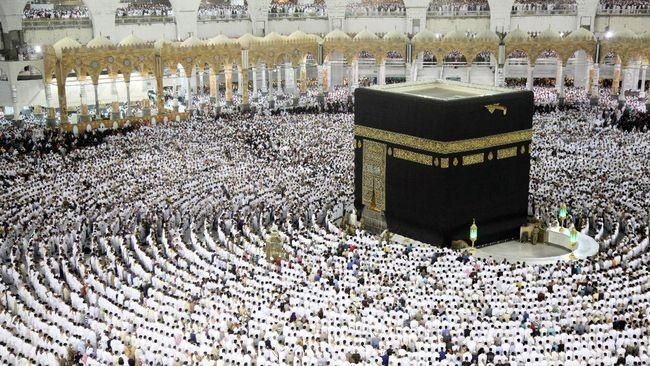
The title of Haji has long been a social identity attached to Indonesian society who have completed the fifth pillar of Islam in the Holy Land. The addition of the name Haji for men or Hajah for women is often regarded as a form of respect for an individual’s spiritual achievement.
However, who would have thought that this tradition has no basis in Islamic sharia or official rules from the Saudi Arabian Kingdom’s authorities. In fact, the use of this title is a product of history inherited from the Dutch East Indies colonial government as a tool for political control in the past.
Thus, two centuries ago, going on Hajj was not only viewed from a business, worship, or spiritual perspective. But also from a political viewpoint.
The reason was that Indonesian Hajj pilgrims often ‘caused trouble’ after returning from Mecca. In the company’s view, the pilgrims often learned new things while in the Holy Land.
So, upon returning home, they spread these new teachings that could spark the grassroots population to rebel against the Dutch East Indies government. Aqib Suminto in Politics of Islam in the Dutch East Indies (1986) mentions that this mindset first emerged during the era of Governor-General Herman Willem Daendels in the 1810s.
At that time, the initiator of the Great Post Road from Anyer to Panarukan thought that native inhabitants returning from Hajj often incited the people to rebel while travelling. As a result, Daendels required those pilgrims to obtain a Hajj passport as a marker.
This kind of thinking was also raised when Indonesia was colonised by the British through Governor-General Thomas Stanford Raffles. In his notes titled History of Java (1817), Raffles even openly ‘attacked’ those who went on Hajj.
He said that Javanese people who went on Hajj were pretentiously pious. With their piety, they could incite the people and become the spearhead of resistance among social groups.
Nevertheless, as written by Dien Madjid in Hajj in the Colonial Era (2008), the political Hajj policy was only fully implemented in 1859 through specific regulations. These regulations clearly outlined the mechanism for receiving those who had just returned from Hajj.
Through this mechanism, they would undergo a series of examinations. If they passed the exams, they were required to include the Haji title in their greeting or name. They were also obliged to wear distinctive Hajj attire, namely the ihram robe and white turban.
The background of these regulations actually stemmed from the fear and traumatic attitude of the Dutch East Indies government. Because in the 19th century, many rebellions originated from those returning from Hajj. One of the largest was the Java War, from 1825 to 1830.
Thus, it is no wonder that the government viewed it all with great vigilance. Through the inclusion of the Haji title, they could easily monitor them.
If there was a rebellion, the government would immediately arrest those with the Haji title in a certain area. This was certainly more effective and efficient than having to search for the mastermind of a rebellion.
Because, in the company’s thinking, rebellions were certainly led by Hajj pilgrims.
From here comes the origin of the use of the Haji title in Indonesia. Since those regulations, the colonial government did not loosen the tightening at all. In the 20th century, when Islamic teachings spread from Mecca to Indonesia, they still closely monitored former Hajj pilgrims.
Unfortunately, the wave of decolonisation in Indonesia after independence did not erode this political designation. As a result, the designation was passed down across generations.