
The TNI Commander Race: Inter-service Rotation or Strategic Need?
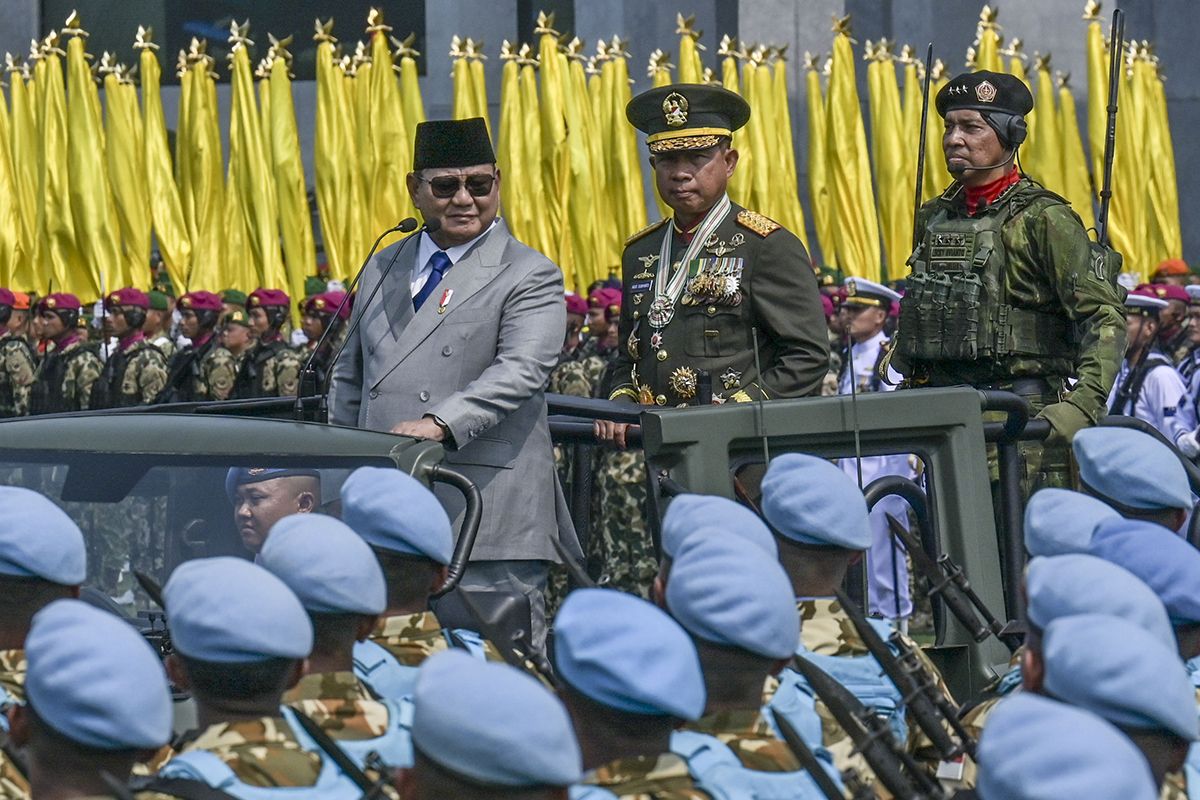
Jakarta (ANTARA) - The race to become the next TNI Commander has heated up again. Army Chief of Staff General Maruli Simanjuntak has emerged as a potential successor to General Agus Subiyanto.
Behind this political manoeuvring lies a more fundamental question: should changes in the TNI leadership follow the principle of rotation among the armed services, or be determined by the country’s strategic defence needs?
The debate is compelling given the complexity of Indonesia’s security environment. Rivalry between the United States and China, tensions in the Indo-Pacific, cyber threats and the need to secure strategic sea lanes all call for military leadership capable of integrating land, sea and air power.
Nevertheless, as of 12 October 2026, no official decision had been made on a change of TNI Commander. Deputy Speaker of the House of Representatives Sufmi Dasco Ahmad said he had not received a letter from the President concerning a replacement. The intense speculation over candidates therefore cannot be taken as confirmation that a change is imminent.
Rotation is more than a tradition
Article 13 of Law No. 34 of 2004 on the TNI, as amended by Law No. 3 of 2025, provides the legal basis for appointing the TNI Commander.
The provision embodies two important principles. First, the President has the authority to nominate a candidate for TNI Commander, but the process also requires the approval of the House of Representatives.
Second, inter-service rotation is explicitly stated as a principle in the law, while organisational interests form the basis for appointments and dismissals.
Rotation is therefore not a mechanical obligation requiring each service to take its turn in sequence regardless of circumstances. But neither should it be disregarded as though it had no significance in the governance of the military organisation.