
The Threat Behind Private Satellites and AI: Earth Surveillance Grows Ever More Sophisticated — Is Privacy at Risk?
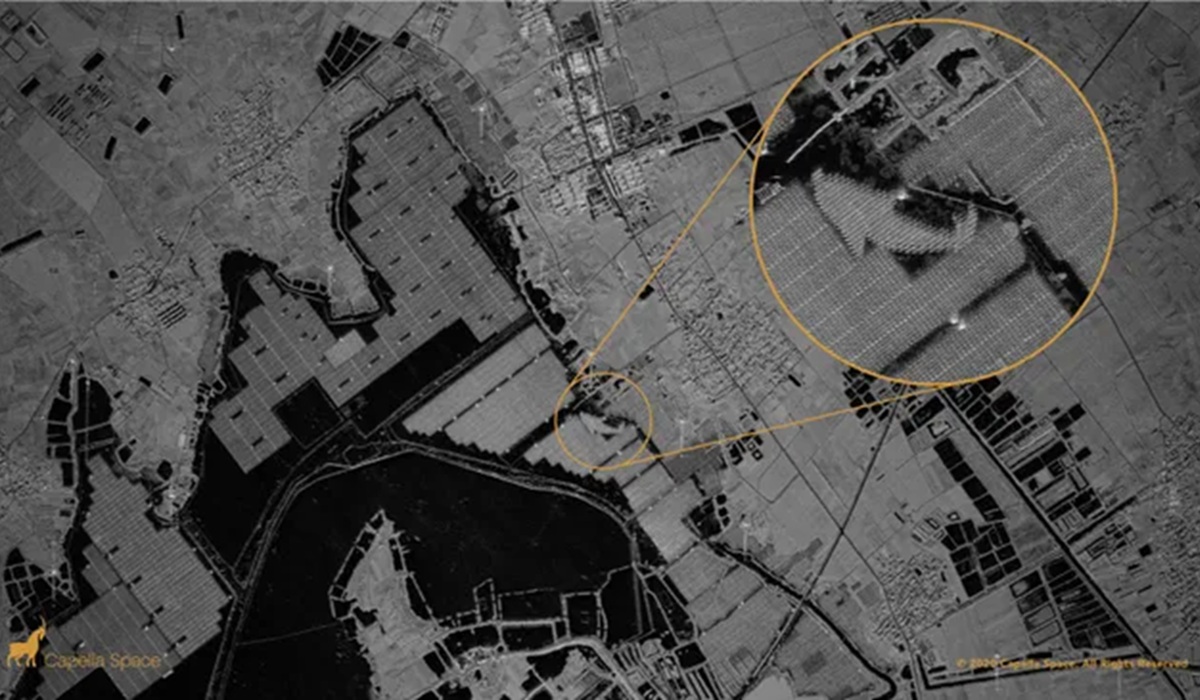
Earth observation from orbit is no longer the monopoly of governments. The presence of private companies combining sophisticated satellite networks with artificial intelligence (AI) has massively changed the way humanity monitors the planet. However, behind these conveniences, new threats have emerged relating to privacy, national security and the spread of disinformation.
A recent report from the Organisation for Economic Co-operation and Development (OECD), prepared by Marit Undseth and Claire Jolly, highlights this phenomenon. The report states that the democratisation of Earth observation data, thanks to the integration of advanced optical systems, cloud computing and AI, brings major challenges.
“Advances in optical systems, photonics, cloud computing and artificial intelligence have democratised both the quality and accessibility of satellite data. However, the convergence of these technologies also brings risks, including to national security and privacy,” the OECD report stated.
One of the main issues highlighted by the OECD is the dual-use nature of satellite data. Satellite imagery used to track illegal fishing, for example, could simultaneously be exploited to monitor the movements of a country’s military forces.
Beyond that, the OECD report emphasised the danger of image manipulation, which is increasingly rampant in the digital era.
“As part of the ever-growing trend of digital disinformation, trust in satellite data can be eroded by fake imagery, misinterpreted imagery, or imagery deliberately presented in a misleading way,” the report stated.
In response to these developments, remote sensing expert Viktor Stoyanov, Chief Operating Officer of Smart Solutions at Space42, a technology company from the United Arab Emirates, explained the challenges governments currently face. According to him, states are demanding Earth observation systems capable of delivering sovereignty alongside cost efficiency.
“Governments increasingly expect Earth observation systems to deliver sovereignty alongside cost efficiency — two objectives long considered to be at odds with each other,” said Stoyanov.
Space42 operates a Synthetic Aperture Radar (SAR) satellite constellation called Foresight, built in partnership with the Finnish company ICEYE. Stoyanov believes the biggest shift in recent years has been the transition from single large-scale platforms towards constellations of small, specialised satellites.
“SAR satellites are able to capture images through clouds, dust and darkness, which is extremely important for our region and for any customer requiring consistency unaffected by time and weather,” he explained.
With the abundance of image data generated by satellite constellations, manual analysis by humans is no longer sufficient. This is where AI plays a vital role as a data-sorting tool based on volume, speed and accuracy. For those dealing with flood disasters, maritime incidents or supply chain disruptions, real information processed rapidly by AI is far more valuable than a mere collection of image pixels.
Source: jawawa.id (https://jawawa.id/newsitem/the-threat-behind-private-satellites-and-ai-earth-surveillance-grows-ever-more-sophisticated-is-privacy-at-1788846685)
Originally published by Media Indonesia (https://mediaindonesia.com/teknologi/930869/ancaman-di-balik-satelit-swasta-dan-ai-pengawasan-bumi-makin-canggih-privasi-terancam), translated from Indonesian