
The Technological Breakthroughs Behind Huawei's New Generation Smart String Grid-Forming ESS Platform
LUTERRA, the latest Smart String Grid-Forming ESS Platform from Huawei FusionSolar, was born from a series of technological breakthroughs designed to help customers improve the performance of their energy storage systems.
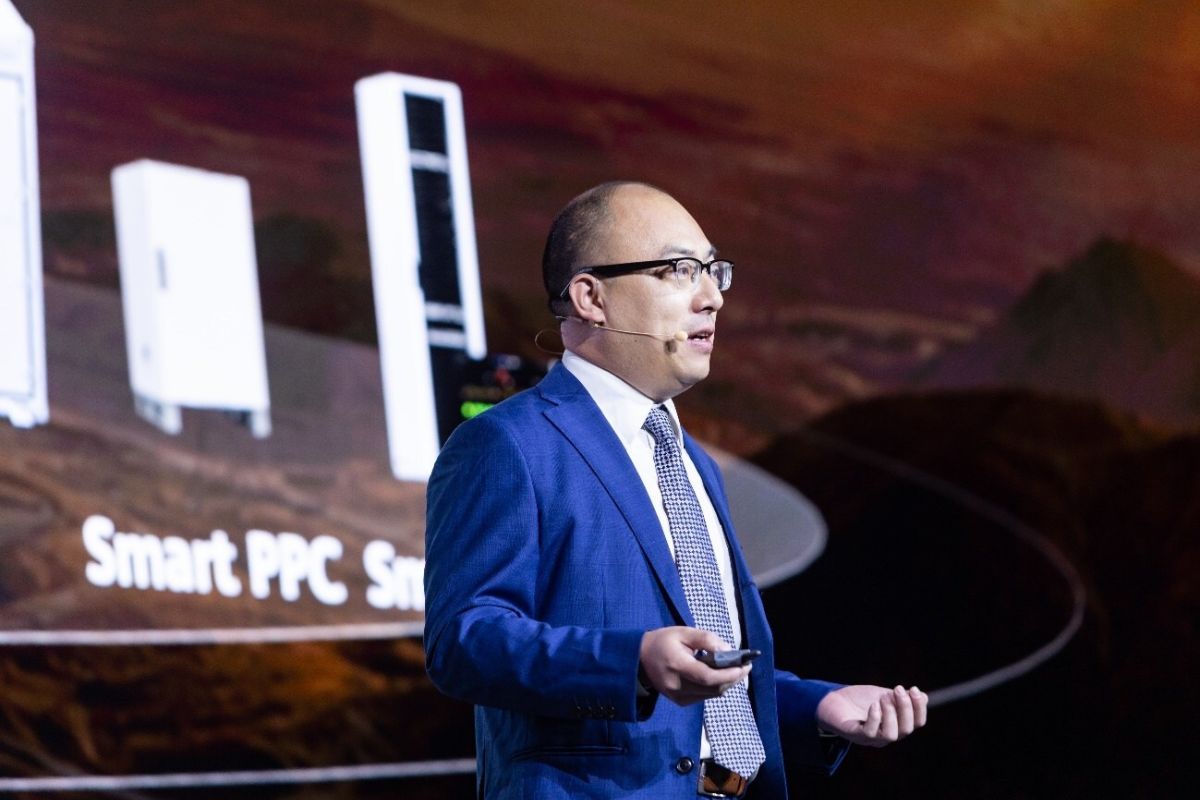
Huawei launched LUTERRA at Intersolar Europe in Germany last month. According to Steve Zheng, President of the Smart ESS Business at Huawei Digital Power, the company has delivered a battery energy storage solution that is easy to install, offers industry-leading efficiency, and supports grid-forming (GFM) applications at power plant level.
Huawei’s grid-forming technology has been proven through various field implementations, including the world’s largest 100% renewable energy-based microgrid located at The Red Sea tourist destination in Saudi Arabia. After operating stably for more than two years, the project has demonstrated that grid-forming energy resource coordination across multiple locations can be applied at gigawatt-hour scale.
Although few projects match the scale of The Red Sea — a facility comprising a 400 MW solar power plant and a 1.3 GWh Battery Energy Storage System (BESS) — Huawei’s technology remains capable of helping customers increase revenue, throughput, and more optimal integration with solar power plants.
According to Zheng, advantages such as industry-leading round-trip efficiency (RTE), high-precision state of charge (SOC) control, and cell-to-pack optimisation are achieved through a combination of disciplines, from electrochemistry and electrical engineering to electronics, thermodynamics, control technology, and predictive technology.
“Huawei comprehensively controls every aspect of the solution, enabling us to achieve 93.1% efficiency on the low-voltage PCS side at an ambient temperature of 25°C. In addition, SOC accuracy reaches 2.5% at both ends of the operational range and 3% in the plateau region,” said Zheng.
The integrated design encompasses comprehensive thermal management from cell level to battery pack, liquid cooling systems, and a high-voltage silicon carbide (SiC)-based switching architecture. This combination offers distinct advantages for Long-Duration Energy Storage (LDES) applications compared with other products available on the market.
“We continue to use the string architecture, applying an optimiser to each battery pack and a controller to each rack. This detailed and effective approach overcomes electrochemical inconsistencies, including the differences in characteristics that emerge over a battery’s life cycle,” explained Zheng.
“For the first time, our new-generation solution raises the AC voltage to 1000V AC using SiC components. This step reduces energy losses and improves system efficiency. Intelligent distributed cooling technology increases the heat dissipation area. Meanwhile, the combination of RTE, consistency, SOC accuracy, and high system availability boosts throughput by more than 10% compared with conventional solutions,” he added.
Despite the sophisticated technology involved, Huawei has designed the installation and logistics processes to remain simple. In an example 1 GWh BESS project, the LUTERRA Smart String Grid-Forming ESS Platform can cut delivery time by at least 30%, reduce balance of plant (BOP) costs by a minimum of 20%, and lower land requirements by one square metre per megawatt-hour of installed capacity compared with conventional solutions.
According to Zheng, these achievements are supported by Huawei’s patented Through-Busbar architecture. The technology enables more flexible installation, easier capacity expansion, and C-rate adjustments for charging and discharging throughout the project’s life cycle.
Grid-Forming Technology Safeguarding Inverter-Based Power System Stability
Grid-forming technology is playing an increasingly important role in maintaining power system stability in many countries, particularly as renewable energy utilisation grows.
Traditionally, the frequency and voltage of power systems have largely been formed by the rotation of thermal power plant turbines. However, as fossil fuel-based generation is replaced or outnumbered by Variable Renewable Energy (VRE) sources, new challenges emerge in maintaining system stability.
Inverters with grid-forming capability can provide similar functions, including inertia, short-circuit ratio (SCR), and black start features. For this reason, GFM technology is considered highly suitable for BESS applications. Several countries, including the United Kingdom, Australia, and China, have begun developing grid-forming-based resources.
In Europe, four German transmission system operators (TSOs) launched a long-term inertia services market earlier this year, open to GFM-based BESS assets. Meanwhile, ENTSO-E, representing transmission system operators from 36 European countries, has drawn up technical guidelines on grid-forming standards.
“Grid-forming technology is key to maintaining the stability of power grids integrating large shares of renewable energy. This technology has evolved from individual equipment level to array systems and entire power plants,” said Zheng.
Huawei defines six core grid-forming features: inertia, short-circuit level, primary frequency regulation, power oscillation damping, black start, and on/off-grid switching in virtual synchronous generator (VSG) mode.
“We believe that grid-forming technological breakthroughs at power plant level are critically important,” he continued.
In a 100 MW BESS installation, for example, there are thousands of power electronic devices that must operate simultaneously in GFM mode.
“Ensuring all these devices work in harmony to maintain grid stability, through collaboration between hardware and software, is no simple technical challenge,” said Zheng, referring to the implementation experience at The Red Sea project.
Beyond Saudi Arabia, Huawei’s technology has also been deployed in various large-scale grid-forming projects in Germany, Bulgaria, the Philippines, and China.
Huawei’s Product Roadmap Focuses on Array and System-Level Optimisation
Huawei has developed the industry’s largest grid-forming energy storage solution optimised at system level for balance of plant (BOP) requirements. According to Zheng, Huawei’s product development strategy focuses not only on increasing power and energy density in a single BESS container, but also at array level and across the entire power plant.
“A power plant’s performance is only truly optimal if the array-level solution is also optimised. A single container cannot yet be called a complete energy storage system, just as a collection of battery cells does not necessarily form a system,” he said.
“That is why we treat each array as the basic unit in solution design and planning, rather than simply chasing higher power density in a single container.”
The Smart String Grid-Forming ESS Platform adopts a dual-stage 1000Vac high-voltage platform. This grid-forming energy storage system is designed to address key operational challenges in utility-scale renewable energy projects and commercial and industrial (C&I) sector storage, particularly as power systems impose increasingly stringent grid support standards.
“From an architectural standpoint, we believe the two-stage solution offers a better level of grid security than the single-stage architecture commonly used today,” said Zheng.
He explained that under high-voltage ride-through (HVRT) conditions, incoming current can move back and forth between the grid and the PCS. When the battery’s SOC is at a low level, this condition can potentially cause battery insulation failure and even pose serious safety risks.
Meanwhile, under low-voltage ride-through (LVRT) conditions, the system requires a constant supply of active power to support rapid grid recovery. According to Zheng, these advantages are not available in single-stage architectures.