
The Tangible Impact of the Free Nutritious Meal Programme in the First Two Years of the Prabowo Era
The government, under the leadership of President Prabowo Subianto, has introduced several ambitious goals for the nation. One of these is to build a strong foundation for sustainable economic, social, and political progress through human development.
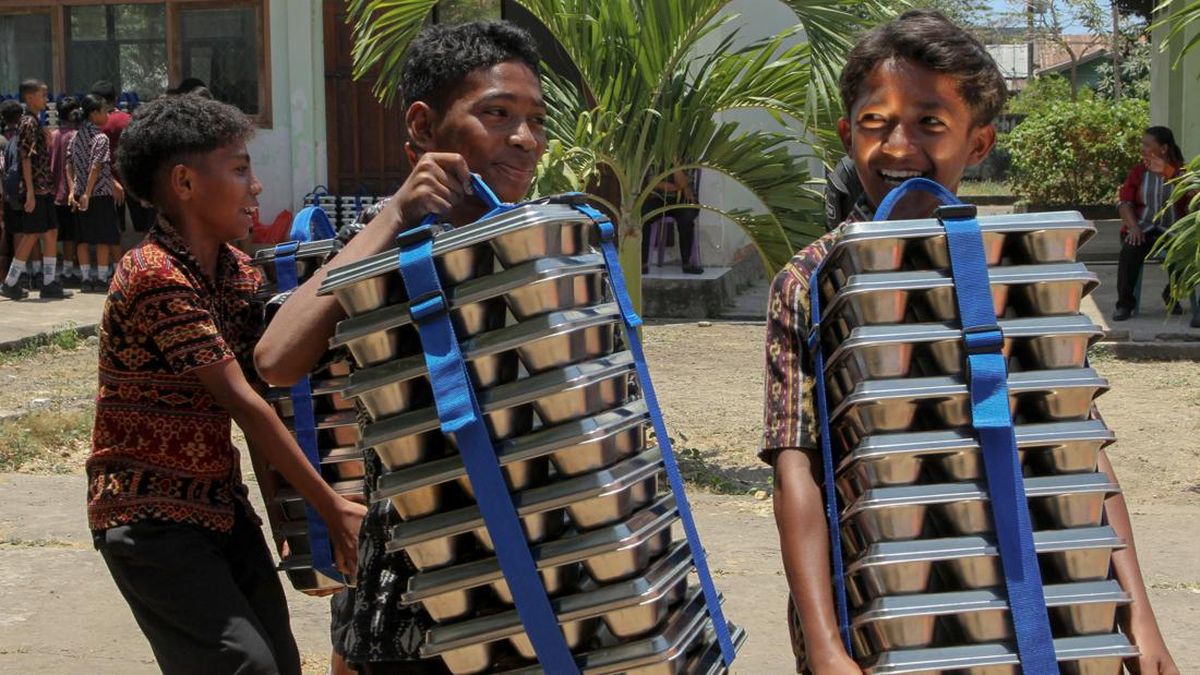
To realise this vision, the government’s strategy involves providing basic services that guarantee nutritional security. This is reflected in its flagship programme, the Free Nutritious Meal (MBG). The programme aims to meet the nutritional needs of the community by providing free nutritious meals to students, children under five, and breastfeeding mothers.
As the second anniversary of the Prabowo administration approaches in late October 202lag, and with nearly two years of MBG implementation, the government has revealed several impacts already achieved by this programme. Compared to its launch in January 2025, the number of MBG beneficiaries has increased rapidly.
As of 31 August 2026, the National Nutrition Agency (BGN) stated that the MBG programme has reached 56.99 million beneficiaries. This represents approximately 76.45 per cent of the government’s target of 74.56 million people.
Specifically regarding students reached through educational institutions, the BGN also released data on the number of schools receiving MBG services. As of 10 September 2026, approximately 340,000 out of a total of 580,000 educational units in Indonesia have received MBG services.
Beneficiaries receive these services through Nutrition Fulfilment Service Units (SPPG) distributed across Indonesia. Under the supervision of the BGN, the SPPG serves as the implementing unit or community kitchen centre responsible for everything from production to food distribution.
Recently, the BGN announced an expansion of services through the opening of 4,800 new SPPG units across 16 provinces in Eastern Indonesia. These areas include the 3T regions (underdeveloped, frontier, and outermost) and areas with high stunting prevalence. With this addition, the number of operating SPPG units has reached 27,000.
“This inauguration also marks the continuation of the kitchen activation process which previously underwent a moratorium. With the inauguration of hundreds of new units, the total number of operating SPPG kitchens across Indonesia has reached 27,022 units,” the BGN wrote via its official Instagram account.
Furthermore, the total number of MBG meals distributed since the launch has exceeded 8.3 billion portions, according to data from the Government of Indonesia’s Communication Agency (Bakom).
Impact on Beneficiaries
The regular MBG menus are claimed to have had a significant impact on the eating habits of beneficiaries. This is evidenced by research from the National Development Planning Agency (Bappenas), as presented by the former Head of Bakom, Muhammad Qodari.
Qodari noted that Bappenas research shows an increase in fruit consumption among students since receiving MBG. “When we talk about Vitamin C and fruit being good for digestion, our children used to eat very little fruit. The majority did not eat fruit; now it has risen from 26 per cent to 84 per cent,” said Qodari.
This increase indicates that school children are receiving more vitamins and fibre. Additionally, research shows an increase in animal protein consumption among student beneficiaries, rising from 65 per cent to 90 per cent.
The availability of MBG services in schools also helps students participate in learning activities while satiated. Qodari reported that the number of students attending classes on a full stomach has increased from 43 per cent to 84 per cent.
The impact of MBG in the school environment is also reflected in improved focus and enthusiasm. Sientje Martentji Ajomi, Head of SD Negeri 24 Rufei in Sorong, stated, “We see a huge change in their enthusiasm for learning. Children are more focused in class, more active in asking questions, and more cheerful throughout the day.”
This is further supported by findings from an evaluation survey of the ‘Seven Good Habits of Great Indonesian Children’ (7KAIH) framework by the Ministry of Primary and Secondary Education. The survey, involving over 1.2 million students, showed a decrease in learning disruptions due to hunger in MBG-recipient schools compared to non-recipient schools.
Meanwhile, the impact of this priority programme is also visible in the community economy, specifically in strengthening family economic resilience. A survey by the Central Bureau of Statistics (BPS) states that MBG has led to a reduction in household expenditure burdens, as families can reduce daily food spending and reallocate income to other needs.
“The MBG programme reduces household food consumption burdens. The remaining income available to families can be utilised to improve their welfare,” explained the Head of BPS, Amalia Adininggar Widyasanti.
Source: jawawa.id (https://jawawa.id/newsitem/the-tangible-impact-of-the-free-nutritious-meal-programme-in-the-first-two-years-of-the-prabowo-era-1791363555)
Originally published by CNN Indonesia (https://www.cnnindonesia.com/nasional/20261007150154-20-1412694/dampak-nyata-mbg-di-2-tahun-era-prabowo), translated from Indonesian