
The sweet fruit of SOE transformation
What was once considered mere jargon has now become a shared determination to deliver maximum returns to the nation and state.
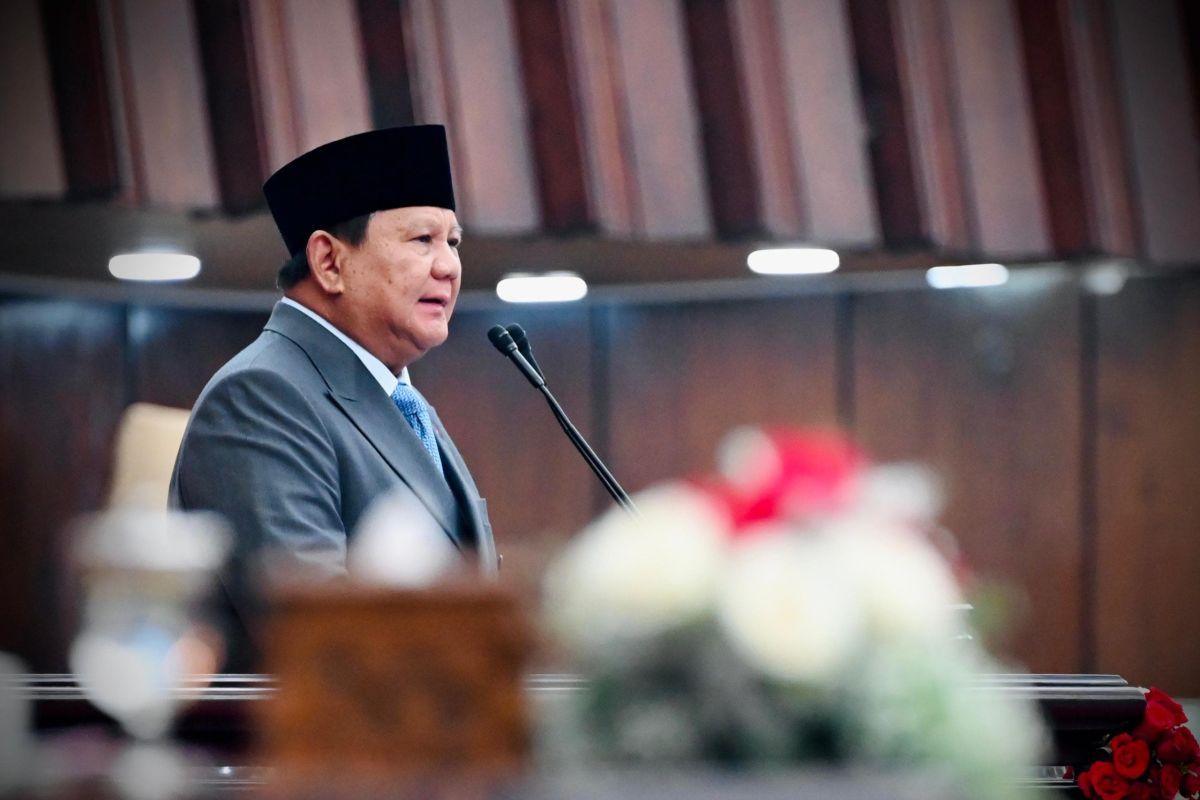
On Friday morning, 14 August 2026, I watched President Prabowo Subianto’s state address before members of the MPR, DPR, and DPD RI. One section caught my attention: the President’s appreciation for the transformation of State-Owned Enterprises (BUMN), particularly directed at the leadership of Danantara Indonesia and its entire team and network.
“I give special appreciation to the leadership of Danantara and its entire team, its entire network,” said President Prabowo.
A president’s appreciation is certainly no small matter. Moreover, the praise was accompanied by concrete reasons. The President noted that the transformation of SOEs throughout 2025–2026 had produced state financial efficiency through structural streamlining, reduced operational costs, and organisational simplification.
For me, that statement is very interesting. For years, SOEs have always been at a crossroads of perception. On one hand, SOEs are strategic state assets. On the other hand, some SOEs have been burdened with various problems, such as bloated structures, high operational costs, underproductive assets, and performance that did not match the state’s capital.
Have SOEs really changed? Let us examine the data.
Government reports show a surge in SOE performance. SOE profits, after adjustments, were recorded at around Rp186 trillion in 2024, rising to around Rp326 trillion in 2025, an increase of approximately 75.3 percent. In the same period, SOE dividends paid to the state increased from around Rp85.5 trillion in 2024 to Rp142.3 trillion in 2025, a rise of about 67 percent.
For 2026, the government projects SOE dividends could reach around Rp200 trillion without state capital injections (PMN), meaning the net contribution of SOEs to the state has the potential to grow even larger. If that target is realised, the change is certainly significant. SOEs are no longer merely required to survive, but are also required to generate profits, pay dividends, work efficiently, and optimise assets.
Is it achievable?
In the first half of 2026, several companies recorded significant profit growth. Semen Indonesia, for example, posted a net profit increase of around 408.9 percent; Pupuk Indonesia 252.8 percent; Pertamina 86 percent; Pegadaian 84.4 percent; Pelindo 60.4 percent; and PTPN around 54.4 percent. PT Timah even recorded a net profit surge of around 804.7 percent.
To be sure, these figures do not mean all SOEs are now healthy. However, there is at least one important message: the transformation engine is beginning to generate power. That power is visible in the leaps in profit, efficiency, productivity, and increasingly greater contribution to the state.
When Danantara was first established, not a few parties considered it merely a change of casing. Some were sceptical, worried, and even assessed that Danantara had the potential to become a vehicle for draining state wealth.
Such debate is natural. In a democracy, pros and cons are part of the public oversight process.
Time is the best test. Now, after more than a year in operation, Danantara is beginning to show the shape of its work. Not merely managing portfolios, but also carrying out restructuring, consolidation, efficiency, balance sheet clean-ups, and asset optimisation.
Danantara is also beginning to direct SOE capital towards activities with greater added value.