
The Strategy of Subandi, a Bantul Wayang Artisan, to Teach Children the Art of Tatah Sungging
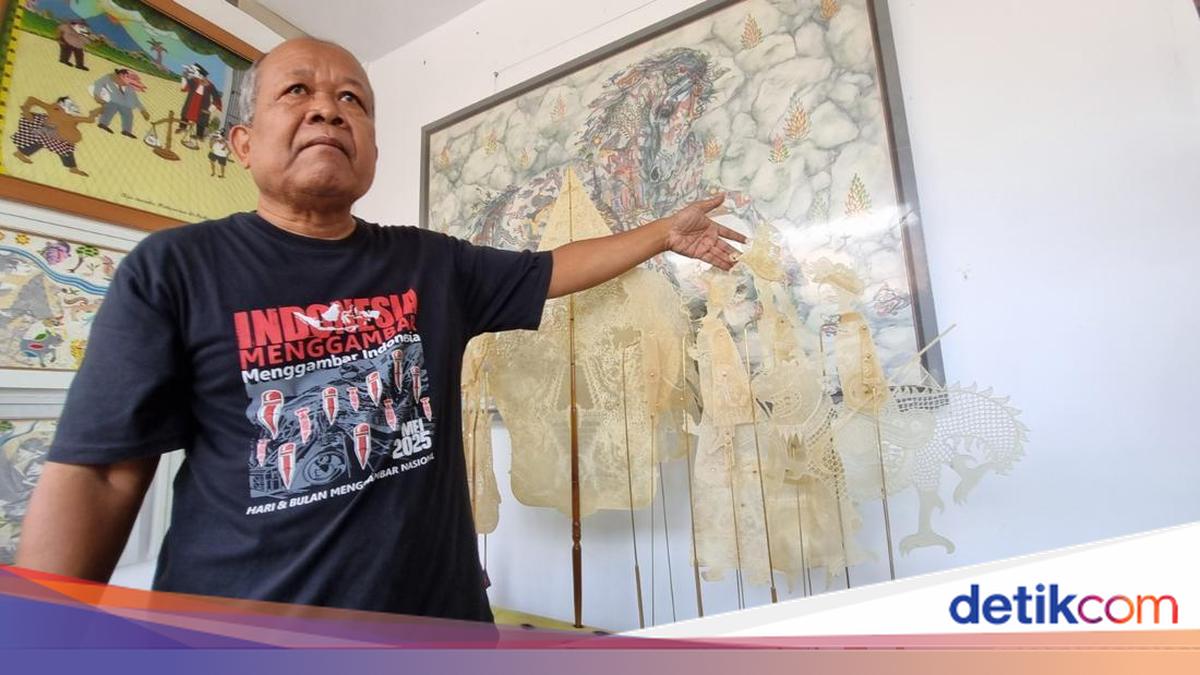
The existence of tatah sungging artisans of leather shadow puppets in Gendeng, Bangunjiwo, Kasihan, Bantul, is increasingly being eroded. This situation has prompted one veteran wayang kulit artisan to teach children the craft, even going so far as to provide them with pocket money.
Subandi Giyanto (68) has been dedicated to making wayang kulit since 1965. His passion stemmed from frequently observing his father, who was also a wayang kulit artisan. ‘I learned tatah and sungging from my father, because my father was a wayang maker. So, it can be said to be passed down through generations,’ Subandi told reporters at his residence in Gendeng, Bangunjiwo, Kasihan, Bantul, on Tuesday (14/7/2026).
Subandi typically uses buffalo hide to create the puppets. However, for the best quality, particularly for international workshops, he opts for goatskin. ‘For the leather, I use buffalo hide. But for workshops from abroad, I use goatskin, because if I give them buffalo hide, the carving will break,’ he explained. The production process takes about one week, and the selling price for his wayang currently reaches millions of rupiah. ‘A wayang cannot be sold like a painting, even though the difficulty level of making a wayang kulit is high. For example, a single character of Arjuna is Rp 1.5 million, whereas a wayang painting can cost at least Rp 7.5 million,’ he said.
Despite the pricing challenges, Subandi persists in his craft to maintain the existence of wayang kulit artisans in Gendeng. He recalled that the village was once a centre for wayang production. ‘Because Gendeng has a wayang centre, back in the 90s when I held a grand conference on puppetry in Gendeng, there were around 340 artisans. But now only about 30 people can perform tatah sungging,’ he noted. Subandi attributes the dwindling number of artisans in his village to economic factors. He remembers that in 1998, precisely during the economic crisis, many wayang kulit artisans went out of business. ‘Then the 2006 earthquake destroyed it further, and the pandemic made it even worse. That is why only a few artisans remain now,’ he said.
To foster regeneration, Subandi invites children from around his neighbourhood to learn the craft. Currently, 11 children come to his house every Saturday to learn how to carve and paint wayang. ‘To keep them motivated, I give them an incentive using my own money. So, if my wayang or paintings sell, I set aside the money to give them pocket money. I give them pocket money once a week, at least Rp 20,000 per person, plus lunch,’ he stated. Subandi does not feel that this is a loss. He has been doing this since he was a bachelor. ‘I have been like this since I was single, because I have been able to earn money since I was little. So even though I am not rich, I can earn money, and part of that money is for the preservation of tatah sungging wayang kulit,’ he said.
Meanwhile, the Head of Bangunjiwo, Parja, confirmed that Gendeng is currently experiencing a regeneration crisis among wayang kulit artisans, despite once being famous as a village of such craftsmen. ‘Now only 10 people are dedicated to tatah sungging wayang kulit in Gendeng. Yet, in the past, the majority of people in Gendeng were tatah sungging wayang artisans,’ Parja said. He also acknowledged Subandi as a prominent figure from the Gendeng hamlet who has been dedicated to the craft since childhood. Parja confirmed that Subandi continues to survive and opens opportunities for children interested in becoming wayang kulit artisans. ‘This preservation of tatah sungging wayang kulit is not only reaching children from Bangunjiwo itself, but Mr Subandi also opens this training to the general public. The hope is that our children will be interested in pursuing tatah sungging wayang and open up opportunities for the future,’ he concluded.