
The Strategic Role of the Marine and Fisheries Sector in Supporting the Free Nutritious Meal Programme
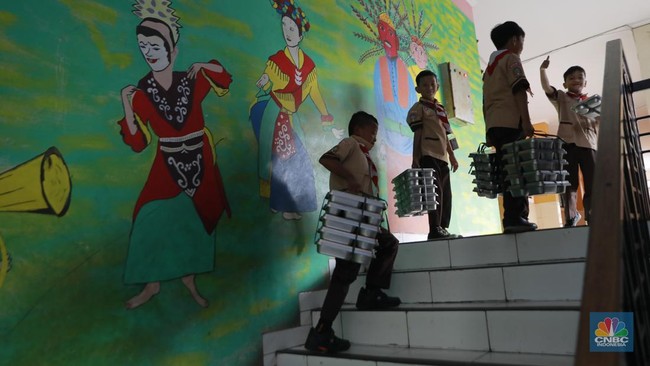
The Free Nutritious Meal (MBG) programme must be viewed as a development intervention that goes beyond a mere food aid agenda. Fundamentally, this programme is a long-term investment in shaping the quality of Indonesia’s human resources by improving nutritional intake during the most critical life stages: school age, toddlers, and pregnant or breastfeeding mothers.
Consequently, the success of the MBG programme is not solely determined by the size of the budget or the breadth of its beneficiaries, but by the state’s ability to build an efficient, sustainable, and domestically-based nutritious food supply system. In this context, the marine and fisheries sector should be positioned as one of the primary pillars of this programme.
Institutionally, the policy foundation for the MBG is already clear. Presidential Regulation Number 83 of 2024 affirms the role of the National Nutrition Agency in improving the nutritional intake and knowledge of target groups, while Presidential Regulation Number 147 of 2024 establishes cross-ministerial and inter-agency coordination in the food sector as a vital prerequisite for effective implementation.
This indicates that the MBG was designed from the outset not as a standalone sectoral programme, but as part of national food and nutrition governance that requires the integration of production, distribution, consumption, and institutional frameworks. Thus, the fisheries sector cannot merely be seen as a food supplier, but as a component of the national nutrition policy architecture.
Fish holds a highly strategic advantage in this scheme. From a food economics perspective, fish is one of the most rational protein sources because it combines three aspects: high nutritional content, vast resource availability, and a relatively lower protein price per gram compared to many other protein sources. Data shows that the average price per gram of protein in freshwater fish is approximately Rp110 and in marine fish is Rp114, which is lower than tempeh (Rp130), eggs (Rp140), broiler chicken (Rp150), tofu (Rp170), fresh milk (Rp230), prawns (Rp250), and beef (Rp350).
This fact confirms that both freshwater and marine fish offer highly competitive protein prices compared to other popular sources. Therefore, making fish a key component of the MBG is not just a nutritional choice, but an economical, efficient, and measurable policy.
Regarding demand, while the scale of the MBG challenge is significant, it is not impossible to meet. With the number of primary, junior, and senior high school students reaching approximately 39.33 million in 2024 and an average protein requirement of 57.50 grams per day, the protein needs for students alone reach 2,261.50 tonnes per day, or about 825,447.50 tonnes per year. This requirement represents only about 9.60 per cent of the allowable catch in fisheries management, particularly in capture fisheries. This figure conveys an important message: Indonesia’s primary issue is not a lack of fish resources, but rather the sub-optimal capacity of regions to transform fishery potential into a consistent, safe, and evenly distributed supply of nutritious food.
Regional readiness is a decisive factor. Although Indonesia is the world’s third-largest fishery producer, national production advantages do not automatically translate to local readiness. Serious issues exist regarding regional capacity disparities, limited port and landing infrastructure, uneven cold chain facilities, weak primary processing, and expensive, inefficient distribution.
As a result, regions rich in fish resources may not be able to serve as effective suppliers for the MBG, while consuming regions may struggle to obtain fish in the necessary quantity, quality, and price. In other words, the true challenge lies in system transformation, not just increasing production.
Therefore, policy approaches to support the MBG must be region-based and cannot be uniform. The types of fish used should be tailored to local production characteristics, nutritional content, consumption preferences, shelf life, and regional cost structures. Coastal areas can rely on fresh marine fish, sea aquaculture, or processed fish, while non-coastal areas can strengthen freshwater aquaculture as a protein source closer to demand centres. Simultaneously, the government needs to review regulations to make them more attractive to businesses, strengthen port and logistics services, and build a distribution ecosystem that reliably connects production centres with MBG needs.
Ultimately, the MBG must be understood as a momentum to reorganise the relationship between nutrition, food, and regional economies. If managed carefully, this programme will not only improve public nutritional consumption but can also act as a lever for fishery production, the strengthening of local businesses, job creation, and the deepening of the national food industry. From this perspective, fish is not merely an additional menu item in the MBG, but a strategic instrument to ensure that the national nutrition agenda grows alongside the strengthening of regional capacity and Indonesia’s food sovereignty.
Source: jawawa.id (https://jawawa.id/newsitem/the-strategic-role-of-the-marine-and-fisheries-sector-in-supporting-the-free-nutritious-meal-programme-1780890304)
Originally published by CNBC Indonesia (https://www.cnbcindonesia.com/opini/20260519155731-14-736005/peran-strategis-sektor-kelautan-dan-perikanan-dalam-menopang-mbg), translated from Indonesian