
The Story of Xi Jinping: How He Lost Everything Before Becoming China's Leader
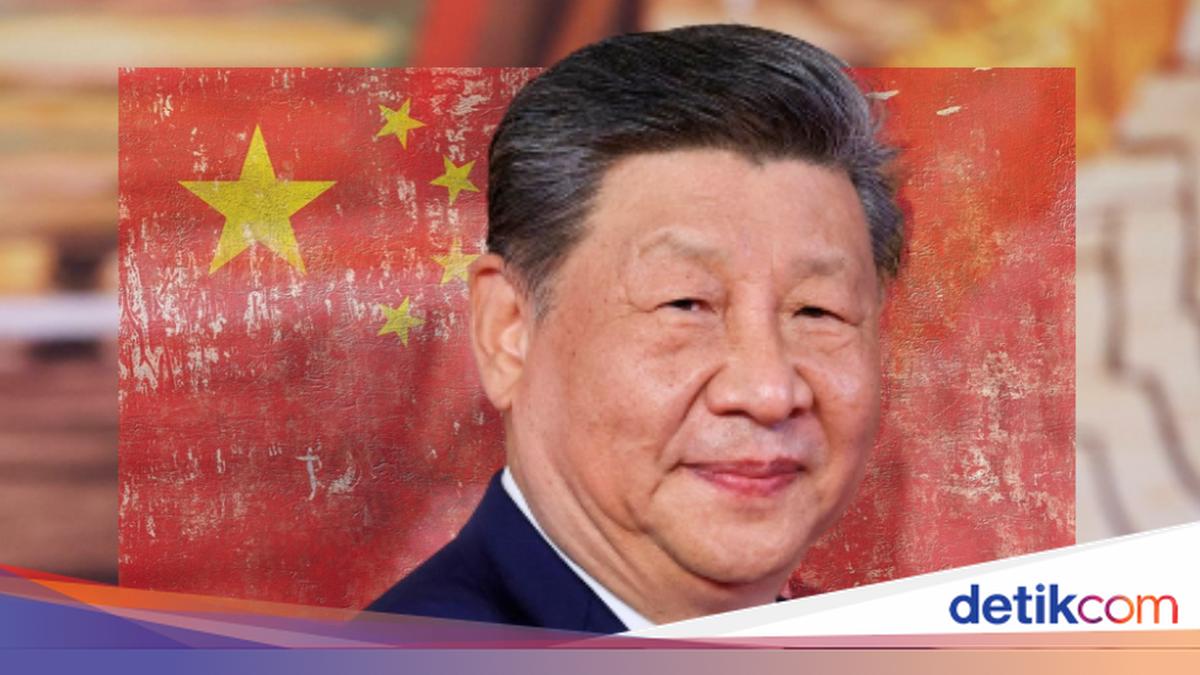
Chinese President Xi Jinping will undertake a state visit to the US capital, Washington DC, on Wednesday (23/09) for the first time in 11 years. Referring to his background, Xi established relations with the US long before becoming China’s most powerful leader in recent generations.
Four decades ago, Xi was a local official from northern China who undertook a study tour to the US Midwest. Xi spent several days in Iowa studying agriculture, visiting farms, and staying with a local family in a suburban home. Chinese state media published the visit, showcasing Xi’s friendship with Terry Branstad, who was then the Governor of Iowa. Branstad was later appointed US Ambassador to China under the Donald Trump presidency, an event that highlighted Xi’s personal ties to the US.
Currently, US-China relations are vastly different, characterised by reciprocal tariff competition, technological controls, and military rivalry. The 73-year-old Xi is no longer a low-ranking official. During his nearly 14 years as China’s leader, he has transformed the Communist Party of China and the nation’s position on the world stage.
The ‘Princeling’ who lost everything
Xi’s story began with a life of luxury. Born in Beijing in 1953, he is the sixth child of Xi Zhongxun, a communist revolutionary involved in the founding of the People’s Republic of China. Xi’s father eventually became a senior party leader and vice premier.
However, Xi’s family faced persecution during the Cultural Revolution from 1966 to 1976, commanded by China’s leader at the time, Mao Zedong. As a child, Xi attended several prestigious schools, enjoying privileges unavailable to most families. Then, politics turned against his family. In the early 1960s, Xi’s father was accused of being part of an ‘anti-party’ group and was exiled to the countryside to work in a factory; his father was also purged from the party.
As the son of someone deemed a ‘counter-revolutionary’, a teenage Xi was forced to be sent to government re-education centres. Responding to Mao Zedong’s call to go to the villages and learn from the peasantry, the 15-year-old Xi headed to the countryside alongside millions of other urban students. Describing his journey in a 2004 interview, Xi said, “Everyone on the train was crying. I was the only one smiling… I would have cried if I hadn’t left. If I had stayed, I wouldn’t even know if I would still be alive.”
Xi arrived in the remote village of Liangjiahe on the hillsides of Shaanxi Province. There, he lived for seven years in a ‘yaodong’, a cave dwelling carved into the hillside. Xi farmed, carried manure, and dug ditches. “Pickled vegetables became my favourite food,” he said of his time there. “Even to this day, I remember it fondly.”
Xi noted that he was shocked by the workload and initially struggled with hunger and lice. However, he claimed to have found relief in a smoking break before lunch.
Ascent to power
Xi left the countryside at age 22 to study chemical engineering at Tsinghua University, one of China’s top academic institutions. After graduating, he worked as a local official far from Beijing, in Fujian and Zhejiang—coastal provinces that became some of China’s wealthiest during the economic opening in the 1980s.
His father’s rehabilitation after Mao’s death helped Xi secure positions within the central government and the military. This also provided him the opportunity to build connections within the party, many of whom later became part of the leadership circle he relies on today.
Xi married his first wife, Ke Lingling, the daughter of a former Chinese ambassador to the UK, in 1979. They divorced three years later. A friend introduced Xi to his second and current wife, Peng Liyuan, who was then a singer at a military institution. Peng Liyuan frequently accompanies the President on overseas visits. For many Chinese citizens in the 1980s and 1990s, Peng was more widely known than Xi.
Peng often accompanies Xi on international trips, marking a departure from the traditional image of a Chinese First Lady, which tended to be more modest. Their daughter and only child, Xi Mingze, was born in 1992. Little is known about her, other than that she studied at Harvard University in the US.
In 2007, after a brief tenure as the top leader in Shanghai, Xi joined the Politburo Standing Committee, China’s highest decision-making body. Five years later, Xi succeeded Hu Jintao as the leader of the Communist Party. As China’s leader, Xi has transformed the economic and political system in ways many did not expect.
The China built by Xi
In his 14 years of governance, China has grown increasingly confident. Abroad, Xi has expanded China’s global footprint through projects such as the Belt and Road Initiative, positioning Beijing as a champion of the Global South. At the same time, China’s relationship with many major democratic nations has become more strained, involving disputes over sovereignty in the South China Sea, increasing pressure around Taiwan, and intensifying competition with the US.
However, Xi’s administration has also been marked by greater political control within China. Under Xi, China has placed a much stronger emphasis on security and political stability. He has implemented controversial policies in Xinjiang, Tibet, and…
Source: jawawa.id (https://jawawa.id/newsitem/the-story-of-xi-jinping-how-he-lost-everything-before-becoming-chinas-leader-1790146843)
Originally published by detikcom (https://news.detik.com/bbc-world/d-8675422/sosok-xi-jinping-yang-kehilangan-segalanya-sebelum-jadi-pemimpin-china), translated from Indonesian