
The Story of Wayan Dunung, Klungkung’s Last Dokar Driver
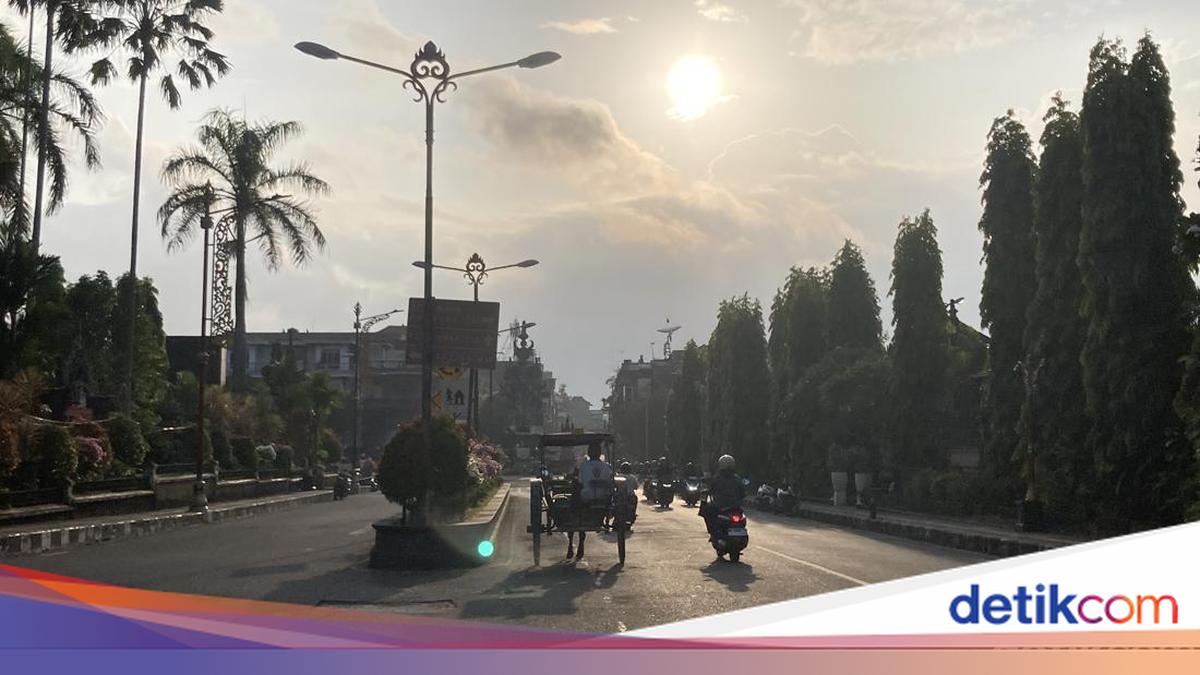
On Sunday morning, the area around Semarapura Market in Klungkung Regency, Bali, seemed to bring the past back to life. Amid the bustle of the market and the passing traffic of motor vehicles and app-based motorcycle taxis, a simple dokar stood quietly, waiting for passengers.
Behind the reins of the carriage, which is said to date back to the 1940s, sat 79-year-old Wayan Dunung. A resident of Semarapura Klod Village, he has spent more than half his life working as a driver.
Since 1979, Dunung, known locally as Pak Dunung and recognisable by his red hat, has never missed a day earning a living with his horse-drawn carriage.
With wooden wheels rimmed in rubber and a classic-style body bearing the yellow number plate DP 9.0, the carriage immediately brings to mind a line from the legendary song: “On Sunday I went to town with my father, riding a special horse-drawn carriage, sitting up front…”
The old-fashioned atmosphere came further to life as several young children happily climbed aboard, experiencing a classic ride that has become increasingly rare in towns and cities.
“I started driving in ’79. It’s 2026 now, so that’s decades,” Dunung said with a warm smile to detikBali on Sunday (15 November 2026).
Today, Dunung is not merely looking for passengers; he is also a living witness and the last guardian of traditional transport in Bumi Serombotan. He said that only he and one other driver, his younger sibling, still operate dokar in Klungkung.
“There are just the two of us left. Only me and my younger sibling. There’s almost no one else now,” he said quietly.
The dokar’s romantic associations with the past contrast with the need to keep food on the table. Dunung said he no longer has regular customers.
“It’s unpredictable. I leave every day at half past six and work until 10. The number of passengers varies. Sometimes it’s one; at most, five,” he explained.
With passenger numbers so low, his daily earnings are modest, ranging from Rp25,000 to Rp100,000.
The heyday of the 1970s
Dunung’s thoughts drifted back to the dokar’s golden age in the late 1970s and 1980s. At the time, public transport and motorbikes did not reach southern Klungkung. Dokar ruled the roads and were the main means for residents to travel and carry goods to Gelgel, Tangkas and Jumpai.
Back then, a journey of six to seven kilometres carrying a heavy load was an everyday occurrence, and the fare was Rp25. Today, a one-way trip costs between Rp10,000 and Rp25,000, depending on the distance.
The lack of passengers has also changed how Dunung cares for his horse. The animal pulling his carriage has been with him for nearly 13 years, following several other horses since he began driving a dokar.
In the past, his horses were regularly fed eggs and bathed in warm water. Now, with fewer passengers to carry, the horse is fed only grass and bran three times a day.
“In the old days, they really had to be looked after properly. They ate eggs and were bathed in warm water because they had to pull the carriage every day, from morning until night,” he concluded.
Loyal passengers
Despite the dokar’s decline, a handful of residents still rely on this traditional mode of transport. One middle-aged woman passenger, who did not wish to be named, said she chose the dokar because it can sometimes be difficult to find an app-based motorcycle taxi, particularly when she is carrying a large amount of shopping.
As well as carrying considerably more goods, the fare is almost the same as that of a typical motorcycle taxi.
“I’m used to taking the dokar. It may be slow, but it feels safer,” she said.
At 79, Wayan Dunung continues to persevere, carrying the last traces of an earlier era along Klungkung’s streets in his horse-drawn carriage.
Source: jawawa.id (https://jawawa.id/newsitem/the-story-of-wayan-dunung-klungkungs-last-dokar-driver-1794714632)
Originally published by detikBali (https://www.detik.com/bali/budaya/d-8753595/kisah-wayan-dunung-kusir-dokar-terakhir-di-klungkung), translated from Indonesian