
The Story of Uthman bin Affan's Envoy to China Who Stopped Over in Central Tapanuli
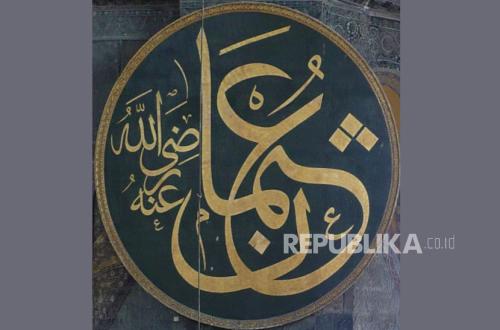
Commercial relations between Arabia (West Asia), India, China, and the Indonesian archipelago had long been established from before and after the arrival of Islam. Mansur Suryanegara in Api Sejarah reveals that although the Prophet Muhammad had passed away, trade relations continued between the Rashidun Caliphs and non-Muslim countries outside the Arabian Peninsula, including the Indonesian archipelago. This is recorded during the era of the third caliph, Uthman bin Affan, who sent trade envoys to China in 24-36 AH/644-656 CE.
The opportunity of the trade envoy’s visit to China was utilised to establish commercial contacts with entrepreneurs in the archipelago. Suryanegara quotes Sheikh Syamsuddin Abu Ubaidillah Muhammad bin Thalib ad-Dimasyqi, known as Sheikh Ar-Rabwah, in his book Nukhbat ad-Dahr. According to him, Muslim entrepreneurs entered the islands of the archipelago during the time of Caliph Uthman bin Affan.
It is explained that the Islamic Caliphs, according to Chinese history, sent 32 envoys to China. Given that the Rashidun Caliphate lasted 29 years (11-41 AH/632-661 CE), it is unlikely that trade relations involving those 32 envoys occurred only during the time of the third caliph.
All 32 trade envoys sent by the caliphs stopped over in Indonesia. This is because the only easy route to reach southern China was through the Indonesian archipelago. Citing another source, J.C. van Leur in Indonesian Trade and Society, based on Chinese sources from the Tang Dynasty, states that in 674 CE on the west coast of Sumatra there was already a settlement of Arab Muslims residing there.
Thomas W. Arnold in The Preaching of Islam also writes, from the same Tang Dynasty source, of Arab entrepreneurs who settled on the west coast of Sumatra.
Chinese records from the Tang Dynasty (618-907 CE), although originating from China, do not state that the first bearers of Islamic teachings to enter the Indonesian archipelago were Chinese entrepreneurs. Rather, they record that in the 7th century CE it was Arab entrepreneurs, not Gujaratis and not Indians.
Based on information from Drs Ibrahim Buchari, the year inscribed on the gravestone of a scholar, Sheikh Mukaiddin in Barus, Central Tapanuli, reads 47 AH or 670 CE. It can therefore be confirmed that Islam entered the archipelago in the 7th century CE, or in the 1st century of the Islamic calendar.