
The Story of US President's Concern Over Indonesia's Economic Condition and His Advice
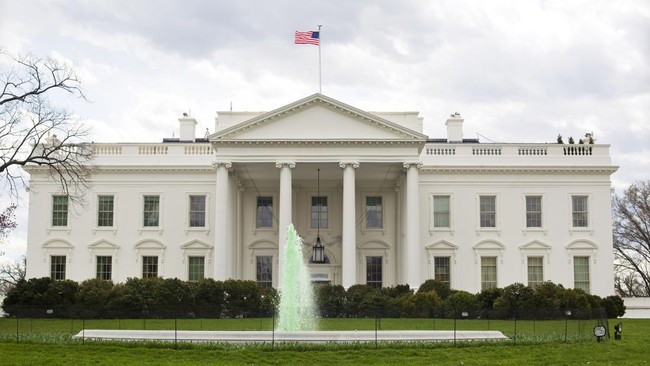
The weakening of the rupiah against the US dollar once caused US President Bill Clinton to worry about Indonesia’s economic condition. This concern was conveyed directly by President Clinton to Indonesian President Soeharto via a telephone call in February 1998.
At that time, Indonesia was facing a difficult situation. According to Jan Luiten van Zanden in ‘Indonesian Economy 1800-2010’ (2012), the rupiah exchange rate plummeted drastically from a stable range of around Rp2,000 per US dollar to approximately Rp10,000-12,000 per US dollar. This was caused by the volatility of the Thai Baht in mid-199, which subsequently spread to various Asian countries, including Indonesia.
This condition caused chaos in the banking sector and led to soaring prices of basic necessities. Amidst this situation, Clinton contacted Soeharto. The conversation between the two only became public knowledge after US presidential secret documents were declassified in 2018.
In the conversation, Clinton admitted to closely following developments in Indonesia and expressed concern regarding the country’s financial situation. “Since we spoke a few weeks ago, I have been closely monitoring developments in Indonesia. I wanted to stay in touch and am calling now because I am concerned about the financial situation there,” Clinton stated.
In addition to expressing concern, Clinton also highlighted the Indonesian government’s plan to implement a currency board. This system is a policy that pegs the rupiah exchange rate to the US dollar at a specific level. According to Clinton, such a move could actually worsen the situation. He stated that he had discussed it with the IMF and G-7 nations. Based on those consultations, Clinton assessed that implementing a currency board had the potential to trigger market panic and drain Indonesia’s foreign exchange reserves.
“This could trigger panic that would heavily drain Indonesia’s foreign exchange reserves and make it harder for the IMF and the international community to provide support,” Clinton said.
For that reason, Clinton requested that Indonesia continue to implement the IMF economic recovery programme. Previously, according to economist Boediono in ‘Indonesian Economy through History’ (2016), Indonesia had signed an IMF bailout package in late October 1997. Shortly thereafter, on 15 January 1998, Indonesia received another economic assistance package worth US$43 billion.
In response, Soeharto explained that the Indonesian government had actually been following various IMF demands. These included revising the state budget, banking reforms and mergers, as well as trade liberalisation. However, he noted that the economic condition was actually worsening.
“Many companies have ceased operations, causing layoffs, unemployment, and riots. The government has also repeatedly intervened and has used US$10 billion from foreign exchange reserves to support the rupiah,” Soeharto stated.
As a result, the government briefly considered implementing a currency board as a way out. However, the plan was ultimately cancelled.
“Thank you for your commitment. We must make a decision quickly because the people are demanding that their president does something to improve the situation and save the country,” Soeharto said.
Ultimately, Indonesia continued with the IMF programme and did not proceed with the currency board. However, the crisis did not subside. The economic situation even evolved into a political crisis that led to Soeharto’s fall from the presidency on 21 May 1998.
In later years, the IMF policies themselves have faced significant criticism for being seen as exacerbating Indonesia’s economic condition at the time. “The IMF’s demand for tighter fiscal and monetary policies, while parts of the budget were balanced and the economy was already experiencing contraction, was clearly a mistake,” wrote Jan Luiten van Zanden in ‘Indonesian Economy 1800-2010’ (2012).
Source: jawawa.id (https://jawawa.id/newsitem/the-story-of-us-presidents-concern-over-indonesias-economic-condition-and-his-advice-1780920538)
Originally published by CNBC Indonesia (https://www.cnbcindonesia.com/entrepreneur/20260513103203-25-734628/kisah-presiden-as-khawatir-kondisi-ekonomi-ri-minta-lakukan-ini), translated from Indonesian