
The Story of the Muslim Community’s Supreme Leader’s Son Being Denied Preferential Treatment
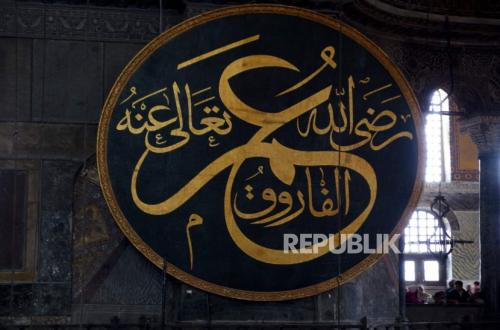
JAKARTA — The child of a country’s highest-ranking official should not receive preferential treatment simply because of their parent’s position. Caliph Umar ibn al-Khattab demonstrated this principle when he noticed that his son Abdullah’s camel had grown fatter than the livestock belonging to other residents.
Umar feared that this had happened because officials were giving special attention to the camel owned by the caliph’s son. He took firm action to prevent his position from being misused to benefit his family.
It is said that Umar regularly carried out inspections, including surprise visits to places where economic activity took place, such as markets and other trading centres. On this occasion, he went to inspect a pasture where residents of Medina kept their livestock, according to the book Nyala Obor Integritas: Kisah Ulama Melawan Korupsi, published by Indonesia’s Ministry of Religious Affairs.
During the inspection, Umar noticed a fat camel that looked different from the others. Finding this unusual, he asked the residents, “Who owns this (fat) camel?”
They replied, “It belongs to your son, Abdullah ibn Umar.”
Umar was surprised to learn that the camel belonged to his own son.
“Very good, very good indeed, son of the Commander of the Faithful,” Umar said, holding back his anger.
He then sent someone to summon Abdullah.
Abdullah arrived in haste. When he stood before his father, Umar stroked the end of his beard and asked him, “Whose camel is this, Abdullah?”
Abdullah replied, “I bought this camel with my own money, Commander of the Faithful. It was very thin, so I grazed it in the pasture. After some time, it became fat. I am trading it to make a profit, as other people generally do.”
Umar rejected his son’s explanation in a stern voice: “And when people saw your camel, they said, ‘Let the Commander of the Faithful’s son’s camel graze. Look after it and give it enough water.’ That is why your camel has grown fat and your profit has multiplied, son of the Commander of the Faithful.”
Umar continued: “Abdullah ibn Umar, take back the principal you used to buy this camel, then give all the profit to the Baitul Maal [public treasury].”
Umar’s instruction meant that the camel should be sold and the proceeds donated to the Baitul Maal, while his son could reclaim only the cost of buying it.
Abdullah obeyed his father without protest. He was not angry, as he understood his father’s deep sense of piety and his caution in avoiding doubtful matters, let alone anything forbidden.
Umar was concerned that his son’s camel had prospered because pasture officials had given it extra attention because it belonged to the Commander of the Faithful’s son, while ordinary residents’ camels remained of normal size.
Umar did not want his son to receive special treatment because of his position. In Umar’s view, using public office for private gain was an act of injustice: it involved an abuse of power to enrich oneself and one’s family, and therefore fell under ghulul (corruption).
Umar’s action is presented as a way of mitigating conflicts of interest. Public officials are expected not only to comply with the law, but also to protect public perceptions, preventing social resentment that could undermine people’s trust in the integrity of institutions.
Source: jawawa.id (https://jawawa.id/newsitem/the-story-of-the-muslim-communitys-supreme-leaders-son-being-denied-preferential-treatment-1794408768)
Originally published by Republika (https://khazanah.republika.co.id/berita/toccn9430/kisah-anak-pemimpin-tertinggi-umat-islam-dilarang-dapat-perlakuan-istimewa), translated from Indonesian