
The Story of the Collapse of the Salim Business Empire After Three Decades of Glory
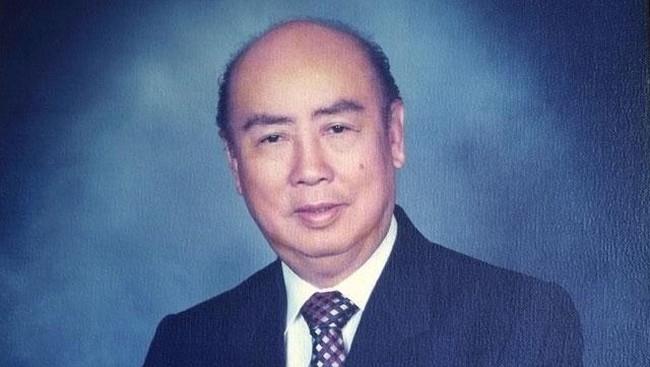
The name Sudono Salim, also known as Liem Sioe Liong, was once a symbol of the greatest business power in Indonesia. His long journey in building a business empire established Salim as one of the most influential conglomerates, particularly due to his closeness to President Soeharto.
Salim’s relationship with Soeharto had been established long before Soeharto became president. During the early years of Indonesia’s formation, Salim ran a clove import business and supplied logistics for the military. This business network eventually brought him together with Soeharto, who was then a colonel.
The meeting between the two was facilitated by Sulardi, a cousin of Soeharto, who acted as an intermediary. Salim subsequently became one of the logistics suppliers for the troops led by Colonel Soehram during the War of Independence between 1945 and 1949.
“After Soeharto gained power in Indonesia in the mid-1960s and became president, he was supported by a group of business cronies, the largest and strongest of which was Liem Sioe Liong,” wrote Richard Borsuk and Nancy Chng in Liem Sioe Liong and the Salim Group (2016).
The two were involved in a mutually beneficial relationship for three decades. Soeharto protected Liem and ensured his businesses ran smoothly. In return, through the Salim Group empire, Liem channelled funds to Soeharto, his family, and other cronies.
As a result, both parties prospered in their respective spheres. Salim successfully became one of the richest people in Indonesia, while Soehonto successfully maintained power in the country. However, their glory collapsed suddenly within just a few days in May 1998.
Salim successfully built three business empires across three sectors: banking (Bank Central Asia, BCA), construction (Indocement), and food (Bogasari and Indofood). However, all of this gradually crumbled during the 1998 crisis, with BCA being the hardest hit.
Historian M.C. Ricklefs, in A History of Modern Indonesia (2009), notes that during the crisis, customers conducted massive bank runs. Hundreds of people queued for hours to withdraw their entire savings. This situation left BCA, which had lost public trust, facing the threat of bankruptcy. This series of crises reached its peak in May 1998.
Salim’s closeness to Soeharto proved to be a disaster at the time. The emergence of anti-Soeharto sentiment, following the expansion of the economic crisis into political turmoil, dealt a heavy blow to Salim. The public, aware of their closeness, targeted Salim. This occurred after protests escalated into racial riots on 13 May 1998.
On that day, Jakarta and its surrounding areas were hit by riots, looting, and the burning of houses, shops, and many vehicles. These actions were carried out by mobs that had been provoked. They targeted buildings and vehicles belonging to the Chinese-Indonesian community, and even targeted the individuals themselves.
Jemma Purdey, in Anti-Chinese Violence in Indonesia 1996-1999 (2013), explains that the emergence of racial sentiment against the Chinese-Indonesian community was caused by a stereotype that they were targets of resentment simply because they were wealthy and close to the Soeharto regime. The central figure embodying that description was Sudono Salim.
“The companies of the tycoons and Soeharto’s family were the primary targets of burning and looting. Liem Sioe Liong’s Bank Central Asia was a primary object of attack,” wrote Ricklefs.
Richard Borsuk and Nancy Chng in Liem Sioe Liong and the Salim Group (2016) reveal that although they were targets of mob fury, Sudono Salim, his wife, and several of his children were in the United States accompanying Salim for an eye operation. In Jakarta, only Anthony Salim was present, working at Wisma Indocim, Jalan Sudirman.
At that time, Anthony did not even dare to return to his father’s house in the Roxy area. This was because the riots were also targeting Chinese-Indonesian residential areas. There were fears that if Salim stayed in his house, he could be killed.
That prediction eventually came true. On the morning of 14 May, Anthony received news that his father’s house was approached by a group of threatening youths armed with jerry cans of fuel and tools. They intended to break into Liem’s luxury home.
Anthony was helpless. He immediately ordered security guards to allow the mob to enter and damage the house, rather than resisting and causing bloodshed.
“In an instant, all the cars in the garage were burnt, including the contents of the house. They burned furniture, removed paintings, and ransacked the rooms. They even defaced the house with inappropriate words,” Anthony told Richard Borsuk and Nancy Chng.
After a few minutes, thick black smoke rose rapidly from the Salim residence. In the streets, photos of Salim were pelted with stones and burned by the angry mob.
Seeing the dire situation in Jakarta, Anthony immediately thought of leaving his office. He feared his office would suffer the same fate as his home. He subsequently went to Halim Airport to fly to Singapore via private jet. From there, Anthony monitored the development of his business during those difficult times.
After the riots subsided and Soeharto finally stepped down, BCA suffered the most severe losses. It was recorded that 122 branches were damaged, consisting of 17 offices burnt to the ground, 26 branches vandalised and looted, and 75 branches damaged but not looted. Additionally, 150 ATMs were damaged and cash was stolen, resulting in losses of Rp 3 billion.
In addition to BCA, Indofood also came under attack. Its factory in Solo was looted and burnt, incurring losses of Rp 42 billion. Its distribution centre in Tangerang was also destroyed by looting.
Only Indocement managed to survive. Nevertheless, a heavy blow was dealt to the banking sector. One week after Soeharto stepped down on 21 May 1998, BCA was taken over by the government because its financial condition had become increasingly critical.
Source: jawawa.id (https://jawawa.id/newsitem/the-story-of-the-collapse-of-the-salim-business-empire-after-three-decades-of-glory-1791028310)
Originally published by CNBC Indonesia (https://www.cnbcindonesia.com/market/20261003161509-17-773066/kisah-robohnya-kerajaan-bisnis-salim-usai-berjaya-3-dekade), translated from Indonesian