
The Story of the Bongal Site in Central Tapanuli: From Gold Finds to Umayyad Coins
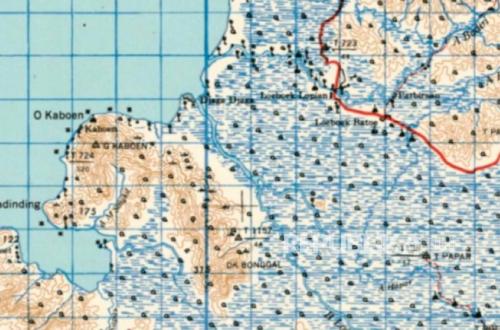
The Bongal site, located on the banks of the Lumut River at the mouth of Sibolga Bay, is an ancient relic that has recently become a topic of widespread discussion. Excavation of the site has the potential to alter the timeline of Islam’s entry into the Indonesian archipelago, given the discovery of artefacts in the form of coins dating from the 7th to 8th centuries CE.
Jago-Jago Village is the area where the Bongal Site is located. The village, situated in Badiri District, Central Tapanuli Regency, North Sumatra, is named Jago-Jago because it served as a guard post during the colonial period. The name derives from the word ‘Jago-Jago’, which in the coastal language means ‘jaga-jaga’ or a place for keeping watch.
In 1920, before roads were built, the community used the Lumut River as a transit route connecting one area to another. This is evident from a 1943 colonial map that mentions the Jago-jago area.
After the opening of a residential area in Jago-jago Village in 1980, many residents went to the foot of Bongal Hill to open plantations and rice fields. These farming activities continued until the 1990s, partly because some residents had sold their land located at the foot of Bongal Hill. This was due to many people preferring to become fishermen rather than farming rice at the foot of Bongal Hill.
In 2001, Jago-Jago Village was included in the administrative area of Lumut District, which has since been renamed Badiri District. The Lumut District area covers 207.81 square kilometres with 14 villages and a population of 30,326. The Lumut District area is surrounded by hills, with the population’s livelihoods coming from the fisheries and plantation sectors (Pertanda et al., 2001).
During the farming activities, residents reported the discovery of a stone statue in the forest of Bongal Hill. In report BPA of the North Sumatra Archaeological Centre Number 6 2001, the discovery of a Ganesha statue on the slopes of Bongal Hill in Jago-Jago Village, Central Tapanuli Regency, was mentioned.
Since many residents sold their land at the foot of Bongal Hill, only a few residents continued farming activities. Until 2009, one of the people who had purchased land in the Bongal Hill foothills area reopened plantations for orange and secondary crops.
Source: jawawa.id (https://jawawa.id/newsitem/the-story-of-the-bongal-site-in-central-tapanuli-from-gold-finds-to-umayyad-coins-1787208799)
Originally published by Republika (https://khazanah.republika.co.id/berita/tk21sp483/hikayat-situs-bongal-di-tapanuli-tengah-berawal-dari-temuan-emas-hingga-koin-bani-umayyah), translated from Indonesian