
The Story of Sukabread: Bread Made by Sukamiskin Prisoners Selling Well as Far as Jakarta and BSD
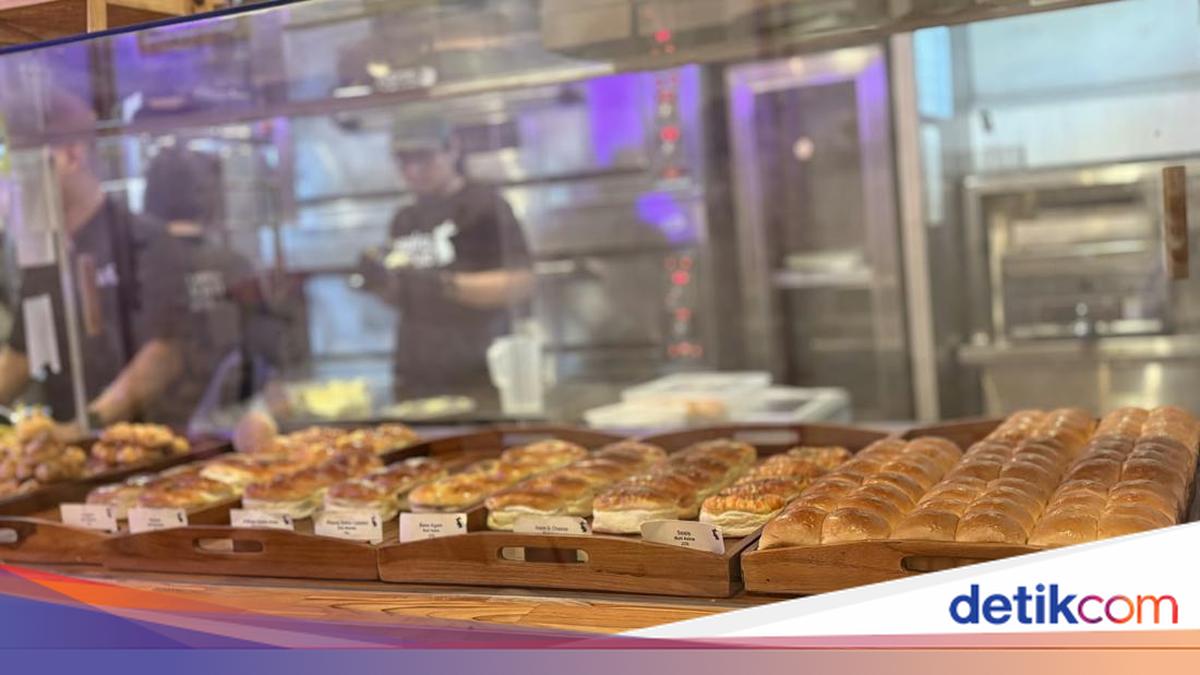
The aroma of bread is part of the daily routine for men identified as H and R, who are currently inmates at the Class I Sukamiskin Prison in Bandung, West Java. In one corner of the correctional facility stands the Sukabread kitchen, whose operations are managed almost entirely by prisoners.
From this kitchen, various types of bread are produced at a rate of 70-100 loaves per day. Inmate H said he has been transferred between prisons twice. First, from Salemba to Cipinang; second, from Cipinang to Sukamiskin; and it is here that he feels productive and at peace.
“I have been here for about six months. I spent a year in Cipinang before that, then I received information that there were work activities here, there was speedboat building, there was bread making. There was a selection process, a transfer to Sukamiskin Prison for inmates who wanted to try activities inside the prison, so in the end I signed up,” H explained to detikcom on Saturday (29/8/2026).
H admitted that Cipinang Prison also had a bread production work programme, but in his view too many inmates participated in the activity there. So during his time in Cipinang, H spent most of his time at the church as a tamping, or inmate orderly.
“In Cipinang there is indeed bread production, but there are so many inmates, so the work opportunities are better here. In Cipinang I just became a tamping at the church,” said the man from Kembangan, West Jakarta.
He is grateful to have been transferred to Sukamiskin Prison, which he considers to have a calmer atmosphere than the two previous prisons. “It is calmer here, the work activities are clear and they really help a lot in passing the time,” he continued.
Sukabread, which is a work guidance programme for inmates, has found its market. Orders come from Jakarta, South Tangerang, and a number of consumers in Bandung.
There are also former inmates who, after being released, have chosen to become Sukabread resellers. H himself admitted he is interested in reselling Sukabread products after his release.
“The enthusiasm of the prison’s guests, they say this is suitable for selling outside. In fact, we now have resellers. There are several inmates who have been released who want to sell the bread, and we can help with the reseller programme. So we take our margin from the cost of goods sold, a small profit, so that resellers can also be creative outside,” said H.
Orders also come from prison guests who have tasted the bread made by H and his colleagues. After tasting it, the guests’ question is whether Sukabread can be ordered for events outside the prison.
“Sometimes there are guests from outside who visit, and then they try the bread. When they feel it suits them, the bread is appealing, they ask whether it can be ordered for a church event, or any event at all,” H recounted.
H said the largest Sukabread resellers are a bread seller at a hospital in Central Jakarta, and in Bumi Serpong Damai (BSD). Orders from the two resellers reach 150-200 loaves per purchase.
“Our largest resellers are a hospital in Semanggi, Central Jakarta, and in BSD. They order 150-200 pieces at a time. In Bandung, those who order are friends from the church, for example. As for cafes, there are already some nearby that take from Sukabread,” explained Hendra.
Delivery of Sukabread products to Jakarta uses an expedition service. The products are entrusted by H to the front section of the prison, and later the expedition officer will collect the order at the front of the prison.
Hendra is now one of the Sukabread coordinators. He mostly handles management, from purchasing ingredients to packaging.
Meanwhile, work in the kitchen is coordinated by inmate R. Around eight inmates work behind the Sukabread kitchen.
2,000-3,000 Loaves Sold Per Month
Inmate R is another inmate who coordinates production in the kitchen. He has a background of experience in cafes and bakeries.
According to R, Sukabread actually already existed before he joined. However, production had stopped because a number of pieces of equipment were damaged.
“Sukabread already existed before, but it was off for a while because some of the equipment was damaged at the time,” said R.
Currently, the price of bread sold retail inside the prison ranges from Rp 10,000 to Rp 15,000. On average, around 70-100 loaves are sold every day for internal needs and the cooperative.
That figure does not include special orders from outside. “For outside orders, it is certainly more. In a month, 2,000-3,000 loaves are sold,” he said.
They also try to make use of raw materials so they are not wasted. In making several types of bread, the part used is the egg yolk. The remaining egg whites are then processed into another product called Cawan Musi with the addition of Japanese stock.
“Because to make bread, we only use egg yolks. It would be a shame to throw away the egg whites, so we make Cawan Musi using Japanese stock,” said R.
The Challenge: Just When They Get Good at Making Bread, They Are Released
However, a work guidance programme like Sukabread has a different set of problems from an ordinary bakery business. Its workforce keeps changing.
Inmate H said there are inmates who have been trained until they have good bread-making skills. When their skills begin to mature, their sentence comes to an end.
“Our challenge is that there are inmates we have trained to make bread, and just when their skills are getting really good, it turns out they are not here for much longer, they are released,” he said.
As a result, the team has to train new inmates again. Because of this, Hendra said Sukabread’s current orientation is not solely about pursuing profit.
“So the effort is really about training inmates again. We have not thought about making a profit to that extent yet. We need to settle the operations first,” he said.
Targeting Hotels and Whoosh Station
Sukamiskin Prison Governor Nanank Syamsuddin said the development of Sukabread began with the provision of human resources. Inmates are mapped according to their interests and abilities, then receive training before being placed in work activities.
“Our form of support for Sukabread, again related to human resources, is that we optimise it here by mapping the interests of inmates. Here they are trained first so that eventually it is the right man in the right job,” said Nanank.
According to him, the mechanism for fulfilling the workforce for work activities also makes it possible to transfer inmates from other technical implementation units to Sukamiskin. The prison first submits its needs to the regional office.
“The policy of transferring human resources is also very possible, where we propose to the regional office and then the regional office will instruct other technical implementation units. So in the previous prison, they are screened according to the needs of the work guidance programme here, and here we assess them again,” Nanank explained.
The next strategy is to expand the market. Nanank said his office has introduced Sukabread to a number of members of the regional leadership coordination forum (forkopimda), including the Regional People’s Representative Council (DPRD).
“We have met with several forkopimda members, including the DPRD, and we conveyed our flagship programmes, and they support them. Our outreach to them is of course an entry point for their outreach to others,” said Nanank.
Sukabread has also begun to be introduced to the hotel business community. Sukamiskin Prison is also exploring marketing opportunities through the management of Whoosh Tegalluar Station.
“We are also encouraging the hotel business community, and then we are exploring Sukabread with the management of Whoosh Tegalluar Station,” Nanank added.
The exploration with a number of businesspeople and hotel associations, according to him, has received an initial response. The prison also plans to collaborate with the agency responsible for micro, small, and medium enterprises to expand marketing.
“Sukabread’s market segment is already premium class. We recently met with several businesspeople and hotel associations, and we socialised it with them and they are interested. It is just one step away from establishing cooperation,” said Nanank.
Involving Former Inmates to Market Sukabread
Nanank further explained that the marketing channel for Sukamiskin Prison products, including Sukabread, has been prepared through Griya Abipraya. Interestingly, the workers at Griya Abipraya also include former inmates who now have the status of correctional clients at the Corrections Agency (Bapas).
“We are also developing Sukabread to reach the public market. We have a hub called Griya Abipraya, and from there we will market Sukabread. The workers at Griya Abipraya are also former inmates who have the status of correctional clients,” Nanank stated.
Nanank also asked that product marketing not only be the job of officers handling work activities. “I emphasise that all employees have a responsibility to develop Sukamiskin Prison products, not only those involved in work guidance or the programme,” he continued.
He described this approach as the ‘spider web’ method. That is, prison officers introduce products to their own closest networks, from family to contacts outside the prison.
Sukabread Served to Guests
Another method used is to get outsiders to taste the product directly. Nanank said that whenever guests visit, Sukabread is one of the products served. A similar policy is applied when Sukamiskin Prison prepares goodie bags for guests.
“There is nothing in the goodie bag that we buy from outside. Everything in it is the result of our own cultivation, there are eggs, water spinach, bread, and so on,” Nanank stated.
According to Nanank, this strategy is also used to address one of the obstacles faced by products made by inmates, namely stigma. He is aware that the image of products made inside a prison cannot change in a short time.
“Our obstacle is indeed the image. We cannot change that image as easily as turning over a hand, but we are trying slowly,” he said.
Because of this, Nanank chooses to invite outside parties to come, see the production process, and taste Sukabread for themselves. According to him, the effort to change that perception is still work that must be done gradually.
“That is why I serve it, invite outside parties here, and then they see for themselves, so that buyers see the fact that our kitchen is hygienic, the taste is no less good, and it is truly made inside the prison,” Nanank revealed.
“This is the homework for all of us in the corrections system, changing the image. That is why our method is simple, the spider web, because so far it has been effective,” Nanank concluded.
Source: jawawa.id (https://jawawa.id/newsitem/the-story-of-sukabread-bread-made-by-sukamiskin-prisoners-selling-well-as-far-as-jakarta-and-bsd-1788184387)
Originally published by detikcom (https://news.detik.com/berita/d-8642485/cerita-sukabread-roti-buatan-napi-sukamiskin-yang-laris-hingga-jakarta-bsd), translated from Indonesian