
The Story of Slamet, Former Furniture Employee Who Switched Careers to Become a Wingko Babat Mogul
SEMARANG - Boredom can sometimes serve as a catalyst for someone to change the course of their life. This is what happened to Slamet, a former employee of a furniture company who has now successfully built a wingko babat business.
Slamet recounted that his journey began from a point of saturation while he was still working at one of the giant furniture producers in mid-2014.
Instead of staying in his comfort zone as an employee, he chose to start learning the wingko production process independently.
“In 2014, we focused; previously, it was just samben-samben (a side job). Every morning selling, then in the afternoon going to the office,” he said when met at his production house on Thursday (7/5/2026).
Although he only truly focused in mid-2014, Slamet admitted he had started experimenting with wingko babat production since 2010, learning from a wingko seller from Lamongan who had entered the business earlier.
Wingko babat itself is a traditional snack made from a mixture of grated young coconut, glutinous rice flour, and sugar, with a sweet and savoury flavour.
With less than a year of learning, Slamet claimed he was brave enough to start the wingko babat business.
Initially, he did not produce on a large scale, but from a very small volume.
“We bought raw materials of 2 kilos, 3 kilos, like that. It kept developing,” he added.
He recalled his first loan of Rp 5 million from a red-plate bank, which was used to increase production capacity.
One major leap in his business was owning his own production equipment.
Previously, he had to rely on grated coconut from the market, which was certainly more expensive than processing whole coconuts.
“Back then, we got coconuts from the market. Until now, we can grate them ourselves. With that Rp 5 million capital, we could buy a grating machine. Initially, we didn’t have one, but finally we do. Now we can buy coconuts ourselves,” he explained.
Currently, his production kitchen capacity has increased significantly.
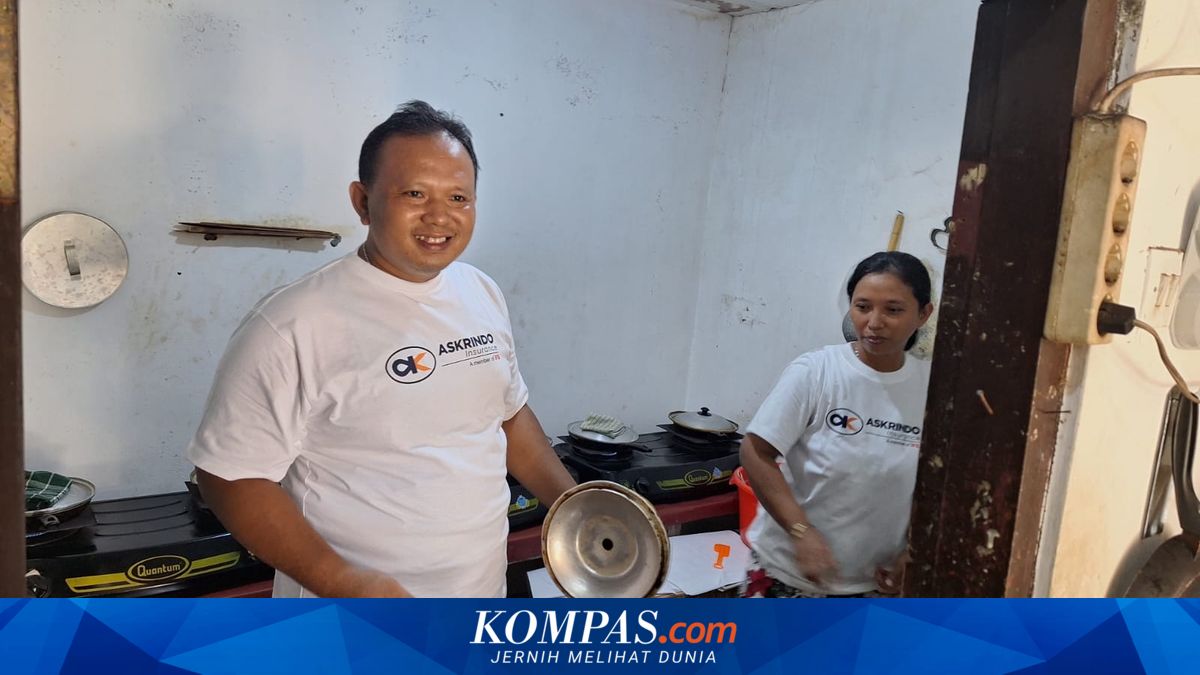
Initially using a simple stove, he now operates 12 burners from six stove units to meet daily production targets.
He still uses a conventional method by consigning his wingko babat to small grocery stores.
However, this method is still considered effective and provides benefits for the wingko babat business.
In addition, keeping raw material prices like super coconuts and glutinous rice flour low is a particular challenge for his profit margins.
“Now I admit it’s a bit declining. Hit by plastic prices too, so the flour has also risen. The price of Rp 30,000 (per tray) is because previously coconuts were exported, so coconuts were very expensive then. This has somewhat decreased,” Slamet explained.
Interestingly, despite being hit by rising production costs, Slamet has no plans to increase selling prices to customers.
Currently, he sets the price at Rp 30,000 per tray of wingko, which can be cut into 10 to 14 pieces depending on orders.
In the market, Slamet’s wingko babat is priced around Rp 2,500. He deliberately does not brand his wingko babat production.
The quality of Slamet’s wingko babat has proven competitive. Even without preservatives and lasting only 3-4 days at room temperature, the product is often taken as souvenirs out of town, even abroad.
“It can go out of town, out of Java, yes. Even out of Indonesia. Once taken to Palestine, no complaints, so it’s fine,” he said.
To this day, he runs the entire business with his wife, Novi. In a day, the business can produce around 15-20 trays of wingko babat.
Besides making wingko babat, he also has a side business selling grated coconut.
He admitted this can add to income when wingko babat orders are slow.
The coconut raw material used is material that cannot be used for making wingko or old coconuts.
In a day, he can pocket turnover of around Rp 300,000 to Rp 500,000 from the wingko babat business alone.
At certain times, his grated coconut business can even surpass the daily turnover from the wingko babat business.
Slamet mentioned that a year ago, he had just disbursed a loan of Rp 50 million with a 3-year tenor.
He feels comfortable knowing that the people’s business credit (KUR) he took has been guaranteed by PT Asuransi Kredit Indonesia (Askrindo).
Source: jawawa.id (https://jawawa.id/newsitem/the-story-of-slamet-former-furniture-employee-who-switched-careers-to-become-a-wingko-babat-mogul-1778201542)
Originally published by Kompas (https://money.kompas.com/read/2026/05/08/073000226/kisah-slamet-eks-karyawan-mebel-yang-banting-setir-jadi-juragan-wingko-babat?utm_source=ABC&utm_medium=rss), translated from Indonesian