
The Story of Sitimah, a Teacher in Kudus Who Travels 4 Hours to Teach at School
The clock had barely passed dawn when Sitimah started her motorcycle from her home in Boyolali Regency. While many were still preparing for the day, the primary school teacher began her long journey to SDN 7 Getassrabi, Kudus Regency, where she has dedicated her life for decades.
Every day, Sitimah spends about four hours traveling to be able to stand in front of the class and teach children to read and write. “I spend about 4 hours on the road. In the morning, I leave after dawn prayers, then return after noon prayers and arrive home at 4 p.m.,” she said.
The long journey does not dampen her spirit. For Sitimah, being a teacher is not just a job, but a calling that she has held dear for a long time. Her love for children keeps her going, even though she has to travel between regencies every day. “If I violate my oath as an employee, I feel a mental burden,” she said softly.
Sitimah’s story is a real portrait of the struggle of many teachers in Indonesia who continue to teach with full dedication in the face of limitations. During her 22 years of service, she has faced various challenges as an educator.
From 2004 to 2010, Sitimah taught as a Wiyata Bakti teacher or honorary teacher. “In 2004, I started teaching. Two years later, I received a salary of Rp50,000 per month. Then, in 2008-2010, I received a salary of Rp220,000,” she recalled.
New hope came when the government opened the CPNS (Civil Servant) recruitment in 2010. A year later, Sitimah was officially appointed as a CPNS and placed at SDN 7 Getassrabi. The school has 72 students and six classrooms. Sitimah was entrusted to be the class teacher for grade 1, which is an important phase for children who are just entering primary school.
According to her, teaching grade 1 requires more patience because the children are still in the transition period from early childhood education. Many students still have difficulty reading and writing. Therefore, Sitimah often provides additional time voluntarily so that children do not fall behind in their lessons. “I repeat the lessons for children who cannot read or help those who are behind in writing. Before that, I ask for permission from the children’s parents,” she said.
For an hour after the learning activities are finished, she accompanies students who need more attention—without charging any fees.
For Sitimah, the success of a teacher is not only when students get good grades, but when no child is left behind in learning.
In the midst of her dedication, Sitimah is grateful that the government’s attention to the welfare of teachers continues to increase. One of them is through the Regulation of the Minister of Basic and Secondary Education (Permendikdasmen) Number 10 of 2026, which regulates the distribution of teacher professional allowances directly each month to the recipient’s account. “Previously, the allowance was paid every three months. If in 2026 it will be paid monthly according to the basic salary,” she said with a cheerful face.
The additional income not only helps her family’s needs, but also becomes a way for Sitimah to share with others. She regularly helps orphans, the poor, and students from less affluent families. “Thank God, it’s a blessing. I can help orphans and the poor every year, and I can also participate in the Eid al-Adha sacrifice in the village. Sometimes I can help the economy of students who are really in need,” she explained.
However, behind that determination, age and health conditions have become new challenges. Sitimah hopes that one day she can teach at a school closer to her home. “Yes, I want to be transferred because of my age and health,” she said softly.
She admitted that she had applied for a transfer twice, but it has not been realized because the school where she teaches is still short of teachers.
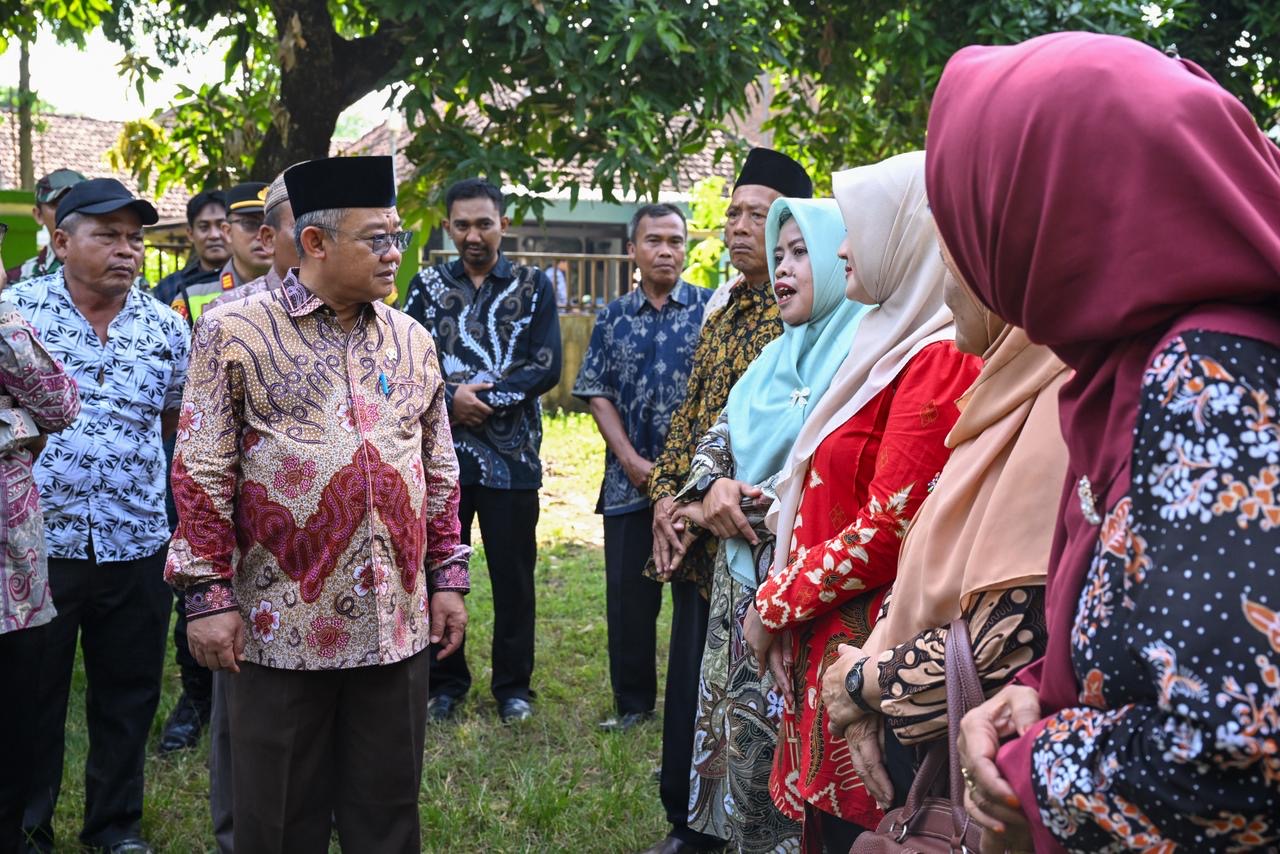
The hope reappeared when the Minister of Basic and Secondary Education, Abdul Mu’ti, made a working visit and heard directly about her struggles. In front of the local government officials, the Minister of Basic and Secondary Education asked that the problem be resolved immediately. “Just let her go if there is a school that is willing to accept her. It’s a pity that she has to travel so far,” said Abdul Mu’ti to the representatives of the Education Office who were present.
The government has also issued Permendikdasmen Number 1 of 2025 concerning the Redistribution of ASN Teachers in Educational Units Organized by the Community. This policy is expected to help equalize the needs of teachers while also providing space for a more humane arrangement for educators.
In the midst of the long journey that she takes every day, Sitimah still believes that being a teacher is a path of dedication. It is not about how far the distance is traveled, but about how much sincerity is given for the future of Indonesian children. (H-2)