
The Story of Kamikaze Dolphins Trained by the Soviet Union and Purchased by Iran
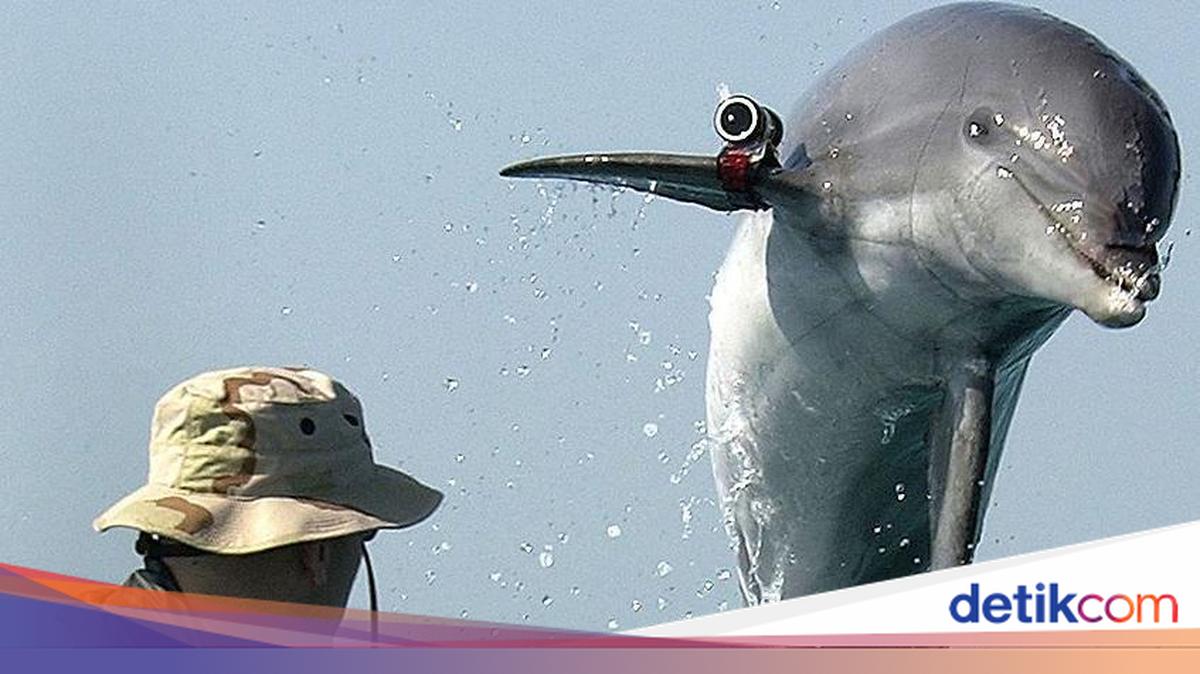
At a Pentagon press conference regarding the potential war between the United States and Israel with Iran, on Tuesday (05/05), a question arose: “Does Iran use suicide dolphins?”
The question was asked by a reporter from The Daily Wire, who asked U.S. Secretary of Defense Pete Hegseth to respond to “reports of the use of suicide dolphins” in warfare.
“I cannot confirm or deny that we have our own suicide dolphins, but I can confirm that they do not have them,” said Hegseth.
U.S. Joint Chiefs of Staff Chairman General Dan Caine also said he had not heard such reports. He instead asked, “This sounds like a story about sharks equipped with laser beams, doesn’t it?”
The statements refer to an article published five days earlier by The Wall Street Journal entitled “Iran Is Looking for a Way to Counter a Blockade It Cannot Break.”
The newspaper wrote that the U.S. naval blockade had revealed a gap in Iran’s strategy to control the Strait of Hormuz, and that Iran was looking for ways to cover this weakness.
In this image released by the U.S. Navy, Lieutenant Two Michael Dabbling (center) is seen with trainers from the Institute for Marine Mammal Studies feeding four dolphins. (Getty Images)
The Wall Street Journal report stated, “Iranian officials have said that Tehran may use weapons it has not used before to attack U.S. warships, ranging from submarines to dolphins carrying mines. The Islamic Revolutionary Guard Corps has threatened to escalate tensions by cutting fiber optic cables in the Strait of Hormuz, an action that would disrupt global internet traffic.”
However, although the use of dolphins for military purposes sounds fantastical, this practice has a history spanning decades.
Twenty-six years ago, on March 8, 2000, the BBC reported that Iran had purchased suicide dolphins.
According to the report, dolphins trained by the Soviet Navy were sold to Iran. However, it was not clear at the time what they would do in the Persian Gulf.
Russian experts had trained these dolphins and other marine mammals to attack enemy ships and divers. However, after funding was cut, some of the dolphins were transferred to a private facility to be used as performers for tourists.
Their main trainer, both during their military service and in civilian life, was Boris Zhurid, who began his career as a submarine officer and later graduated from medical school.
At that time, it was said that he sold all the marine animals to Iran because he could no longer afford to pay for their food and care.
Zhurid told the Russian newspaper Komsomolskaya Pravda at the time, “If I were a cruel person, I could have stayed in Sevastopol. But I couldn’t bear to see my animals starve. Our medicines, which cost thousands of dollars, had run out, and we no longer had fish or nutritional supplements.”
A total of four dolphins and a beluga whale were trained by Zhurid at a Russian naval base on the Pacific Ocean before being transferred to Crimea in 1991.
The animals had learned to attack enemy divers using spears attached to their backs, or drag them to the surface to be captured.
Getty ImagesBud Bickford, a Navy marine mammal trainer, helps a 33-year-old dolphin named “Makay” return to its pool after swimming in the port of Umm Qasr, March 29, 2003.
After the Iraq invasion in 2003, the U.S. Navy used trained dolphins to identify and clear mines and mock mines in the Persian Gulf.
The trained dolphins were also able to attack enemy ships on suicide missions and carry mines that would explode upon contact with the ship’s hull. It was said that these dolphins could distinguish between Soviet submarines and foreign submarines by the sound of their propellers.
Komsomolskaya Pravda wrote at the time that Zhurid’s research was essentially military in nature and described the dolphins as “mercenaries.”
“In fact, Iran has bought our old secret weapons from Ukraine cheaply,” he said.
The newspaper also noted that the United States had previously protested some sales from the Russian military to Iran.
Zhurid said at the time that he did not know what missions the dolphins would be assigned, but added, “I am willing to go to God or even to the Devil, as long as my animals are treated well there.”
In recent years, there have also been unconfirmed reports of similar efforts by a number of countries, including North Korea.
Satellite imagery reportedly showed dolphin enclosures in North Korea, sparking speculation about the launch of a similar program in Pyongyang.
However, Russia and the United States still have the most advanced and oldest military marine mammal programs.
According to reports, since its attack on Ukraine, Russia has increased its use of military dolphins in the port of Sevastopol to counter enemy divers and protect its naval fleet in the Black Sea.
‘Dolphins are intelligent and follow orders well’
Former Iranian President Akbar Hashemi Rafsanjani wrote about the events of April 2, 2000, in his memoirs, Reforms in Crisis.
“We visited the Park Hotel owned by Hossein Sabet in the southeastern part of the island [Kish]. The development of green spaces there is going well. The marine animal pools are also almost complete; some of the pools have been put into operation, and a number of walruses, sea lions, seals, and dolphins have been imported from Ukraine.”
He
Source: jawawa.id (https://jawawa.id/newsitem/the-story-of-kamikaze-dolphins-trained-by-the-soviet-union-and-purchased-by-iran-1780640658)
Originally published by detikcom (https://news.detik.com/bbc-world/d-8491161/kisah-lumba-lumba-kamikaze-yang-dilatih-uni-soviet-dan-dibeli-iran), translated from Indonesian