
The Story of Instant Noodles, the 'Cheap Food' That Has Become This Country's Economic Weapon
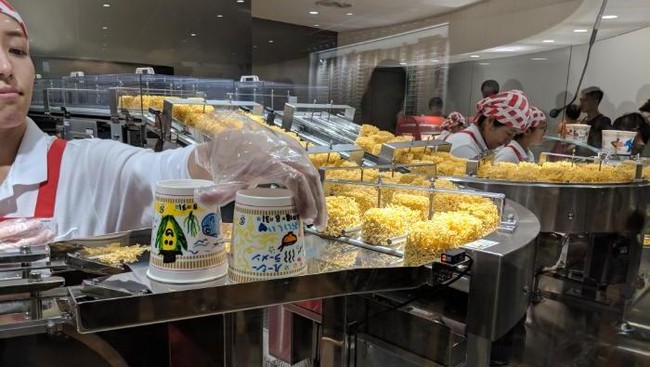
Amid the relentless roar of machines in the industrial city of Gumi, South Korea, one of the ‘Ginseng Country’s’ secret economic weapons was born: instant noodles or ramyeon. Once synonymous with cheap hunger-filling food, instant noodles have transformed into a money-making machine worth trillions of rupiah, a tourism driver, and a tool for South Korean cultural diplomacy around the world.
At Nongshim’s largest factory in Gumi, around 600 packs of ramyeon are produced every minute. The facility, spanning over 42,000 square metres, can generate 6 million packs per day with just around 600 workers, thanks to AI-based sensors and smart cameras monitoring the entire production process.
‘Last year, we produced 1.23 billion units worth 884 billion won (around Rp10.3 trillion),’ said factory manager Sang Hoon Kim, as quoted by CNN International, cited on Friday (15/5/2026).
This factory serves as the backbone of production for Shin Ramyun and Chapagetti, which currently dominate the domestic South Korean market. However, in Gumi, ramyeon is more than just a food product.
The city, with a population of around 400,000, once known as a dull industrial area, has now transformed into an instant noodle-based tourism destination. The city government began holding a ramyeon festival in 2022 to build a new cultural identity.
The results were beyond expectations. The number of visitors surged from 10,000 people at the first festival to 350,000 in 2025, with sales reaching 54,000 bowls and 480,000 packs of ramyeon in just three days.
‘As an industrial city, we need a cultural identity,’ said senior official of Gumi City Hall, Jeong-tae Kim.
The festival features a 475-metre culinary trail filled with creations based on ramen, from ramen sandwiches to noodle soup with smoked meat. The impact is immediately felt in the local economy, from sold-out train tickets to a surge in turnover for local traders.
Cheap Food Saviour in the Post-War Era
The success story of ramyeon itself is rooted in South Korea’s difficult times after the Korean War in the 1960s. At that time, the country faced food shortages, and the government encouraged the consumption of flour from US military aid as an alternative to rice. From there, the Korean instant noodle industry was born.
Samyang Foods pioneered it in 1963 by adapting Japanese instant noodles created by Momofuku Ando, then tailoring it to Korean tastes that favour spicy and savoury flavours. Sang Hoon Kim still remembers when Shin Ramyun was launched in 1986 at a price of just 200 won, or around Rp2,300 in current value.
‘I ate a lot of it. I bought it by the carton,’ he recalled. ‘The most I ate was 10 packs a day.’
Now, South Koreans consume more than 4 billion servings of instant noodles per year, or an average of 77 bowls per person. The ramyeon craze then spread around the world along with the wave of Korean pop culture.
Scenes of ‘ram-don’ in the film Parasite to noodle-eating action in K-Pop Demon Hunters have further boosted the global popularity of Korean ramen. According to Nongshim’s global marketing head, Jinny Seo, those pop culture moments have been a key catalyst in expanding their international consumer base.
South Korean instant noodle exports in 2025 surged 22% to US$1.5 billion, or around Rp26.24 trillion. Demand from Europe and various countries continues to flood in, overwhelming production capacity.
To meet this surge, Nongshim is building a new export factory in Busan worth 191.8 billion won, or around Rp2.3 trillion. It is projected to produce 500 million packs of ramyeon per year.
Source: jawawa.id (https://jawawa.id/newsitem/the-story-of-instant-noodles-the-cheap-food-that-has-become-this-countrys-economic-weapon-1778824504)
Originally published by CNBC Indonesia (https://www.cnbcindonesia.com/lifestyle/20260515092944-33-735061/kisah-mie-makanan-murah-yang-kini-jadi-senjata-ekonomi-negara-ini), translated from Indonesian