
The Story of Indonesia's Sugar King Immortalised on the Streets of Singapore
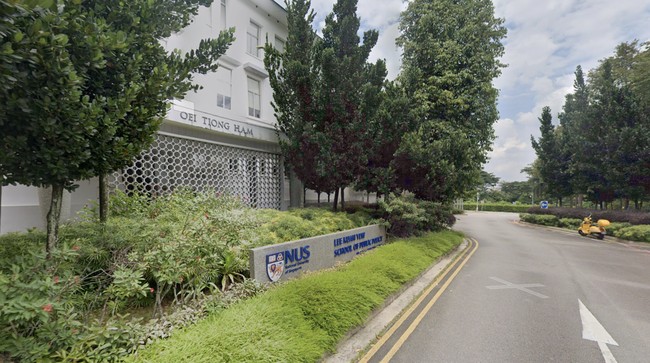
Singapore has long been a favoured destination for Indonesian entrepreneurs to store their wealth. However, few realise that an Indonesian businessman once controlled up to a quarter of the country’s territory. Of the total area of around 728.6 km², approximately 182 km² was under his control.
The extent of his influence and contributions led to his name being immortalised as street names and buildings in Singapore.
So, who was this businessman?
The Sugar King from Semarang
The businessman was Oei Tiong Ham, a man born in Semarang and owner of one of the world’s largest sugar companies, Oei Tiong Ham Concern (OTHC). OTHC was a business conglomerate founded by Oei Tiong Ham in 1893.
OTHC began as a single company named Kian Gwan, founded by Oei’s father in 1863. Kian Gwan initially dealt in property but gradually expanded into the sugar business when the company’s management fell into Oei’s hands.
Under Oei, Kian Gwan reached the peak of success. From the late 1880s, thanks to the modernisation of the company, Oei Tiong Ham successfully monopolised the sugar market in Java after opening sugarcane plantations and establishing large-scale sugar mills. From there, he accumulated wealth and successfully built a business empire named OTHC.
Through this vast sugar monopoly, as written by Onghokham in Konglomerat Oei Tiong Ham (1992), OTHC managed to export 200,000 tonnes of sugar, outcompeting many Western companies between 1911 and 1912.
At the same time, OTHC controlled 60% of the sugar market in the Dutch East Indies. It did not stop there; OTHC’s business wings extended not only to the Dutch East Indies but also to India, Singapore, and London. Its business lines were not limited to the sugar industry but also included warehousing, shipping, and banking.
It is no surprise that, thanks to this vast business, Oei was said to have wealth of 200 million guilders. For context, one guilder in 1925 could buy 20 kg of rice. If rice is priced at Rp 10,850/kg, his estimated fortune would be worth Rp 43.4 trillion.
On the other hand, the immense profits Oei earned became a curse for him. Because his vast wealth attracted the attention of tax officials from the Dutch East Indies colonial government. As written by Liem Tjwan Ling in Oei Tiong Ham: Raja Gula dari Semarang (1979), the colonial government demanded 35 million guilders in taxes from Oei, which would be used to cover post-war losses. Not only that, Oei was also required to pay double taxes without clear reason.
From this, Oei thought he was being squeezed by the government. The taxes were merely a pretext for the government to get his money. As a result, to avoid the burdensome taxes, he left Semarang and lived permanently in Singapore in 1920. In Singapore, he was truly free.
Still quoting Liem, in the British colony, Oei bought a lot of land and houses, the total area of which was equivalent to a quarter of Singapore’s territory. At that time, not all businessmen could buy land there. Only the super-rich could, and Oei was part of that group. All these asset purchases were recorded in Oei Tiong Ham’s personal name.
On the official website of the National Library of Singapore, he is also known to have bought the Heap Eng Moh Steamship Company Limited and become the initial owner of shares in the Overseas Chinese Bank (OCB), now OCBC.
He also donated US$150,000 for the construction of Raffles College, including building several schools. He was also a frequent main donor in humanitarian activities. All this happened before Oei’s death on 6 July 1924. Since Oei’s passing, his business glory began to wane.
This decline eventually led to the sudden collapse of Oei Tiong Ham’s business. In 1961, the Indonesian government sued OTHC for allegedly violating foreign exchange regulations.
For Oei’s son, Oei Tjong Tay, as quoted from Benny G. Setiono in Tionghoa dalam Pusaran Politik (2003), this lawsuit was an attempt by the government to find reasons to seize all OTHC assets in Indonesia after previously failing to take over the company.
In short, the Semarang court ruled OTHC guilty. On 10 July 1961, evidence items related to the incident were confiscated and seized by the state.
The seizure, which occurred in one day, also included Oei Tiong Ham’s inherited assets. In other words, all OTHC and Oei family assets were seized. The proceeds from this seizure became the assets for the capital of the state-owned sugarcane SOE named PT Rajawali Nusantara Indonesia (RNI) in 1964.
After the state takeover, the traces of the large OTHC conglomerate’s business for decades during the colonial era vanished just like that. Even the echoes of Oei Tiong Ham’s descendants are no longer heard, leaving only history.
This includes the ownership of land and houses up to a quarter of Singapore’s territory. All of it disappeared just like that. Nevertheless, traces of Oei Tiong Ham’s greatness in Singapore can be seen in many places. At the National University of Singapore, there is a building named after Oei Tiong Ham. Then, on the city streets, there is Oei Tiong Ham Park.
Source: jawawa.id (https://jawawa.id/newsitem/the-story-of-indonesias-sugar-king-immortalised-on-the-streets-of-singapore-1775875849)
Originally published by CNBC Indonesia (https://www.cnbcindonesia.com/market/20260411075525-17-725904/kisah-raja-gula-ri-yang-diabadikan-di-jalanan-singapura), translated from Indonesian