
The Story of Indonesia's President and the World Duped by the "Gold Mountain Hoax" of 53 Million Tonnes
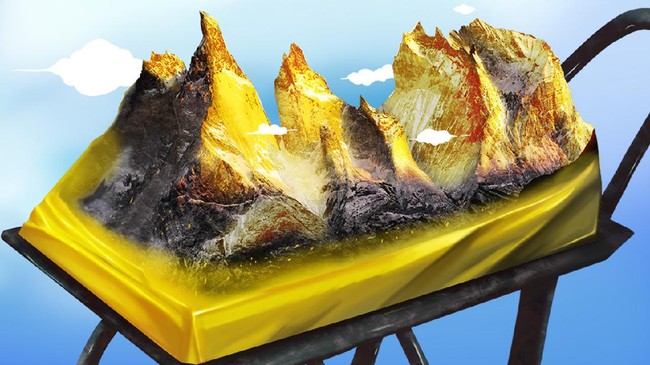
The entire world, including Indonesia’s President Suharto, was deceived by a purported discovery of treasure in East Kalimantan. The Canadian mining company Bre-X claimed to have found a massive gold mountain with an estimated mining potential of 53 million tonnes.
According to research from Bondan Winarno’s investigation documented in “Bre-X: A Nugget of Gold at the Foot of the Rainbow” (1997), company geologists undertook a 12-day expedition through East Kalimantan in 1993. They traversed the remote tropical forest in an area called Busang, which was reported to be rich in gold reserves. Following this expedition and after assessing the region’s potential, the company issued an open letter to investors outlining the promising prospects of Busang. The letter suggested that if Busang were developed seriously, investors could become extraordinarily wealthy. Given the well-known examples of fortunes made through gold mining, this announcement created considerable excitement.
As a result, Bre-X’s shares in Canada soared to record heights. According to BBC International, the company’s value once surged to approximately 7 trillion rupiahs.
Within Indonesia, numerous government officials and businesspeople were enticed by this prospect. This included close associates of President Suharto, such as his son Sigit Harjojudanto and businessman Bob Hasan. Through their respective companies, they secured control of mining operations in Busang. Bob Hasan acquired 50 per cent of PT Askatindo Karya Mineral and PT Amsya Lina, which controlled the Busang I and Busang II mining operations. Sigit was also enticed by Bre-X with a monthly payment of 1 million US dollars for his company PT Danutan Raya to serve as consultant in Busang.
Initially, everything proceeded smoothly. However, the truth about Busang’s gold eventually emerged.
At that time, President Suharto mandated that foreign mining companies share equity and cooperate with the government. He designated PT Freeport-McMoran to represent the government in the Busang matter. Freeport was subsequently required to conduct field verification. Freeport was obligated to perform verification and collect samples to confirm that the soil genuinely contained gold.
As Freeport conducted its verification on 19 March 1997, it was reported that Bre-X’s Exploration Director Michael de Guzman disappeared. He was subsequently reported to have committed suicide by jumping from a helicopter travelling between Samarinda and Busang. “The rear seat, which held the only passenger, was now empty, and the right door of the helicopter was open,” Bondan Winarno wrote (1997:117).
A suicide note was also discovered in the incident. The search and rescue team successfully recovered a body believed to be Guzman’s, which was then transported to the Philippines for burial.
Bondan conducted an investigation because he suspected the recovered body was not actually Guzman. After further investigation in Canada, this suspicion proved correct. The physical characteristics of Guzman differed from those of the body that was found, meaning he was still alive and had been deliberately concealed.
At the same time, Freeport also released its verification results, which stated that the soil contained no gold. Several independent researchers also corroborated this, confirming there was no gold in Busang’s rock formations from 1995 to 1997.
This news immediately shocked Indonesia, as the nation’s top leader had been deceived. Bre-X shares promptly collapsed and investors became enraged. Because of this incident, investors held Bre-X boss David Walsh hostage to demand the return of their invested funds.
However, the matter remained unresolved. Guzman’s whereabouts are unknown. His family does not know his location, although they believe he is still alive. According to reports, he is in South America living in self-imposed exile.