
The Story of Indonesia’s ‘Gang of Four’ Business Powerbrokers
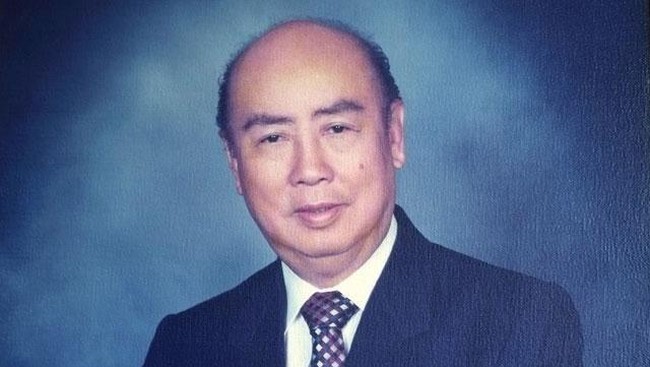
In today’s technology era, Indonesians are familiar with the nickname ‘Nine Dragons’, referring to nine influential businesspeople said to dominate the country’s economy. But several decades before the ‘Nine Dragons’ emerged, the ‘Gang of Four’—or ‘Four Companions’—was known as a force in the New Order economy.
The group consisted of four prominent businesspeople: Sudono Salim (Liem Sioe Liong), Djuhar Sutanto (Liem Oen Kian), Ibrahim Risjad and Sudwikatmono. The Gang of Four is often described as a highly successful partnership that created major companies which now command a significant place in the Indonesian economy.
The Gang of Four began with a meeting between Sudono Salim, Sudwikatmono, Ibrahim Risjad and Djuhar Sutanto around 1968. Before meeting, they did not know one another and were occupied with their own affairs. Salim and Djuhar were traders, while Sudwikatmono, known as Dwi, and Risjad worked as ordinary employees. They met by chance.
Salim and Sudwikatmono meet
The story began with the meeting between Salim and Sudwikatmono. By 1960, Salim was already known as a successful businessman, with interests in manufacturing and export-import. In 1963, Salim, who was close to Suharto, was summoned to the general’s home in Menteng. Dwi happened to be on duty guarding Suharto’s house; Suharto was his cousin.
As recounted by Richard Borsuk and Nancy Chng in Liem Sioe Liong’s Salim Group (2014), Dwi saw Salim talking with his relative for an hour. As Salim was leaving, he suddenly asked Dwi to come to his office on Jl Asemka the following day.
‘The next day, I met Om Liem. He asked me to join his business because Pak Harto had suggested my name. I was offered a monthly salary of Rp1 million and shares in the company,’ Dwi told Borsuk and Chng.
Dwi was astonished. The offer was a windfall, as he had never received that much money before. He had previously been an ordinary employee earning just Rp400. He accepted. Suharto later explained that he had made the recommendation because Salim was not yet an Indonesian citizen and therefore found it difficult to obtain loans. Suharto appointed Dwi to act as a guarantor.
Dwi could not refuse. He accepted the offer and took a 10% stake in PT Hanurata, a company owned by a Suharto foundation. From then on, Salim and Dwi’s relationship grew closer.
The ‘Gang of Four’ takes shape
In 1966, a company called Kongsi Bintang Lima, which had close ties to the military, fell apart. Suharto was involved because of the company’s military connections. He introduced Djuhar Sutanto, an influential figure in the company, to Salim. The two got along and shared a similar outlook on business.
Two years later, Salim and Dwi met Djuhar. Djuhar and Liem then took over CV Waringin and converted it into a limited company. At the time, neither tycoon was an Indonesian citizen, so they used the names of Sudwikatmono and Ibrahim Risjad, a Waringin employee, for administrative purposes. This marked the beginning of the Gang of Four. Waringin’s main activities were trading coffee and primary commodities, and producing crumb rubber in Sumatra.
After Liem and Djuhar became Indonesian citizens and Suharto officially became president, their businesses accelerated. They first entered the flour business through PT Bogasari. The four later joined the Salim Group and held important positions. They were involved in establishing Indocement, Indomilk, Indofood, Indomobil and Indomaret. These companies’ businesses went on to dominate their respective markets in Indonesia. With Suharto’s backing, the group prospered, and each member went on to build a business empire of his own while retaining his core interests in the Salim Group.
Source: jawawa.id (https://jawawa.id/newsitem/the-story-of-indonesias-gang-of-four-business-powerbrokers-1792317026)
Originally published by CNBC Indonesia (https://www.cnbcindonesia.com/news/20261018133726-4-777205/kisah-gang-of-4-penguasa-bisnis-di-indonesia-ini-sosoknya), translated from Indonesian