
The Story of Indonesia's Foreign Minister Resigning After a Secret Deal with the US Was Exposed
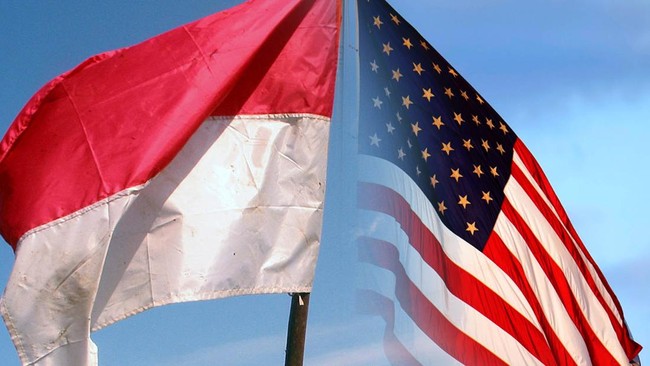
In Indonesian history, there was a moment when the Republic of Indonesia’s Foreign Minister resigned after a secret deal with the United States that damaged the free and active principle was exposed to the public. The impact was far-reaching. The domestic political situation became chaotic, leading to the complete halt of the government.
This incident occurred in 1952, when Indonesia still used the parliamentary system. In this system, the running of the government was in the hands of Prime Minister Sukiman, while President Soekarno held the position of head of state.
This meant that the cabinet’s position was highly dependent on political support in parliament. As soon as a major controversy arose, the foundation of the government could immediately falter.
This was the situation that ensued when the government entered into cooperation with the US through the Mutual Security Act (MSA) in secret. According to the Merdeka newspaper (11 February 1952), the agreement signed between Foreign Minister Achmad Soebardjo and US Ambassador Merle Cochran contained military, economic, and technical assistance from the US to Indonesia.
On paper, this aid appeared beneficial. However, the agreement did not come without political interests. According to Merdeka (7 February 1952), a spokesperson for the US State Department explained the purpose of the agreement.
“The purpose of the US in making this agreement is to maintain security and advance US foreign policy, as well as to promote prosperity by providing assistance to friendly countries for the sake of world peace and security,” he stated.
This explanation only strengthened suspicions domestically. The content and process of the agreement’s birth quickly ignited harsh criticism. The opposition deemed the step problematic because it was done secretly. The agreement had been signed on 5 January 1952, but was revealed to the public on 8 February 1952.
The controversy grew larger after it was revealed that when signing the agreement, Soebardjo did not consult with relevant ministers, especially the Minister of Defence. He only had a brief discussion with PM Sukiman.
“The Minister of Defence, Sawaka, was not informed about the decision. No members of the high command of the Armed Forces were informed,” revealed historian Herbert Feith in The Wilopo Cabinet, 1952-1953: A Turning Point in Post-Revolutionary Indonesia (2009).
And most importantly, the step was considered fatal because it directly contradicted the free and active foreign policy principle. By accepting aid under the MSA scheme, Indonesia was deemed to be siding with the US.
From then on, waves of rejection spread to various layers of society and parliament. From within the government itself, political pressure turned into a vote of no confidence against the cabinet.
As a result of this pressure, Foreign Minister Achmad Soebardjo decided to resign on 20 February 1952.
“The cabinet meeting could not approve the policy of Foreign Minister Soebardjo. Therefore, Minister Soebardjo’s resignation request was settled. In other words, Soebardjo stepped down,” stated the Harian Rakyat newspaper (21 February 1952).
Nevertheless, the resignation of Indonesia’s first Foreign Minister was only the beginning. The opposition and the public continued to demand the government’s dissolution. Finally, five days later, PM Sukiman returned the cabinet’s mandate to President Soekarno. With this step, the executive government was officially declared to have ceased.
“The Sukiman Cabinet has returned the mandate to the President. This decision is to improve the political atmosphere in order to overcome the difficulties arising from the signing of the agreement regarding the MSA,” stated the Merdeka newspaper (25 February 1952).
This event is subsequently recorded as one of the most important political crises in the parliamentary democracy era. A foreign agreement deemed to deviate from the free and active principle could trigger the complete cessation of the government.
Source: jawawa.id (https://jawawa.id/newsitem/the-story-of-indonesias-foreign-minister-resigning-after-a-secret-deal-with-the-us-was-exposed-1776333061)
Originally published by CNBC Indonesia (https://www.cnbcindonesia.com/entrepreneur/20260416093431-25-727196/kisah-menlu-ri-mundur-usai-deal-diam-diam-dengan-as-terbongkar), translated from Indonesian