
The Story of How Low Tuck Kwong Took Over Bayan from Haji Asri
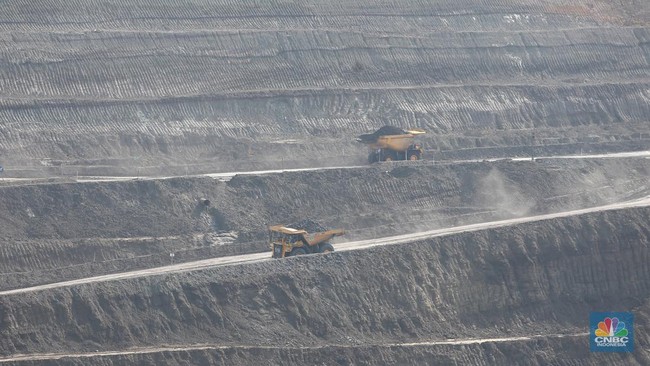
Andi Syamsuddin Arsyad, also known as Haji Isam, has signed a Share Purchase Agreement regarding the transfer of controlling shares in PT Bayan Resources Tbk (BYAN) from Low Tuck Kwong (Dato’ Dr. Low Tuck Kwong) and his daughter, Elaine Low.
If the process proceeds smoothly, approximately 10,000,000,500 ordinary shares of PT Bayan Resources Tbk, equivalent to a 30% ownership stake, will transfer to Haji Isam.
However, long before the name Low Tuck Kwong became synonymous with Bayan, the company’s roots trace back to an individual named Haji Asri. Low Tuck Kwong’s introduction to Bayan began in 1998 when he acquired PT Dermaga Perkasapratama (DPP) and PT Gunung Bayan Pratamacoal (GBP). The latter was originally owned by the entrepreneur Haji Asri.
Haji Asri established PT Gunung Bayan Pratamacoal in the 1990s as part of the Domestic Capital Investment (PMDN) programme. According to newspaper archives from Neraca (12 May 1992), PT Gunung Bayan Pratamacoal was one of four domestic companies applying for coal mining concessions in East Kalimantan.
At that time, Asri applied for a land concession of 100,000 hectares in the region. During this period, Low Tuck Kwong was operating as a contractor through PT Jaya Sumpiles Indonesia (JSI), which, according to BYAN’s official website, has been involved in the mining industry since 198$8. One of the company’s businesses included land clearing, simple mining, and transporting coal products to various partners in Kalimantan.
This was the point of convergence for Haji Asri and Low Tuck Kwong. “Low Tuck Kwong is not a stranger to Asri. This Singapore-born man was the one surveying Gunung Bayan’s land,” wrote the book Para Raja Batu Bara (2019).
Gradually, the relationship, which began as merely owner and contractor, evolved on 26 August 1996. According to reports from Detik.com, Low Tuck Kwong and Haji Asri entered into an agreement before a notary on that date.
The agreement concerned coal exploitation on Asri’s concession land under a Foreign Capital Investment (PMA) scheme. The partnership was valued at Rp7.6 trillion. The PMA structure was utilised because Low Tuck Kwong was still a Singaporean citizen at the time.
A year later, on 22 November 1997, Low Tuck Kwong purchased Gunung Bayan for Rp5 billion. Five days later, a share transfer occurred during an Extraordinary General Meeting of PT Gunung Bayan Pratama Coal (PT GBPC), resulting in Low Tuck Kwong’s party taking over the position of President Director and several other key roles.
From that point, Low Tuck Kwong’s position changed from contractor to controller of a 100,000-hectare concession. This control became a vital part of the business journey that eventually birthed Bayan Resources and established the 1948-born businessman as the wealthiest person in Indonesia.
However, the journey was not always smooth. According to the book Para Raja Batu Bara (2019), a dispute emerged in 2008 between Haji Asri and Low Tuck Kwong. Haji Asri and his two sons, as shareholders of Gunung Bayan, sued Low Tuck Kwong and other shareholders.
The issue stemmed from differing interpretations of the 1997 cooperation. From Haji Asri’s perspective, the arrangement was an affiliation, whereas Low Tuck Kwong interpreted it as a share transfer. Furthermore, Haji Asri claimed that Low Tuck Kwong’s payment had not been settled in full.
“According to him, from the original Rp5 billion payment agreement, Low—who has since become an Indonesian citizen—has only paid Rp3.5 billion,” the book recounts, relaying Haji Asri’s statement.
Haji Asri subsequently filed a civil lawsuit for breach of contract at the South Jakarta District Court. According to Detik.com, Haji Asri’s petitions included declaring the agreement null and void, recognising Haji Asri as the rightful owner of PT Gunung Bayan Pratama Coal (PT GBPC), halting exploitation on the concession land, and seeking Rp7.6 trillion in damages.
However, the lawsuit was dismissed by the court. On 12 January 2009, the South Jakarta District Court rejected all of Haji Asri’s claims via Decision Number 882/Pdt.G/2008/PN.Jkt.Sel.
This decision was upheld by the Jakarta High Court on 29 April 2010 via Decision Number 595/Pdt/2009/PT DKI. The cassation appeal filed by Haji Asri’s heirs was also rejected by the Supreme Court. In its consideration, the Supreme Court affirmed the validity of the sale and purchase deed made before the notary, deeming it legally binding and finding no evidence of forgery in the transaction.
At the next stage, the judicial review (PK) filed by the plaintiffs was also rejected. Through this series of rulings, Haji Asri’s claims regarding the alleged underpayment of the 1997 transaction were not accepted in the legal process.
Meanwhile, Low Tuck Kwong continued to maintain his control over Gunung Bayan. Now, the controlling ownership of Bayan faces a new chapter, as Haji Isam prepares to acquire a 30% stake in Bayan from Low Tuck Kwong and Elaine Low.
Source: jawawa.id (https://jawawa.id/newsitem/the-story-of-how-low-tuck-kwong-took-over-bayan-from-haji-asri-1789725521)
Originally published by CNBC Indonesia (https://www.cnbcindonesia.com/market/20260918144423-17-769060/cerita-low-tuck-kwong-ambil-alih-bayan-dari-tangan-haji-asri), translated from Indonesian