
The Story of Djoko Suyanto: From Ejecting from a Fighter Jet to Becoming TNI Commander
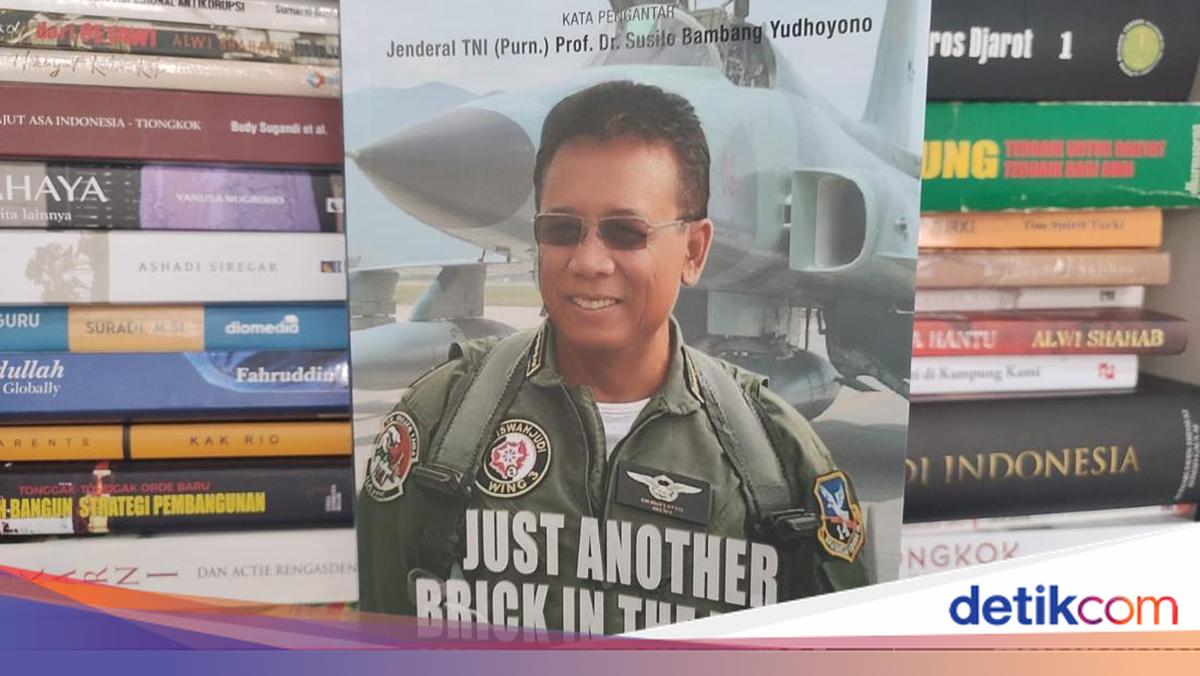
“The only way that you can keep leading is to keep growing. The day you stop growing, somebody else takes the leadership baton. That is the way it, always it.” The wisdom from Frank Outlaw is more than mere motivational words for Marshal TNI Djoko Suyanto. He made it a principle of life—that leadership can only be maintained through continuous growth. For Djoko, human character is not merely a gift, but the result of a long process forged by experience. Mistakes, failures, and trials are not things to avoid, but rather to be embraced as part of the journey. He once imagined his career as a TNI AU fighter pilot would end at the rank of First Lieutenant. However, life’s journey said otherwise. He instead reached the peak as Chief of Staff of the Air Force (2005-2006), becoming the first TNI AU officer to serve as TNI Commander (2006-2007), and was trusted as Coordinating Minister for Political, Legal, and Security Affairs (2009-2014). What was the key? “Improving oneself from mistakes, learning from experience, and having a strong drive to become better,” he said in the biography Just Another Brick in the Wall Marshal Djoko Suyanto. Once upon a time, when he was still a First Lieutenant in 1979, he overslept and failed to pick up the seniors for a dawn attack exercise in Situbondo. Harsh reprimands from the seniors struck his morale. However, the most memorable was the brief comment from his commander, known for being tough and fierce, Lieutenant Colonel FX Suyitno, who only threw a short reprimand: “Halaah Djok… you’re only that much!” That sentence shattered his confidence as the top graduate of Sekbang Class 20. He even thought his career was over. But from there, he learned: reputation guarantees nothing if not followed by consistency. He chose to introspect and improve himself. The next test came even heavier. On 23 September 1981, while flying an F-5 Tiger over Iswahjudi Air Base, Madiun, both engines of his aircraft suddenly failed. In seconds, he had to make a life-or-death decision. The quick restart attempt failed, altitude continued to drop, and finally, he decided to eject according to procedure. “My parachute landed in a cornfield about four kilometres south of the runway,” he said. That incident could have ended his career as a fighter pilot. However, the opposite happened; a decade later, Djoko Suyanto made history as the first fighter pilot with 2,000 flying hours on the F-5 Tiger—a achievement immortalised in Kompas daily on 27 March 1991. One of the interesting parts of this biography is his relationship with Susilo Bambang Yudhoyono (SBY). As President, SBY appointed Djoko, who had just earned his two-star rank, to become Chief of Staff of the Air Force, replacing Marshal Chappy Hakim. His stars increased to three the day before being inaugurated as Chief of Staff of the Air Force, and increased again to four stars 2.5 months later. Regarding that policy, SBY explained it over four pages in the foreword of this biography. This phenomenon of rapid promotions repeated in SBY’s second term. He did something similar to Timur Pradopo, who was promoted twice in less than three weeks. The stars on Timur’s shoulders increased to three (Commissioner General) when promoted from Metro Jaya Police Chief to Deputy Chief of Police Intelligence on 4 October 2010. Then he became a four-star General when appointed as National Police Chief on 20 October 2010. However, behind those achievements and honours, Djoko Suyanto’s personal life was marked by far heavier trials. His wife, Ratna Sinar Sari, had to undergo a series of major surgeries. A year after his father, who was his idol, passed away, his eldest son, Yona Didya Febrian, who was diagnosed with a brain tumour, followed on Eid al-Adha, 5 April 2000. In deep sorrow, Djoko interpreted it with resilience: a sacrifice on a noble day. “He sacrificed on the day of Eid al-Adha, a very noble day for both parents and his siblings,” said Djoko. The draft of this biography has been prepared since 2005. Unfortunately, some typos were still found. There is also inaccuracy in the time description regarding the passing of Djoko Suyanto’s eldest son. Initially written as dying on 5 April 2000, but in the following paragraph, it is mentioned that he was buried the next day in Madiun, 6 March 2001. Reading this biography, one red thread is evident: leadership is not about position, but about resilience to continue growing. Mistakes do not stop steps, failures do not end the journey, and trials do not break direction. Rather, from there a leader is forged—not only to lead others, but also to conquer oneself.