
The Story of an Indonesian Conglomerate's Regular Visits to Mount Kawi to Seek Guidance
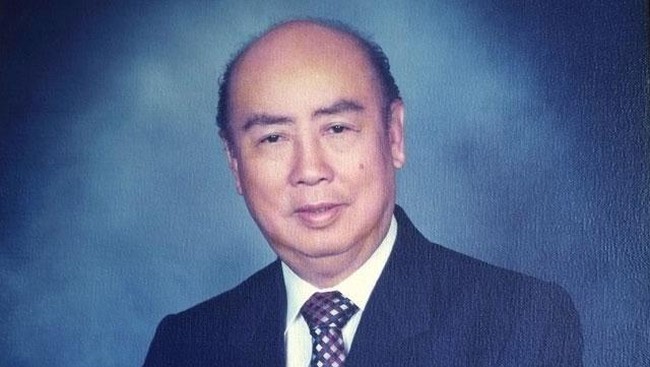
The name Sudono Salim, or Liem Siolem, remains immortal in history as one of the largest conglomerates ever produced by Indonesia. The founder of the Salim Group successfully built a massive business empire spanning various strategic sectors, from the food industry to banking.
However, behind his staggering financial success lies a unique story regarding the tycoon’s spiritual side, involving regular visits to the Mount Kawi area in East Java. For Salim, the trips from Surabaya to Mount Kawi were not merely ordinary pilgrimages. He frequently visited Chinese temples to seek supernatural guidance and spiritual decrees before executing large-scale business decisions.
A crucial moment in his business history occurred in 1975, when he unexpectedly met Mochtar Riady on a flight to Hong Kong. During their conversation, Riady expressed his ambition to establish a new bank. At the same time, Salim was searching for a capable figure to manage Bank Windu Kencana, Bank Dewa Ruci, and Bank Central Asia (BCA).
Recognising Riady’s immense capability, Salim did not hesitate to invite him to collaborate. This shared vision became the springboard that propelled BCA to become the largest private bank in Indonesia from the 1980s to the present day.
Looking back, Salim’s strategic decision to recruit Riady did not arise purely from cold business calculations, but was also driven by the spiritual whispers of a fortune teller. “Upon returning from Mount Kawi [to meet the fortune teller], with conviction, he said, ‘I will become the Tang Sheng for Mochtar’,” stated Salim, as quoted from the book Liem Sioe Liong and Salim Group: Soeharto’s Business Pillar (2016) by Richard Borsuk and Nancy Chng.
According to the literature Mount Kawi: Facts and Myths, the area is legendary as a centre for spiritual rituals to seek guidance and prophecies. For Salim, these rituals held a special place in his business management.
Richard Borsuk and Nancy Chng noted that Salim routinely undertook the three-hour road trip from Surabaya to Mount Kawi three to five times a year. Upon arrival, he would typically remain in a Chinese temple to undergo specific rituals and seek the fortune teller’s decree before launching mega-corporate projects.
“In the temples where he prayed, Liem often relied on supernatural methods to help him decide which steps to take. One common method involved shaking a bamboo tube containing sticks with specific writings until one stick emerged; the writing on the stick would then be read and interpreted by a monk or fortune teller,” wrote Richard and Nancy.
Salim accepted all the fortune teller’s advice without question and believed in it absolutely. He believed that ignoring such guidance was equivalent to opening the door to erroneous decisions that could lead to bankruptcy. This belief applied not only to expansion but also to determining the location and physical specifications of offices to ensure good fortune.
This legendary story was etched in 1968, when Salim, alongside an elite group of conglomerates known as the ‘Gang of Four’—consisting of Sudwikatmono, Djah Sutanto, and Ibrahim Risjad—prepared to launch a joint venture. Rather than renting luxurious and spacious office space, Salim insisted on choosing a narrow room containing only one desk, one telephone, two chairs, and no air conditioning. His reason was simple: the location possessed feng shui believed to bring prosperity.
Whether proven or not, time provided the answer. The business partnership established with the Gang of Four grew extensively and became a solid foundation for the expansion of all Salim Group business lines, cementing his name as a living legend in the nation’s business world.
Source: jawawa.id (https://jawawa.id/newsitem/the-story-of-an-indonesian-conglomerates-regular-visits-to-mount-kawi-to-seek-guidance-1789286093)
Originally published by CNBC Indonesia (https://www.cnbcindonesia.com/market/20260913105223-17-767487/kisah-konglomerat-ri-rutin-bolak-balik-gunung-kawi-minta-petunjuk), translated from Indonesian