
The Story of Abu Najjeh and the Third Nakba: The Repeated Displacement of the Bedouin Community in the West Bank
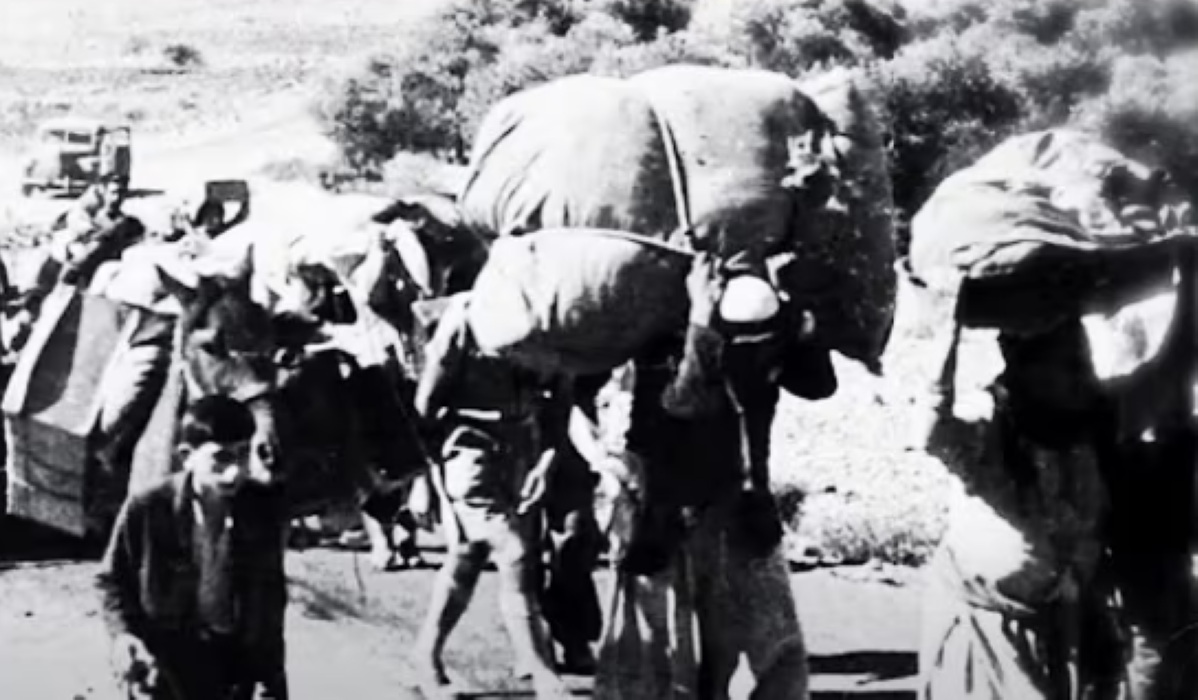
For Abu Najjeh, this year’s commemoration of Nakba Day is more than just a reflection on the tragedy of 1948. The leader of the Ein Samiya Bedouin community calls the current situation the ‘Third Nakba,’ a recurring cycle of forced displacement that is becoming increasingly brutal under the shadow of war.
Having just experienced his seventh displacement in his family’s history, Abu Najjeh now lives in a makeshift tent on the outskirts of Rammun. However, peace is a luxury he does not have.
That morning, he had to rush to Jiljilyya after receiving news that settlers had stolen hundreds of sheep, seized a tractor, and shot dead Yousef Kaabneh, a 16-year-old from the same clan as him.
‘This is not a place to live,’ Abu Najjeh said anxiously. ‘That’s why I’m in a hurry to wait for the car to pick me up.’ His fears are justified. Yousef was killed in an area that should be under the administration of the Palestinian Authority (Area A), a place they considered safe from settlers.
The history of the Kaabneh family is a portrait of the suffering of the Palestinian people over the past eight decades:
In Ein Samiya, they once owned thousands of livestock and a school for children. However, since 2019, illegal settler outposts have begun to surround them. Physical intimidation, poisoning of livestock, and the closure of access to water sources have drastically reduced their sheep population from 2,500 to less than 500.
After being displaced from Ein Samiya in May 2023, they moved to Khirbet Abu Falah, and then to Rammun. However, wherever they go, new illegal settler outposts always appear within a few hundred meters of their tents.
In their current location, there is no electricity. Clean water must be bought at a high price, reaching 250 shekels (about 1.1 million rupiah) per tank. The land is also not suitable for grazing because it is surrounded by olive groves owned by other people.
Humanitarian workers say that what is happening to the Kaabneh clan is not sporadic violence, but a systematic pattern to empty land in the West Bank. Abu Najjeh calls it an effort to make life impossible so that Palestinians are forced to emigrate.
‘We live on this land and die on this land,’ Abu Najjeh said, quoting a Bedouin proverb. However, he acknowledges the imbalance of power. ‘A community of only 7 or 10 men will not be able to fight 60 or 70 armed men.’
When his cell phone rang again with the latest news from the conflict in Jiljilyya, Abu Najjeh stood up. There is no time to lament the past. For him, the Nakba is not just history, but a crisis that is happening every second in front of his eyes. ‘My people need me. I have to go.’ (Al Jazeera/I-2)