
The Story of a Victim of Illegal Dutch Adoption Struggling to Become an Indonesian Citizen
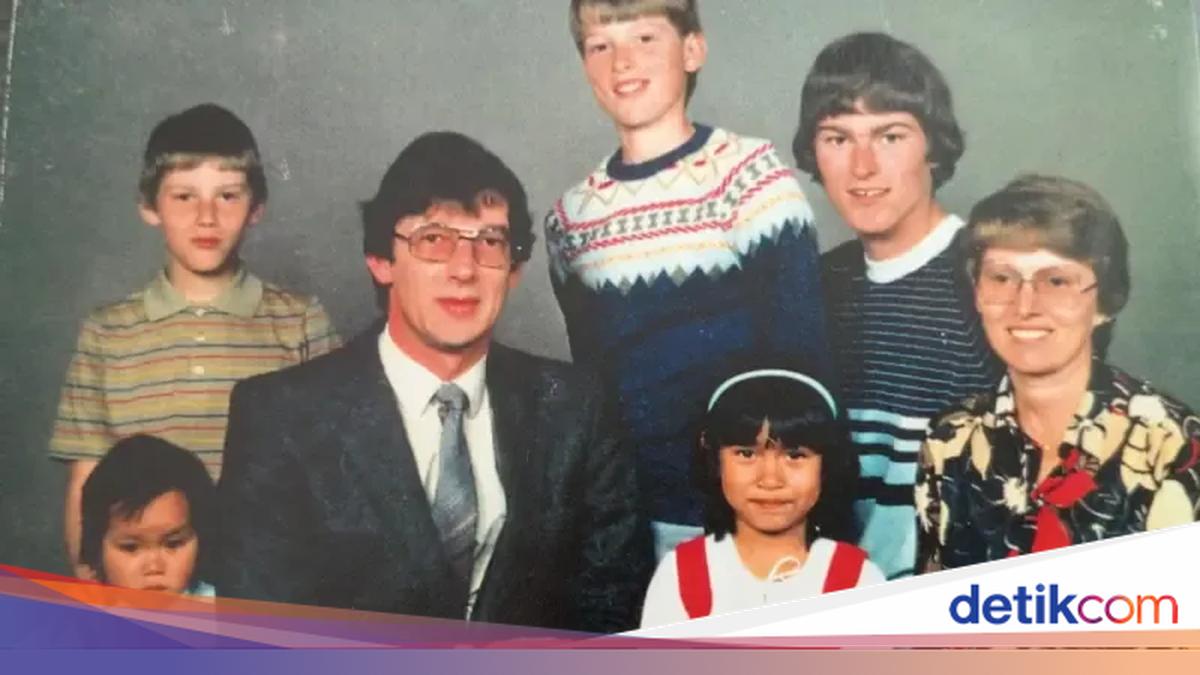
During the 1970s to 1980s, thousands of Indonesian children were adopted to the Netherlands. Not a few of these adoptions were carried out through illegal means. Now, the child victims of these adoptions have grown into adults. A small portion of them are attempting to obtain Indonesian citizenship.
The name on his birth certificate is Scipio Jean Luc. Three decades later, he changed it to Indra Jaya Kelana. Official residency documents record that Indra is a Dutch citizen. However, he does not feel that way.
Shortly after being born in Bandung, West Java, in 1982, Indra was taken to the Netherlands for adoption. He has never known the faces of his biological parents.
“What actually happened was that my entire identity was erased,” he told BBC News Indonesia in early April 2026.
“They severed all ties with my original family.”
As he grew older, Indra realised that what he experienced as a toddler was not adoption, but abduction.
Now, Indra is striving to reclaim what was taken from him, which he believes should rightfully belong to him: Indonesian citizenship status.
The path is winding, and Indra is not alone.
Bandung, 1982
The news first reached Indra’s ears when he was still 10 years old.
His adoptive father, a Dutchman named Armene Manuel Oudkerk Pool, informed him that Indra was not his biological child. His real parents were in a country thousands of kilometres away from the Netherlands: Indonesia.
As soon as Indra received that information, the small world he had always imagined as nearly ideal vanished without a trace.
The building he saw filled with warmth was actually piled with lies covered in a dark cloth.
Indra never understood why his adoptive father made that confession. What Indra remembers is that when his adoptive father finished the sentence, he was very shocked and unable to react otherwise.
“I then locked myself in my room. I felt very scared because what I had always felt turned out to be true,” Indra recalls.
In the Netherlands, Indra lived with his adoptive father. On many occasions, his adoptive father’s mother also helped raise him. In Indra’s eyes, they were his parents. Indra called them ‘father’ and ‘mother.’
The bond that formed between them, Indra says, did not run naturally as is typical in parent-child relationships. Indra had felt it, but was unable to describe it in detail. In Indra’s mind, the figures he often encountered in the Netherlands, who filled his days, were not his real father or mother.
Indra kept his thoughts tightly to himself. He tried to continue his childhood until similar news came like a big wave and swept him away all at once.
His adoptive father’s confession brought a thick cloud that followed Indra wherever he went. Outside, Indra was often sullen and struggled with various anxieties, disappointments, and above all, anger.
“Everyone seemed to know that I was an adopted child, while I myself did not. So, who can I trust?” Indra asks.
“I started thinking, who are these people really? And who am I really?”
Indra could not dispel everything that arose in his head. The Dutch public’s perception of adopted children is very negative, Indra believes.
Those who are adopted are often interpreted as “dirty children” whose parents “do not want them.” Indra feared he would suffer the same fate.
Amid that struggle, his adoptive father took him on a holiday to Indonesia, specifically to Medan, North Sumatra, in the mid-1990s.
Initially, when setting foot in Medan, Indra did not feel comfortable. What he encountered was very different from the situation in the Netherlands. A week later, Indra began to enjoy it.
Arriving in Indonesia made him witness his birthplace directly. He met children his own age and believed that “this is where I should be,” Indra emphasises.
Unfortunately, cultural differences, from language to style of dress, hindered him from interacting with the Indonesian children he met.
“I couldn’t play with them. I looked different. From there, I thought, I don’t want to wear ‘Western’ clothes anymore,” Indra recounts.
“I want to wear sandals, not shoes like I wore in the Netherlands,” he adds with a laugh.
The moment in Indonesia was like medicine for the wound Indra faced. However, that wound resurfaced when he had to return to the Netherlands.
The days after visiting Indonesia rolled on like reality in a prison, Indra likens. He wanted to fly to Indonesia, but it was not possible. Meanwhile, his disappointment turned into a series of questions he directed at his adoptive father.
Why did you bring me to the Netherlands?
Why me?
Those questions never produced answers; they were left hanging without certainty.
His relationship with his adoptive father slowly strained, then deteriorated. The two often quarrelled, forcing him to spend more time outside the house.
Entering adolescence, Indra faltered. With a baggage of a bitter past, Indra staggered in directing his life.
“The question that arises is how you, as a very young child, respond to all that? It’s a very difficult thing,” he explains.
“Because as an underage child, you don’t have help or ways to deal with those events.”
The anxiety Indra experienced, at the same time, drove out visions of his biological mother’s figure. Indra harboured anger because his mother was deemed to have abandoned him by giving custody to the Dutch.
Is she still alive?
Source: jawawa.id (https://jawawa.id/newsitem/the-story-of-a-victim-of-illegal-dutch-adoption-struggling-to-become-an-indonesian-citizen-1777539229)
Originally published by detikcom (https://news.detik.com/bbc-world/d-8468627/kisah-korban-adopsi-ilegal-belanda-yang-berjuang-menjadi-wni), translated from Indonesian